Nearly every beekeeper I’ve spoken to this year who lost colonies last winter treated late September into October. That was the first question in Let’s Talk Bees #82, and it’s the one that matters most right now. If you want a straight answer on when to treat for varroa, it’s the last week of July or the first week of August.
Last winter everyone told me it was the cold and the damp that got their bees. Varroa got them. The damp, miserable hive you open in February is what’s left behind after the mites have done their work.
The rest of the episode was wasps, honey rooms, splits, queen problems and honey pricing. That timing question runs through all of it.
What this episode covers
- Why varroa treatment belongs in late July or early August, and why 1 September is a hard cutoff
- How to harvest, treat and feed in a single visit, and how to time it around a wet spell
- Getting colonies ready for wasp season before the wasps switch to sweet feeding
- Setting up a honey room without buying kit you’ll never use
- How to work out how many colonies to take into winter
- Quick answers on splits, Demarees, queen introductions, merging and jar prices
When to treat for varroa in the UK
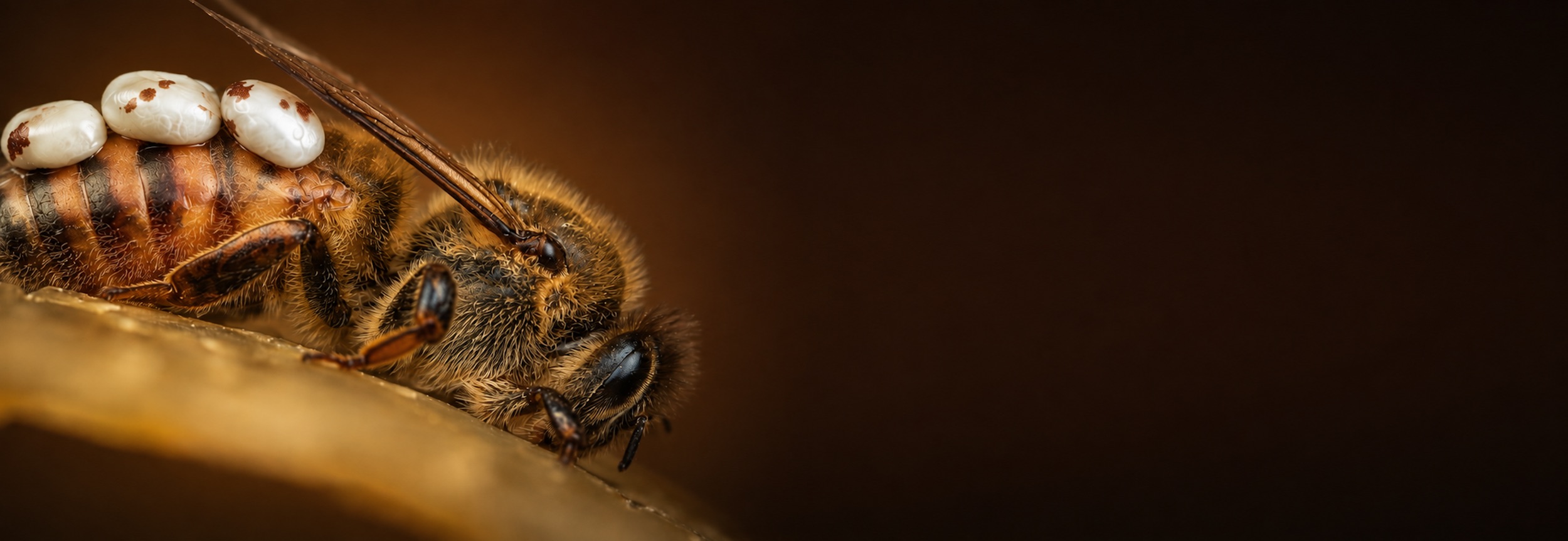
The textbooks have it the wrong way round. Get the honey off, extract it, jar it, and then think about mites. Put the bees first instead. Ask when the bees need treating, and you get a much earlier date.
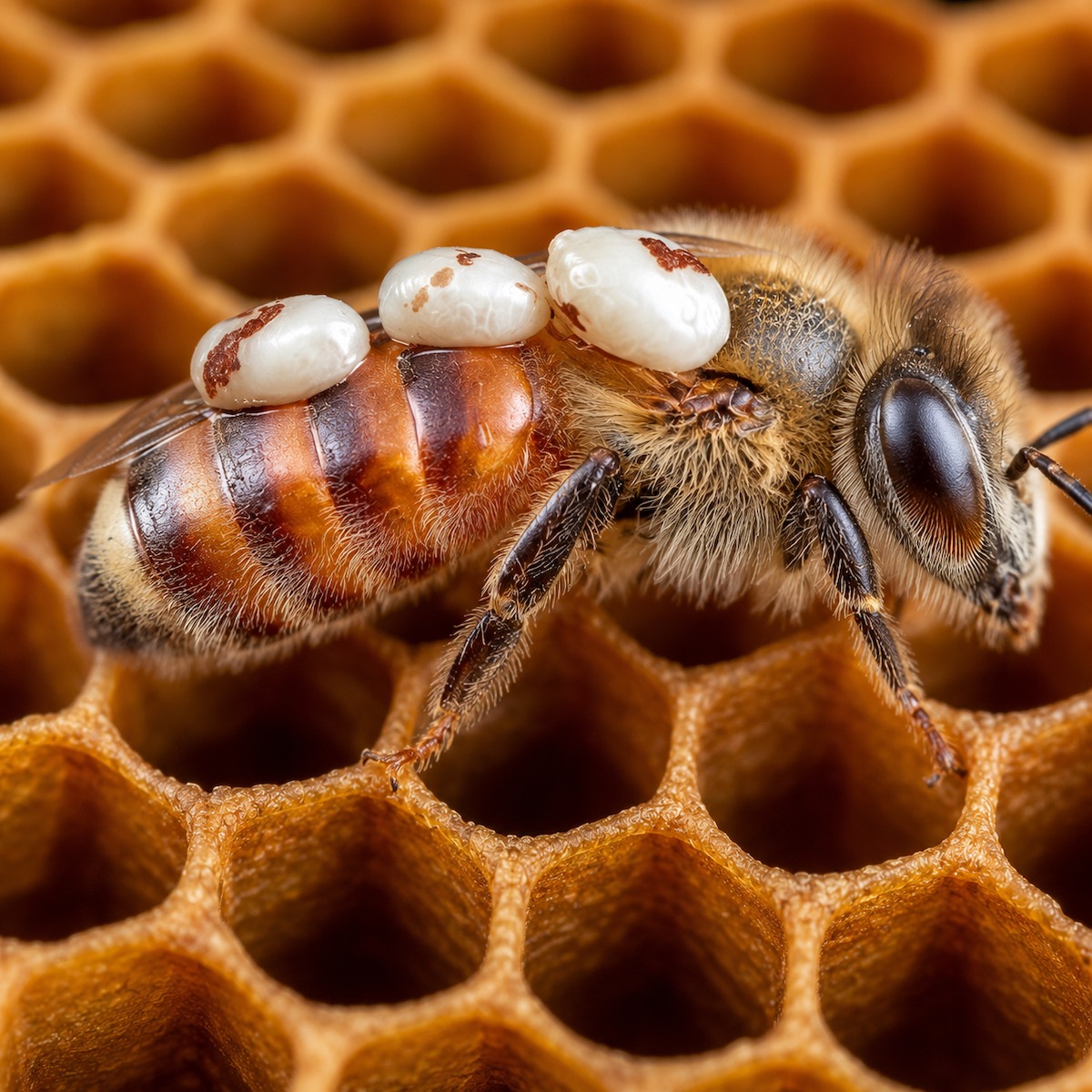
Here’s why the date matters so much. We’re past the solstice, so the amount of brood in your colonies is tapering off. The varroa population is still climbing. One curve is coming down, the other is going up, and the number of mites per bee gets to a dangerous point right about now. Every week you wait, that ratio gets worse.
Your winter bees are the ones that carry the colony through to spring, and they’re produced in late summer and early autumn. Treat in late September and you’re not protecting them. They’re already sitting there in brood form with a viral load you could have prevented.
For me in North Wales, mid August is usually the sweet spot. This year, with the drought and a compressed season, I’m going in the last week of July or the first week of August. If you’re in Scotland or Northern Ireland and you’re two or three weeks behind us, mid to late August is fine. Wherever you are in the UK, 1 September is the cutoff. That still leaves you a good six weeks of honey gathering.
Harvest, treat and feed in one visit
My system is one trip. Honey off, brood nest configured how I want it for winter, Apivar strips in, feeder on, one to one sugar syrup trickling in.
Doing it all at once helps the beekeeper and the bees. That early feed boosts the number of winter bees, and it keeps the colony strong enough to hold the door against wasps and robbers. Split it into a treatment period and then a feeding period and you lose both benefits.
It’s also why I stick with Apivar. Amitraz isn’t something I enjoy putting in a hive, and I wish there was a gentler option that worked as well. Varroa kills bees, and healthy bees come first. Formic acid stops you feeding at the same time. The thymol treatments are long, fussy about temperature, and in my experience nowhere near as effective.
The other thing to watch is the forecast. After weeks of sun you’ve got monster colonies sat on a lot of honey, and when the rain comes in they will eat through it at a frightening rate. Go in the day before the weather breaks. Take the honey at its peak, double brood them, strips in, trickle feed, and the bees are sorted for the next eight weeks.
On resistance, I do worry about it. That’s why we use two very different treatments: Apivar in summer, then oxalic acid sublimation in autumn, timed to a natural brood break. If one didn’t do the job, the other catches what’s left.
Get the colonies ready before the wasps switch over
Wasp nests are enormous at the moment and most of them aren’t bothered about your honey. They’ve got everything they need. Then someone flips a switch, the nests move into sweet feeding mode, and every one of them is interested.
So do the boring jobs now. Reduce the entrances. Check there are no holes in the supers. Combine the weak colonies, make sure everything is queen right, and get rid of any dead space the bees can’t defend. A colony that looks a bit thin today will not stand a chance in three weeks.
I get asked about wasp poison a lot. Not for me. In the UK you can manage the wasp threat perfectly well by preparing big, strong colonies, and the wasps will only wipe out what you left unprepared.
Don’t undersize your honey extraction setup
My honey room is a log cabin, 2.5m by 4m. In there I’ve got a 30 frame extractor, an uncapping machine, a Melliflow, a 200 litre creaming tank, a 200 litre settling tank with a premium sieve, and two bottling machines. It’s tight. There used to be a lot more in there, including a wax capping spinner, a pump and a sump, none of which I needed.
A beekeeper I know with hundreds of colonies runs two 20 frame extractors and a bread knife. That’s it. He reckons it’s quicker than an uncapping machine because he fills one, presses the button and works on the other. He’s not wrong.
Two bits of advice if you’re building a setup this year. Don’t undersize the extractor. People with ten or twelve colonies buy a six frame because it feels like a big step up from two, and they’ve outgrown it in a season. Go for a 20 frame and it’ll carry you a very long way. Then look at the flow of the room. Most people fill the floor plan with equipment and forget that 50 supers are about to arrive. Treat half the space as dead space, and get some stainless trays for the supers so they’re off the floor and any drips are caught.
Work out how many bees, not how many hives
A question I get every year is how many colonies to take into winter. The number itself is irrelevant. If you’ve got six hives with roughly 20,000 bees in each, you’ve got 120,000 bees. Now ask what the best configuration of boxes is to get as many of those bees through to spring.
At this time of year the bar is higher than it was in May. A colony going into winter wants a couple of frames of brood as an absolute minimum, a frame of stores, and a good couple of shakes of bees. If any colony has a drone laying queen, sits on two frames in a twelve frame box, or is already struggling against robbing, fix it now. Combine the weak ones, compress the ones that need compressing, and get the defences ready for everything else.
Autumn treatment for me is brown, gold leaves on the trees, October, November time. It’s way too late to be treating.
What to do next
- Check the forecast, and treat the day before a wet spell. Honey off, brood nest sorted, strips in, one to one syrup on.
- Get your strip count roughly right. The instructions say one strip per five frames of brood, so count brood frames rather than frames of stores. Most colonies need two. A genuine double brood with eight frames of brood in each box needs four, two per box. Don’t pull frames apart to count them and risk your queen this late in the season.
- Splitting within the same apiary? Don’t feed the split for three or four days. Feed it and the returning foragers bring every robber and wasp in the field with them.
- Can’t find a queen after introducing her? Add a frame of eggs and come back in eight days. Nothing but capped brood means the bees think they have a queen, and a patch of emergency cells tells you they don’t.
- Merging colonies is straightforward. Find the queen you don’t want and remove her, leave that box an hour, then set it over the queenright box with a sheet of newspaper between them. Strips in, roof on, one colony by spring.
- Five or six frames of pollen in the brood box is too much. Pull three or four out and freeze them. They’re brilliant for making up splits and for queen rearing.
- Selling honey? The 8oz and 12oz jars do the work. Wholesale sits around £5 to £7, retail closer to £10 for an 8oz and £12 to £13 for a 12oz. Anything over a tenner gets hard.
Come and join us in HiveQ
The live streams are changing. I’m going back to every other week on YouTube, and on the alternate weeks the live stream will be exclusive to our beekeeping community, HiveQ. That’s where this kind of localised advice lives, and the ambition is to get groups going for Northern Ireland, Scotland and Wales, then drill down into counties, so you can compare notes with beekeepers close enough to you for it to actually mean something. It’s filling up fast, and it is a very cool place to be.
If you’d rather have the whole thing laid out step by step, The 14-Day Beekeeper covers the treatment timing and seasonal decisions in order, and you can always take a look at our mated queens and nucleus colonies if you’re planning next season already.