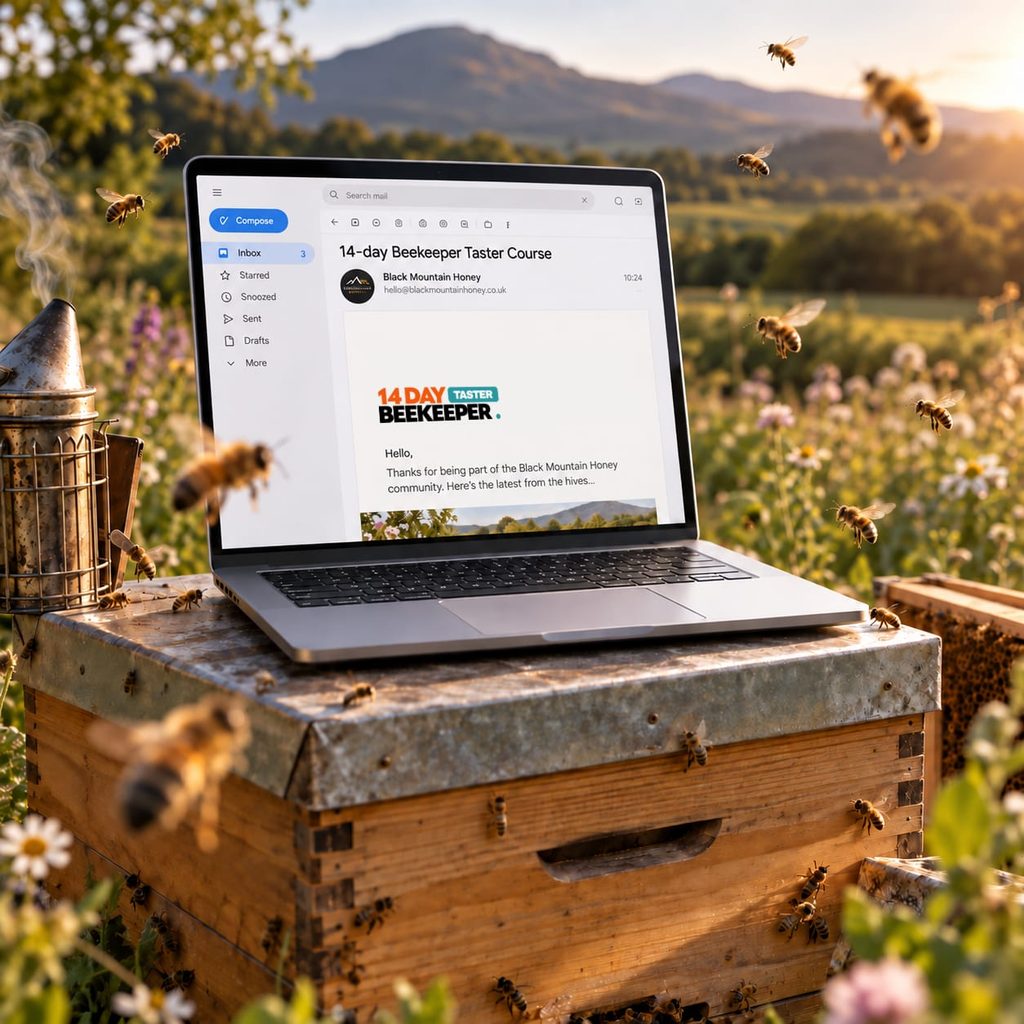
Fourteen days of beekeeping, straight to your inbox
One email a day, each one covering a module of my full beekeeping course. Free, and you can use most of it at the hive the same week.
Day one is the one habit I’d hand to every beekeeper on their first day. It arrives the moment you sign up.
"*" indicates required fields
Free. One email a day for fourteen days. Unsubscribe whenever you like.
What you’ll learn
All of it is free, and it’s the short version of what I teach in the paid course, in the order I’d teach it.
Know what you’re looking at
Most beginners open a hive and see chaos. By the end of the fortnight you’ll read eggs, brood, stores and queen cells, and know what each one is telling you about the week ahead.
Spot trouble early enough to fix it
Swarming, varroa and a failing queen all show warning signs weeks before they become a disaster. I’ll show you what I watch for and when, which is usually what decides whether a colony sees spring.
Spend less money on the wrong kit
Beekeeping has a long list of things you can buy and a short list of things you need. I’ll tell you what I’d buy first, what can wait a season, and how to choose a hive type you won’t want to replace in two years.
Get a way of working, not a pile of tips
The last email is the Beekeeping Blueprint, the system I run my own colonies on. It’s built on staying three weeks ahead of the bees and repeating the basics on time, so you know what to do on any given Saturday.
what you’ll get
One module a day, in this order:
- Fundamentals. Colony biology, timings, stings and safety, and what a good first year really looks like.
- Equipment. The kit worth the money and the kit that can wait.
- Beehives. National, Langstroth, Commercial, WBC. Poly or wood, and how the stack fits together.
- Apiaries. Sun, forage, access and neighbours, plus where to buy your first bees.
- Inspections. Eggs, brood, queen cells, stores. What to look for and what to do about it.
- Bee health. What to spot, and when to call for help.
- Feeding and nutrition. When bees need help, and the difference between 1:1, 2:1 and fondant.
- Techniques. Installing a nuc, splits, merges, supering and moving hives.
- Swarming. Why colonies swarm, how to read queen cells, and what to do before and after they go.
- Pests and parasites. Varroa, wasps, wax moths, mice and hornets.
- Queens. Judging, marking, buying and introducing queens.
- Honey. Knowing when it’s ready, and getting it off the hive cleanly.
- Post harvest. Feeding, varroa treatment and winter configuration, all in the same short window.
- The Beekeeping Blueprint. Staying three weeks ahead, banking drawn comb, and repeating the basics on time.
Where it leads
This series is a taster. The full course, The 14-Day Beekeeper, is £149 and covers the same fourteen modules in-depth:
- 300+ video lessons in 4K, filmed in real colonies,
- lifetime access to the course content,
- and 12 months access to our HiveQ community for when you’re stood at an open hive wondering what you’re looking at.
You’ll get the sales pitch for it at the end of the fourteen days. Until then the emails stand on their own, and you can ignore the offer entirely and still get the advice.
Why listen to me
I’m Laurence. I run Black Mountain Honey, a family-run bee farm in Wales, and I’ve built my living out of bees rather than out of talking about them.
- Around 360,000 people follow the beekeeping content across social media.
- Our honey has won a Great Taste Award, and we’ve been finalists in the Welsh Food and Drink Awards.
- The beekeeping has been covered by the BBC, ITV, The Guardian and The Times.
- We’re DASH accredited and members of the Bee Farmers Association.
Every email in this series comes out of the same material as the paid course, filmed and written in real working colonies.
Still deciding?
It’s a real course. Fourteen modules of the same material I teach in the paid version, in the same order, and it stands on its own. Plenty of people read the lot, never buy anything, and keep better bees for it. There’s one optional upgrade towards the end, and you can ignore it entirely.
It’s free. Fourteen emails, one a day. Nothing to enter but an email address.
The first few days are groundwork. The later ones on swarming, queens, post harvest and the Blueprint are where most experienced beekeepers tell me they pick things up.
The emails sit in your inbox. Read them in your own time, in any order.
You carry on getting my weekly beekeeping email: what I’m doing in my own colonies that week, what to watch for next, and the mistakes worth avoiding. It’s the part that keeps you a season ahead rather than a season behind. One click to unsubscribe if it isn’t for you.
Ready? sign up now
"*" indicates required fields