I spent two months telling beekeepers not to go into their hives.
Then I went and did the exact thing I have been warning people about, and I did it on camera.
Not because I got bored or because I fancied a look. I did it because there is one question I see every year that is almost impossible to teach in words – how much a colony should weigh going into winter, and what that weight actually looks like inside the box.
The plan was simple: sign off colonies for winter, take the Apivar strips out, get the propolis screens in, and show you a practical way to judge stores without pulling frames. Of course, the bees had other ideas.
What this episode covers
- How to get colonies signed off for winter without falling into the late-season inspection trap
- Why taking varroa strips out on time matters, and what goes wrong if you do not
- A simple way to weigh a hive so you can calibrate your hefting
- What "about right for late September" looks like in kilos for a nuc, and what the target is once the ivy finishes
- How to fit cheap homemade propolis screens so you do not block feeder access
- What to do when a breeding queen has swarmed late in the year – and why sometimes you just have to let the bees get on with it
Do not fall into the "just one quick frame" trap
At this time of year, you can do more harm than good by getting curious.
If you have not been in the hive for a while, it is very tempting to think, "I’ll just pull one frame and have a look." That is how people squash queens and turn a perfectly viable colony into a write-off.
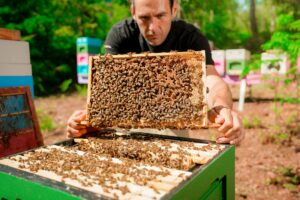
You can learn a lot from looking down into the top of the box without turning it into a full inspection. You can see where the bees are sitting, whether they are drawing comb, how much space they are using, and whether the colony looks organised.
If you are on the fence, do nothing. That is a rule worth keeping.
There are still important winter jobs to do, but they do not need frames out on the stand.
Take treatment strips out properly, not when you remember
One of the biggest jobs in this period is taking Apivar strips out on time.
If you leave strips in too long, you are doing the mites a favour. The longer you run it, the more chance you give varroa to adapt, and you can end up dragging resistance problems into winter.
The job is not complicated:
- open up
- take the strips out
- have a sensible look while you have the chance
- close up and get on with the next hive
No drama, no deep poking about, no "while I’m here" inspection just because the roof is off.
If you are watching from outside the UK, make sure you are using something licensed in your area and follow the label. What matters is the principle: treat properly, then remove treatments properly.
Use a scale once so you can trust your hands later
This is the bit I really wanted to show, because it is the bit most people struggle with.
When I heft a colony, I have years of calibration in my arms. That does not help you if you are trying to learn, because "it feels about right" is useless as instruction.
A cheap hanging scale and a ratchet strap fixes that.
In this episode, the nuc we weighed came out at just over 11kg. At the back end of September, early October, that is about where I want a nuc to be – roughly in that 10 to 13kg range.
Then you wait until the ivy is finished and see where they land naturally. My target for a nuc going into winter is around 15kg.
Do not get obsessed with one magic number. If it is 14kg, fine. If it is 16kg, fine. The point is do not drift into winter at 8kg or 9kg and pretend it will work out. That is how you end up emergency feeding when it is cold and wet.
Once you know what 11kg feels like, you can heft another box next to it and actually make a useful judgement. You will learn faster in one afternoon of weighing than you will in two years of guessing.
If the bees surprise you, keep your head
The colony I picked to demonstrate was the one that had swarmed.
That is the sort of thing that happens in real beekeeping. You choose a tidy example and the bees choose chaos.
Late in the season, if you find you have queen cells and no queen, there is not always a neat fix. Sometimes there is not much you can do beyond leaving them set up, taking the strips out, making sure they have enough food, and crossing your fingers that a virgin can get mated.
That is not me being vague. That is just the reality of the calendar. Timing matters, and by mid-October in North Wales you are pushing your luck.
So the decision becomes: do you mess about and make it worse, or do you let the bees have a go?
In this case, I am leaving it exactly as it is and checking back later.
Cheap propolis screens that actually fit your setup
Propolis traps are one of those things people either never bother with, or they do properly and wonder why they waited.
You can buy propolis screens, but they add up fast when you need a lot of them. The cheap option is fly screen cut to size.
The key is not making it too big.
If you cover the whole top, you can block the bees going up into the feeder, especially with certain feeder designs. Leave the right slot so the bees can still access feed.
Get the trap in under the feeder, line the gap up properly, and then leave the bees to it. Come spring, you should be cracking the hive open and seeing lovely golden propolis.
What to do next
- If you have not removed treatment strips yet, get it on your list this week and do it properly.
- Stop "having a look" for the sake of it. If you need to go in, go in for a reason.
- Weigh a couple of colonies once, write the numbers down, then use that to train your hefting.
- If you want the full checklist I use to get colonies ready for winter, grab the free guide here: Get the free winter preparation guide
- If you are new or you feel like you are guessing every autumn, this is exactly the sort of practical decision-making we teach inside 14 Day Beekeeper.
"Do not get caught in the trap of thinking, I’ve not seen bees for a while, should we have a little look? It is the easiest way to kill your colony."
Optional close
If you are sat there thinking, "Do I need to be doing stuff with my bees right now?", the answer is yes – but it is not more inspections. It is doing the right winter jobs at the right time, then leaving them alone.