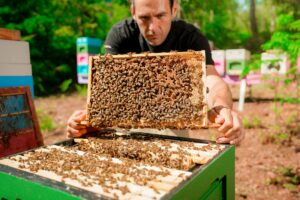
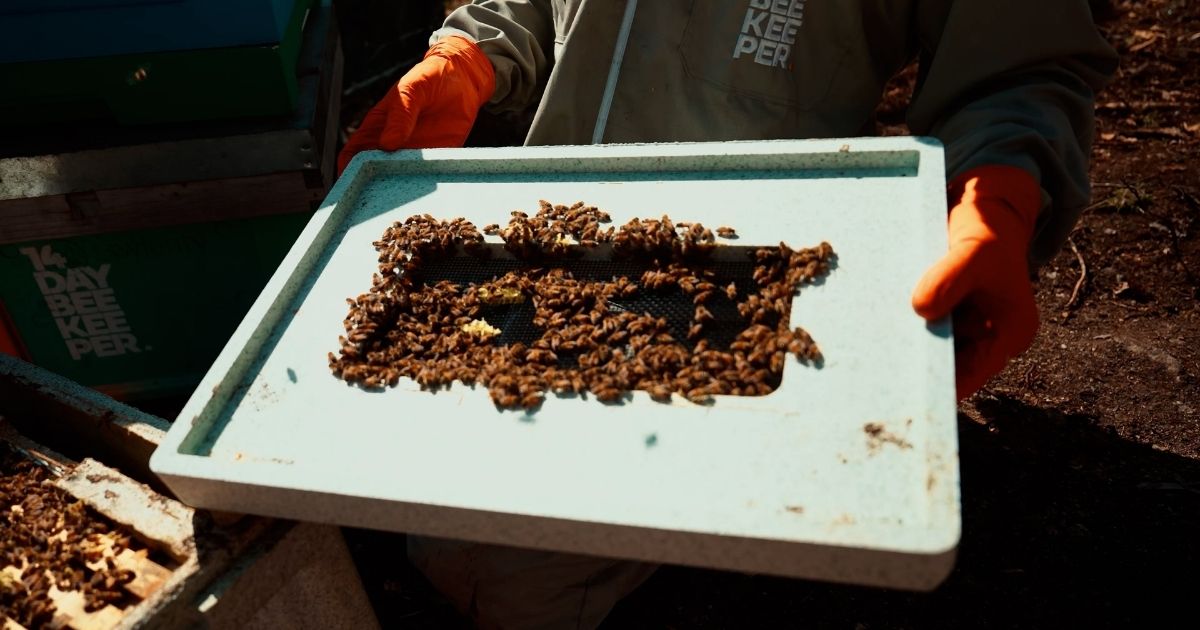
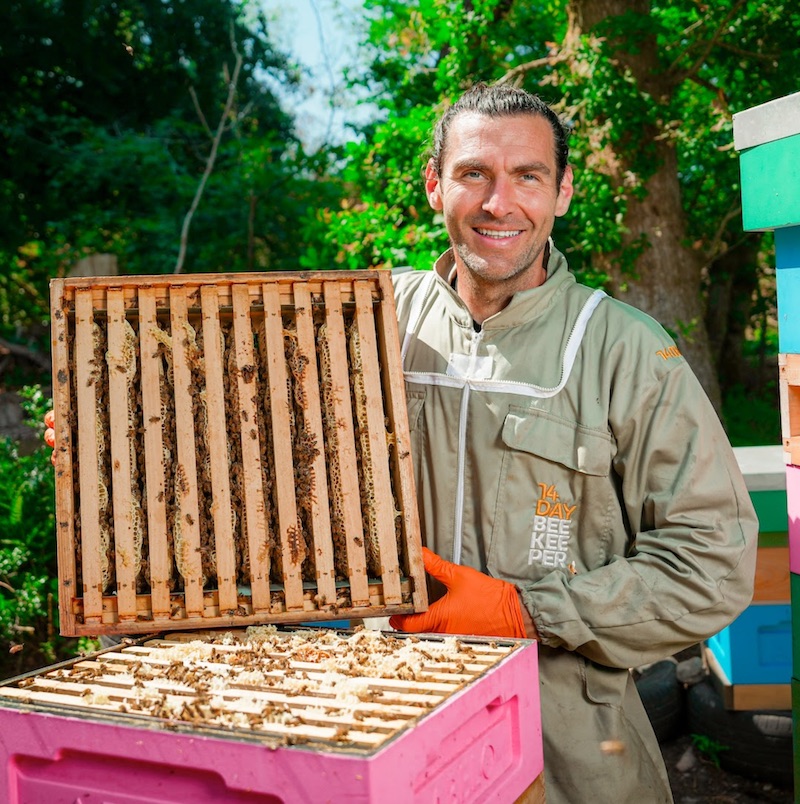
Gordon had planned to finish his first beekeeping season with 14 colonies. By the time we sat down in the forest, he had around 50. Roughly 30 were in full-sized hives, with another 20 nucs coming along.
I’d visited his apiary the day before. The bees looked good. These were proper colonies with bees covering the frames and lovely brood patterns. He’d clearly put a lot of work into them.
Then I asked what would happen if he stopped splitting them and started producing honey. Where would it all go? How would he extract it? He hadn’t thought that far ahead. I recognised that situation immediately. I’d done exactly the same thing, and it cost me a lot of money.
What this episode covers
- How a plan for 14 colonies turned into around 50 in one season.
- Why I judge expansion by the bees inside the boxes.
- The extraction work and equipment costs that can catch you out.
- Choosing between honey production, selling nucs and the work you enjoy.
- What my guest learned when some queen introductions failed.
Count the bees inside the boxes
I made one of my biggest beekeeping mistakes in the very apiary where we recorded this conversation.
It was the middle to back end of September. I looked at six-frame nucs and convinced myself I could turn each into two three-frame colonies. I wanted the numbers to keep going up.
Those colonies failed.
That experience is why I’m cautious when someone tells me they’ve gone from two hives to 50. I want to know how many bees are in them. Dividing the same bees between more boxes can make your hive count look impressive while leaving you with weaker colonies.
Gordon had taken a more restrained approach. Having inspected his bees, I was impressed with what he’d built. He could have chased an even higher number, but he’d kept substantial colonies.
His next season would involve a different kind of management. He’d spent much of this one making splits and had only had one colony swarm. Now he wanted to slow the expansion and get some honey.
We talked about swarm management as part of that change. For him, keeping strong colonies together would bring challenges he’d largely avoided while splitting them.
Plan the honey harvest before it arrives
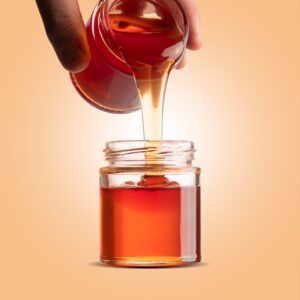
Gordon had already extracted his first honey. He reckoned he’d filled about five buckets, which I’d have been delighted with in my first season.
Getting it home had been awkward. His car was small. He hadn’t put clearer boards in, so he’d shaken the bees from each frame and moved the frames into covered supers. Then he’d extracted in a temporary setup.
It worked, but it gave him a taste of how much work sits between a full super and honey in a bucket.
I asked him to think through a much larger harvest. That meant transport, somewhere to extract, and eventually jars and labels. His honey was still in buckets, and he hadn’t ordered the jars yet.
I’d reached about 250 colonies when the honey really caught up with me. I realised my extraction equipment couldn’t handle it all and spent roughly £20,000 to £25,000 putting equipment in place.
Then I discovered how little I enjoyed doing extraction for long stretches. A couple of hours was fine. Weeks of moving supers and working in a hot extraction room were another matter.
“I don’t enjoy it for a couple of weeks.”
That’s why I asked the difficult questions. I wanted him to try the work properly before putting more money into it.
Bee maths can fill your shed
When we started talking about extractors, Gordon said he already had one. Then he corrected himself. He had two. Actually, three.
There was a small three-frame hand-cranked extractor, a large one of around 32 frames, and a nine-frame machine he’d picked up free through an association newsletter.
The large extractor was still wrapped up in the shed. He hadn’t sorted out anywhere to use it. The free nine-frame machine was doing the work.
I could hardly criticise him. I’d made the same sort of purchases myself.
A bigger machine can seem sensible when the price difference looks manageable and you’re imagining next year’s crop. But he was already considering fitting out a container before he’d properly used the equipment he owned.
By the time we spoke, his plan was to keep equipment spending down next year and bring some money back in. Wise move.
Build around the beekeeping you enjoy
Gordon loved making nucs. He enjoyed introducing queens, watching colonies develop and working out what to do when something went wrong.
That gave him another option for next season. He could sell some of the nucs instead of moving every one into a full-sized hive.
In my experience, selling good nucs was easier than producing and processing all the honey from an ever-growing number of colonies. It also helped me find the part of the business I enjoyed most.
We talked about a smaller operation with honey, some nuc sales and perhaps wax products. That mix appealed to me because it offered different kinds of work without requiring a huge extraction setup.
He was also filming his beekeeping. We discussed how a routine job, such as replacing old comb, could become useful educational content. People could see the work and judge it for themselves.
He wanted to turn beekeeping into a full-time business. My advice was to build steadily and notice which jobs he actually wanted to spend his days doing. I’d already spent enough money learning that lesson the expensive way.
Allow for queen introductions that fail
Some of his nucs had developed beautifully after following my overwintering guide. A few hadn’t.
He thought he’d missed queen cells before introducing the queens. We discussed that possibility, but we couldn’t confirm every cause. A virgin queen might have been present. There were other possible explanations too.
I told him that expecting every introduction to succeed, every time, was unrealistic. Even when you think you’ve done everything correctly, an introduction can fail.
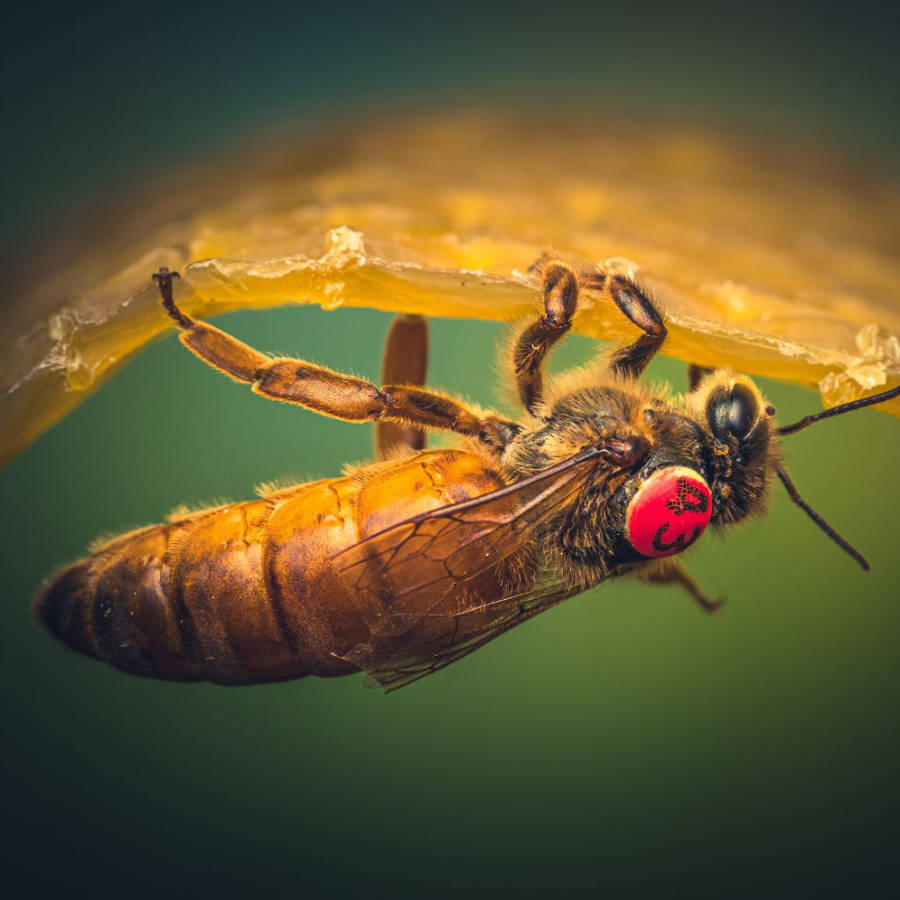
He was beginning to recognise differences between the colonies. The successful ones were expanding, with brood and eggs. The suspect ones had failed to develop in the same way.
That was useful experience for him. We discussed requeening and a possible recovery plan for those particular nucs, including the uncertainty about virgin queens. Their condition and the time of year mattered to that conversation.
What to do next
Before buying more boxes, I’d sit down and work through the questions we discussed.
How many strong colonies do you have now? What do you want them to produce next season? If you get the honey you’re hoping for, how will you move it, extract it and sell it?
I’d also look at the jobs you’ve already tried. My guest knew he enjoyed making nucs. He was still finding out how much honey production he wanted to take on. That was worth knowing before spending more.
For the nuc-making process discussed in the episode, you can get the free guide to setting up nucs to overwinter here.