Winter beekeeping gets more complicated when a colony still feels light and the bees have stopped taking syrup. Do you keep feeding? Switch to fondant? Is the colony too small?
Then there are the equipment jobs. You’ve got feeders to remove, insulation to sort out and perhaps a hive stand that needs replacing.
I’ll take you through how I approach those jobs, along with cleaning spare polyhives and planning winter treatments. Start with the colony in front of you. One cold morning doesn’t mean every hive needs the same thing.
Feeding bees in autumn: syrup or fondant?
If a colony still feels light after plenty of syrup, work out why before you give it more.
The bees might have filled the available comb around the brood. Or you might have a smaller colony sitting on a few frames of brood and stores, with undrawn foundation on either side.
Those colonies need different decisions. A small colony can struggle to process syrup as the weather cools, and more feed in the feeder won’t solve that on its own.
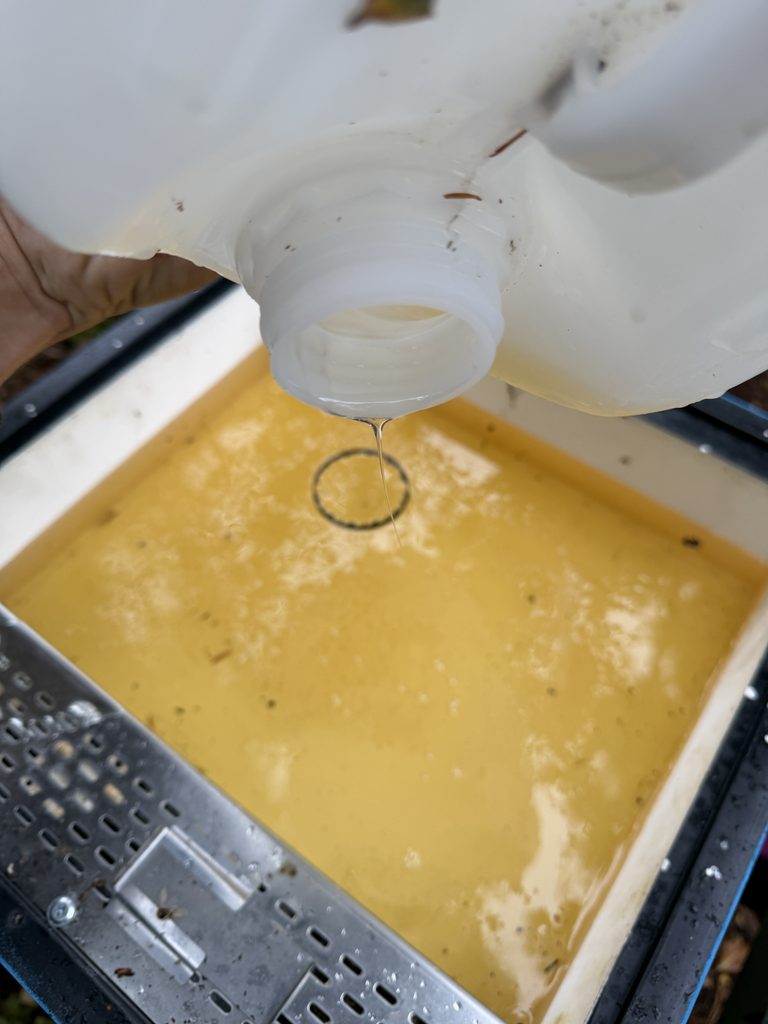
When I would keep offering syrup
I prefer syrup while the bees are still taking it. I wouldn’t switch everything to fondant because I’ve had to scrape ice off the car one morning.
Look at whether the colony needs more stores and whether it’s taking the feed. If it needs food and the syrup is going down, I’d keep offering it.
If the syrup is sitting untouched and the hive still feels light, you need to reconsider. Look at the colony’s size, how much drawn comb it has and the stores already there. Don’t keep filling the feeder and assume the job’s done.
Our guide to what to feed your bees explains the different feeding options.
When I would use fondant
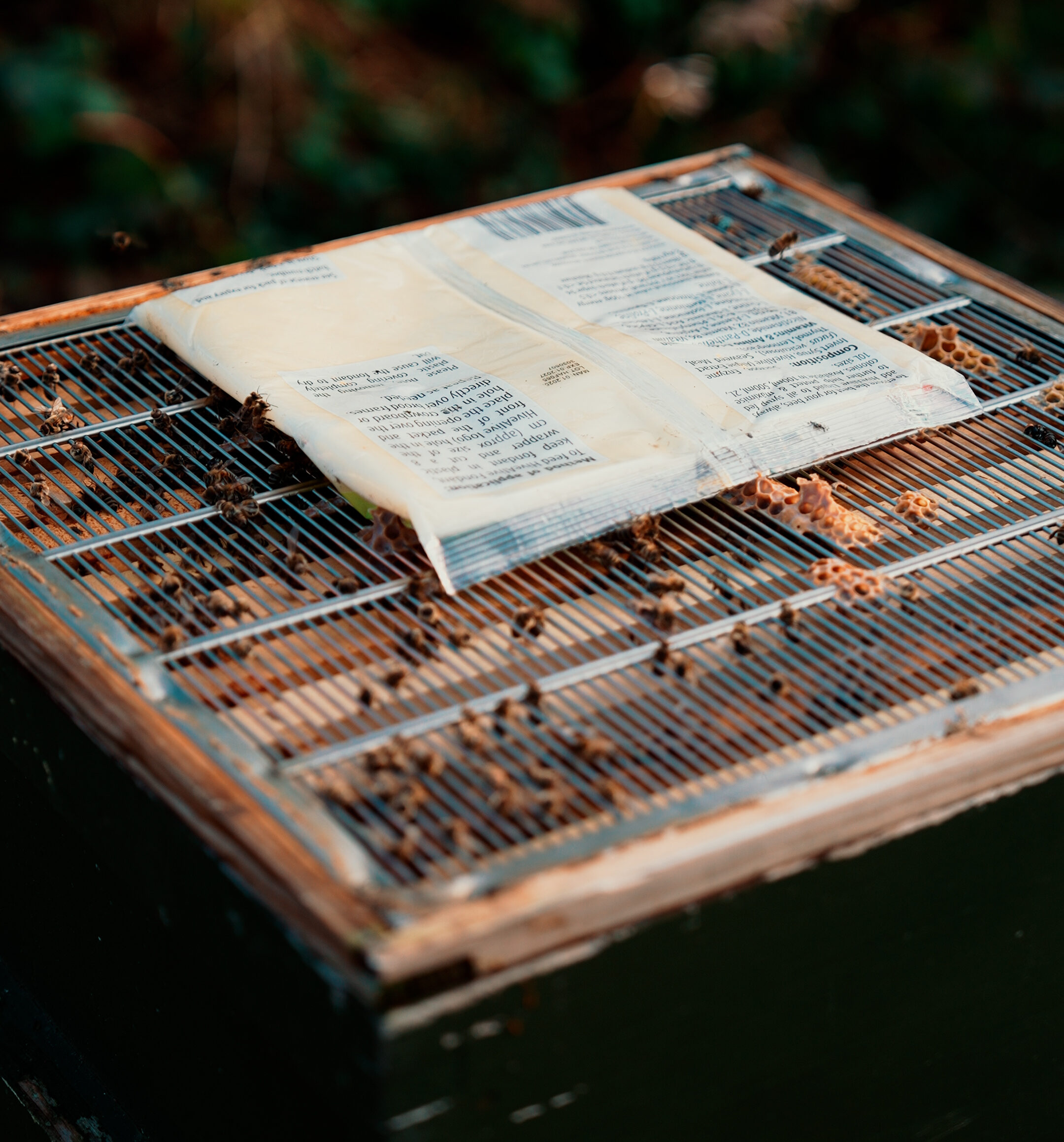
If the bees aren’t taking syrup and the colony is still short of stores, I’d put fondant directly above the bees, with insulation over the top.
Ideally, you’d have got them up to weight before the weather turned cold. But if you’ve got a light colony now, you need to give it food it can use.
I’d also make a note of how big that colony was going into winter. If you made it as a split, could you have started it earlier or given it more bees?
Remember that when you’re making next year’s nucs. Give them enough time and bees to build up, so you’re in a better position when autumn comes around.
Winter hive insulation: should the feeder stay on?
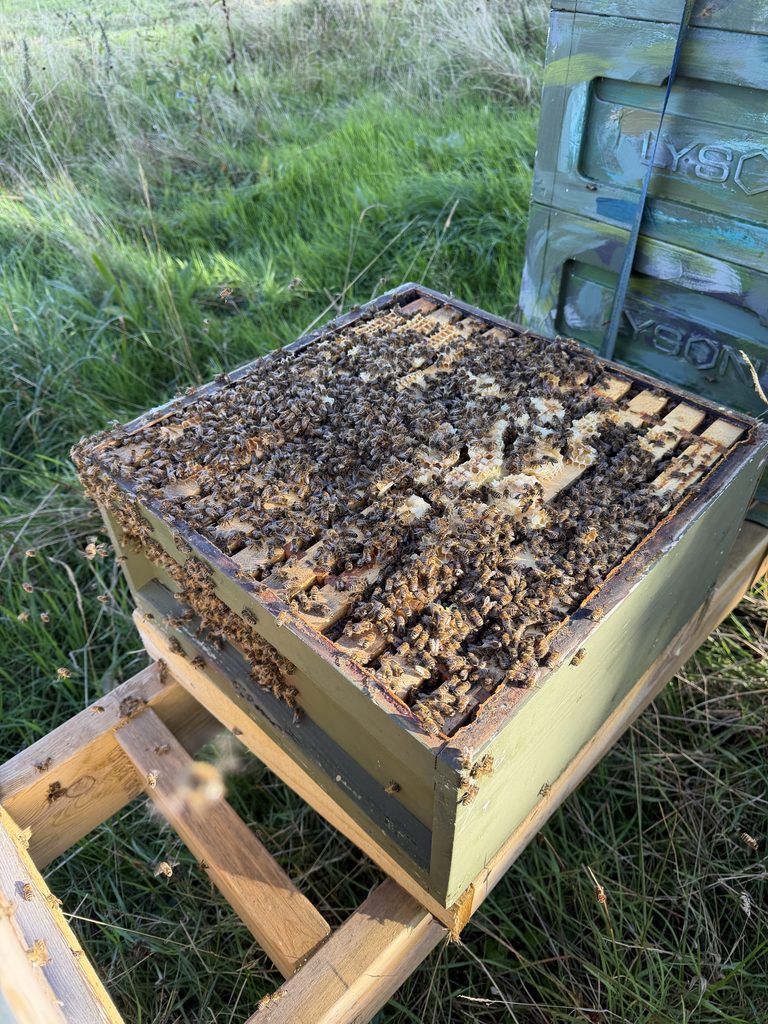
Once you’ve finished feeding syrup, look at what’s sitting above your bees. If you’ve got an empty English feeder inside an insulated eke, I’d take the feeder out and use that space for more insulation.
The eke is the shallow spacer above the brood box. Removing the feeder gives you more room to insulate over the colony. There’s no benefit in leaving that empty feeder there all winter.
An insulated poly feeder is different. The feeder itself provides insulation, so there’s a reason to leave it on. It depends on the equipment you’re using.
Before you take anything off, check whether the bees still need syrup. If feeding is finished, think about how you can use that space and where you’ll put fondant if they need it later. You want the fondant directly above the bees, with insulation above it.
Our guide to preparing bees for winter covers the other jobs to get sorted before winter.
Moving beehives in winter: watch the flying conditions
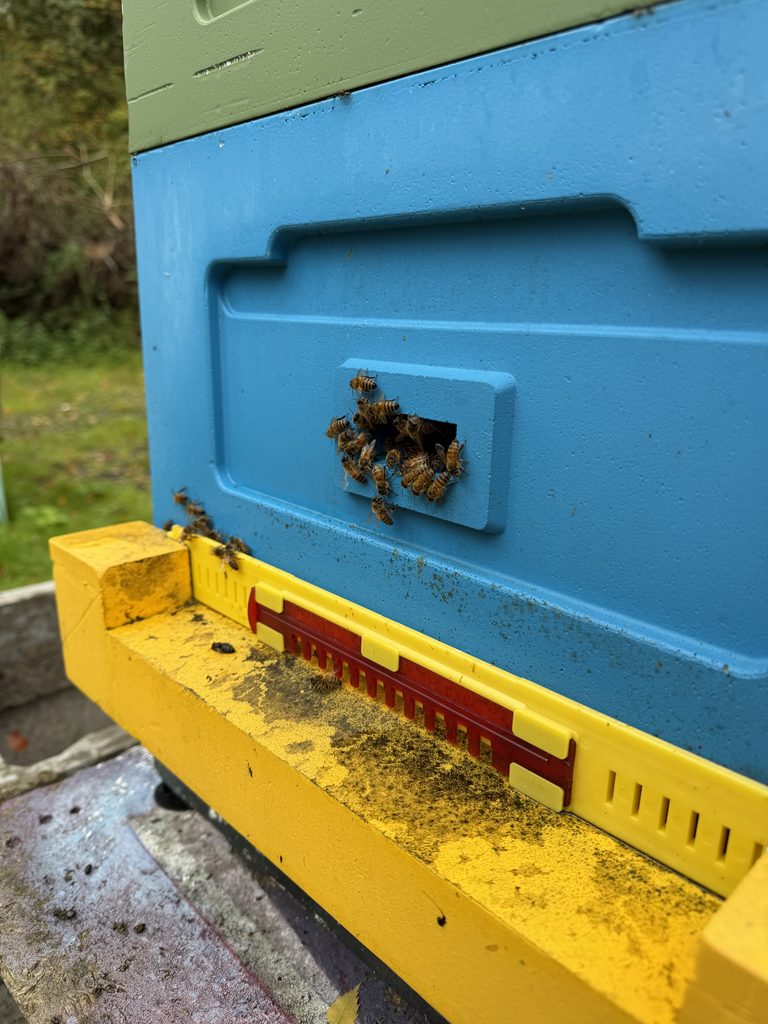
Winter can give you an opportunity to change a hive’s position or replace a stand. The conditions matter more than the month on the calendar.
During the flying season, I use the familiar three-foot or three-mile rule when planning moves. Returning foragers remember where their hive was. Move it across the garden and you can find bees gathering at the old position.
In prolonged cold weather, when bees aren’t flying, I approach a local move differently. That can create a useful opportunity to reset an awkward apiary layout.
A frosty morning isn’t enough
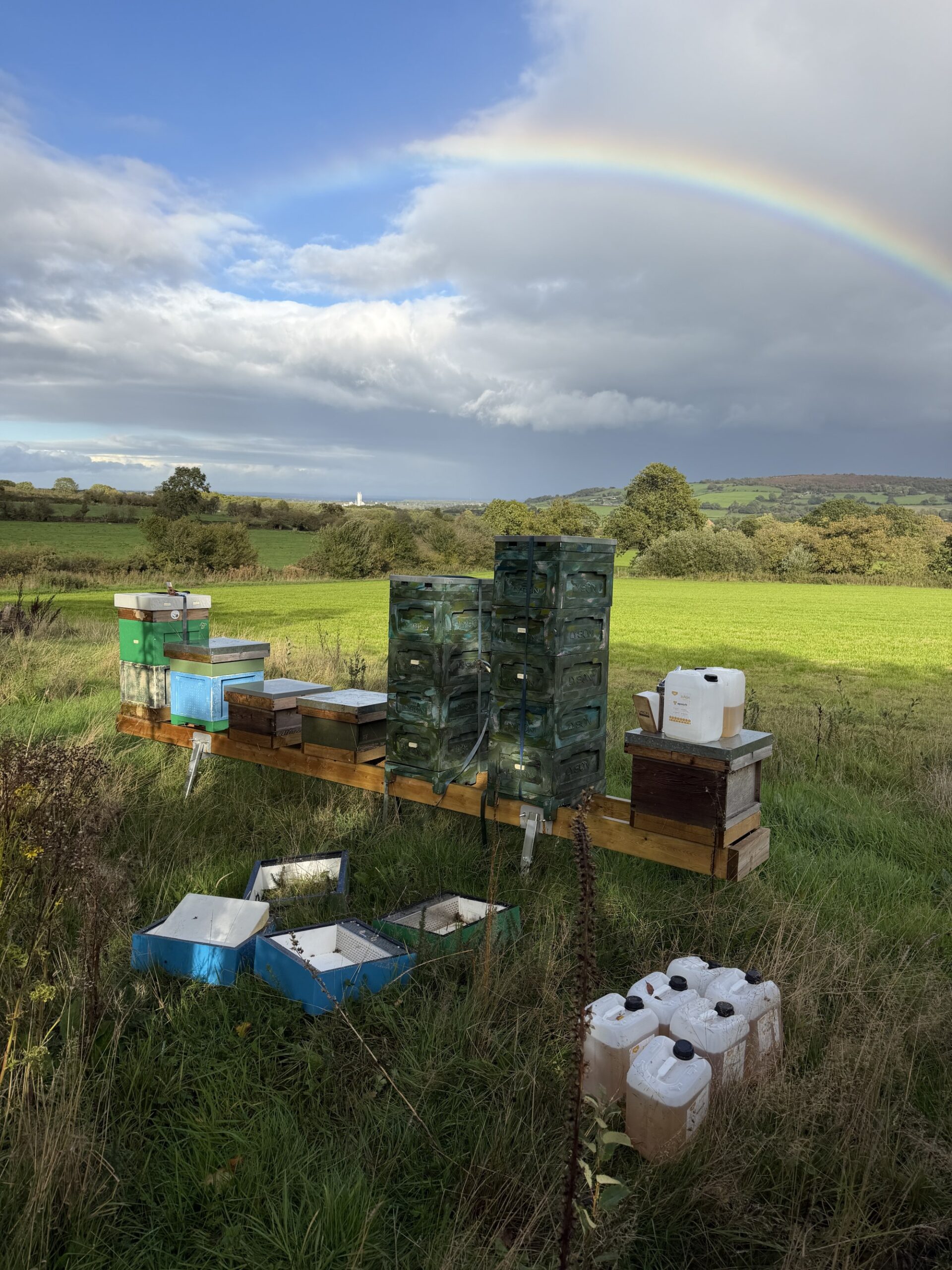
The question that prompted this involved six hives on one long stand. The beekeeper wanted to replace the stand in the same place.
My advice in that mid-October discussion was to wait.
I mentioned daytime temperatures around 6-7°C, but also pointed out that bees may still fly then. That number isn’t a guarantee. A warm spell straight after a move can bring returning bees back to the old location.
For moving beehives in winter, I’d look for a settled period when the bees aren’t flying. I’d also avoid repeated moves and take care not to jolt the cluster.
If you close an entrance for the move, remember to open it again afterwards.
Cleaning polyhives: cleaning and disinfection are separate jobs
I use two separate baths for cleaning polyhives. One is a soda cleaning bath to remove wax and propolis. The other is a sodium hypochlorite bath for disinfection.
Start with empty equipment. Take the boxes apart and scrape off as much wax and propolis as you can without damaging the poly.
Do this when it’s cold if you can. Cold wax is brittle, and propolis comes away much more easily. When they’re warm, they smear and make the job harder.
Clean the boxes in the soda bath first, then remove any remaining wax and propolis. Rinse them before putting them into the separate disinfection bath.
A box can look lovely and clean and still need disinfecting. Don’t stop because it looks ready.
Get the chemical instructions before you start
Check the written instructions for your equipment and chemicals before mixing either bath. You need the correct concentration and contact time. Don’t guess.
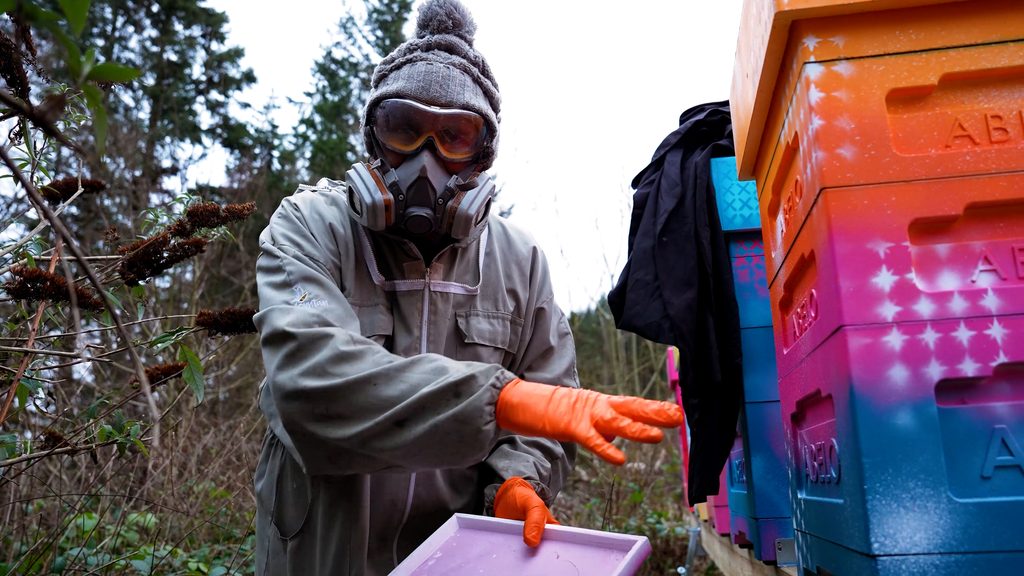
Sodium hypochlorite can cause serious eye injuries. Wear suitable protective gloves, eye protection and full-length protective clothing. Take your time when lowering boxes into the bath or lifting them out, because it can splash.
Once disinfection is complete, rinse the equipment thoroughly and leave it to drip dry.
Winter treatments on double brood need a specific plan
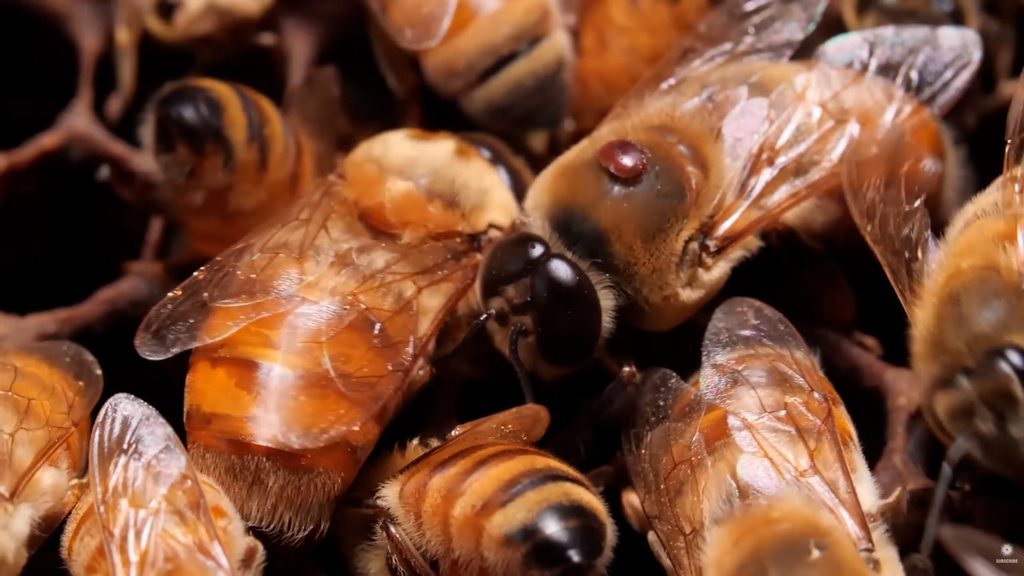
With double brood, you need to think about where the bees are before you treat. If they’re spread across both boxes, you can’t assume treating the top box will reach them all.
I don’t use oxalic acid trickling myself, so I’m not going to guess a dose for you. Check the instructions for the authorised product you’re using, including how to apply it on double brood. Don’t add extra because you’ve got another box.
For sublimation, I’ve tried going in underneath a mesh floor, but I found the material collecting on the mesh. I prefer to use an opening in a board above the frames so the mesh isn’t in the way.
That’s what works with my setup. Before using yours, check the treatment and equipment instructions so you’ve got the dose, application method and safety precautions right.
Use winter planning time to prepare for spring
Once the autumn jobs are done, you’ve got time to plan next season. If you want more colonies, start thinking about how you’ll make your splits and where you’ll put them.
Plan splits around colony growth
I look for colonies that are expanding, warm weather and mated queens being available. Don’t pick a date in April and assume your bees will be ready. Look at what’s happening in the hive.
You can split a strong colony in different ways. You might divide it into two larger colonies or make several smaller nucs. The smaller you make them, the more carefully you’ll need to manage them.
For a small nuc, I use a frame of brood and a frame of stores, with the bees on them, plus an extra shake of bees. I then move it to another site so the flying bees stay with it.
If you leave several small nucs in the same apiary, the flying bees can return to their original position. You can end up with one nuc full of bees and another without enough to look after its brood. That makes them much harder to manage.
Plan the new site before you start making those small splits. Then work through our guide to splitting a beehive so you’re ready when the colonies and conditions are right in spring.
Plan how you’ll reset your Demaree next season
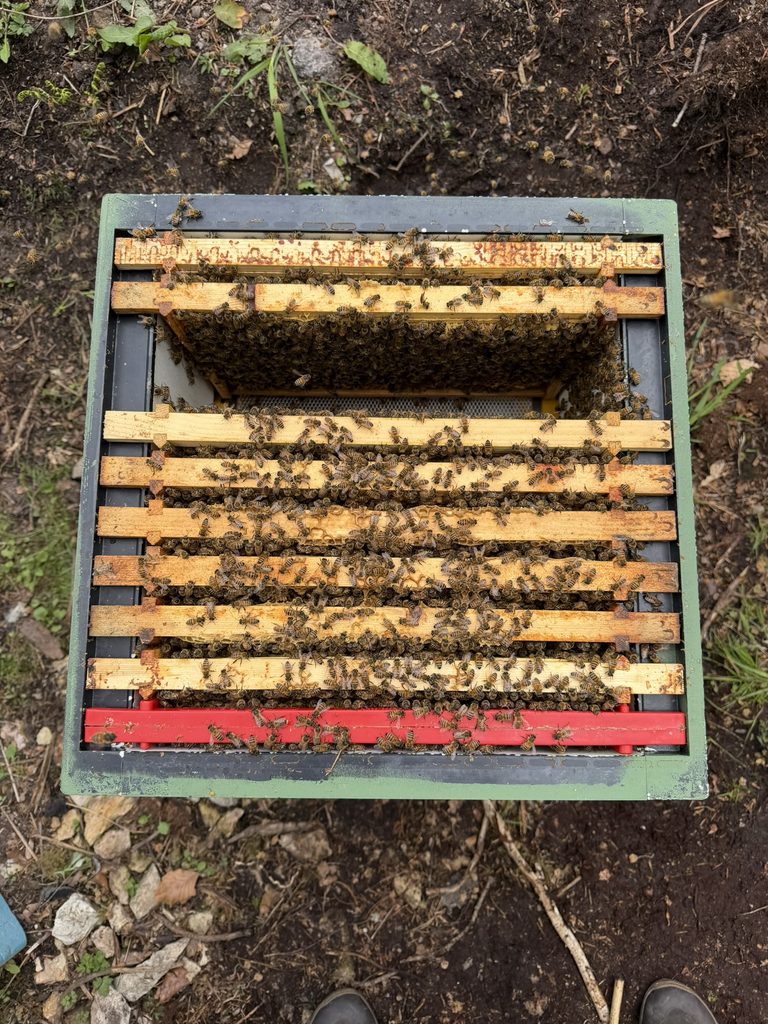
I’m still working on a season-long Demaree system that you can repeat each year using two brood boxes. The awkward bit is getting the right box ready when you need it again.
You also need to think about the treatment history of your comb. If you’ve used a treatment in a brood box, check the product’s restrictions before using that comb for honey you intend to harvest.
One option I’m considering uses three brood boxes per hive, but I don’t like adding that expense if we can make it work with two. Another option is to keep the top brood box for the bees’ stores and never harvest honey from it.
I haven’t finished the two-box system yet. I want to get the reset right before recommending it.
Keep small-scale queen rearing manageable
If you only want to rear a couple of queens, I wouldn’t start by setting up a big queen-rearing operation.
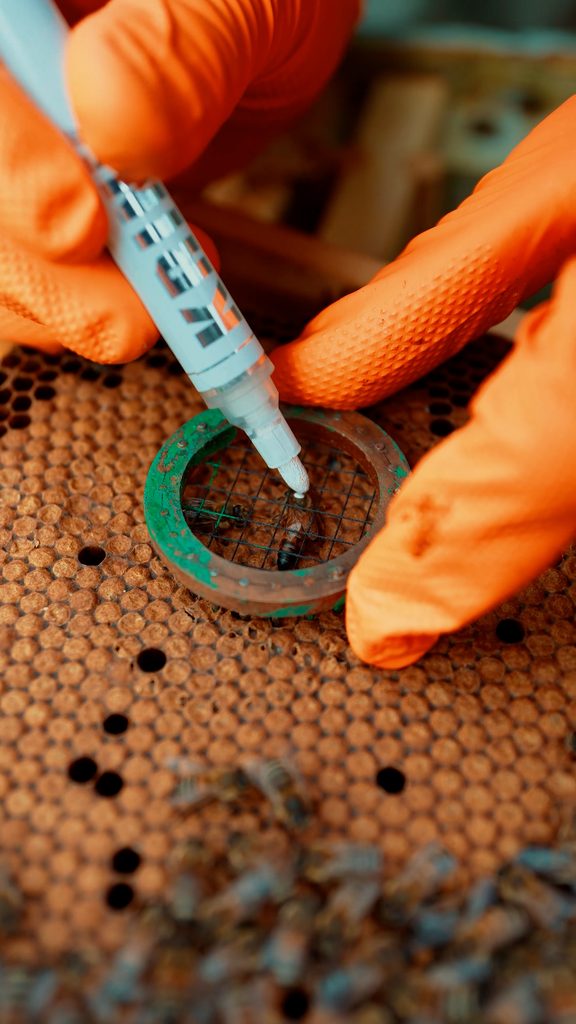
I’m planning to demonstrate the Ben Harden method because it needs fewer resources than a dedicated starter-and-finisher setup. That’s the approach I want to focus on for beekeepers rearing a few queens for their own colonies.
A practical winter beekeeping checklist
Use these questions to decide which jobs need attention and which can wait. You don’t need to open every colony to work through the list.
- Which colonies still feel light despite the feed they’ve had?
- Are those bees taking syrup, or is it sitting untouched?
- If fondant is needed, can you place it directly above the bees with insulation above?
- Have you left an empty, uninsulated feeder where insulation could go?
- If a hive or stand needs moving, have you checked the flying conditions and forecast?
- Is your spare equipment ready for cleaning?
- Have you confirmed the exact instructions for your winter treatment and hive setup?
- What would you change about the timing or strength of next season’s splits?
Keep brief notes. A small colony that struggles now can teach you something useful about how you set up the next one.
Get help with your winter beekeeping decisions
Winter beekeeping raises questions that depend on your colony, equipment and local conditions. If you’d like to bring those questions to the community and join Let’s Talk Bees, find out about HiveQ.