In this guide
- Why I prepare colonies to protect bees from wasp attacks
- How I make entrances easier to defend
- How I plan splits before wasp pressure rises
How to protect bees from wasp attacks
If you want to protect bees from wasp attacks, I start with colony strength and an entrance the bees can defend. That’s how I try to stop wasps killing bees in my own apiaries.
I don’t set wasp traps as routine prevention. I want colonies prepared before wasps start testing them.
Make the entrance easier to defend
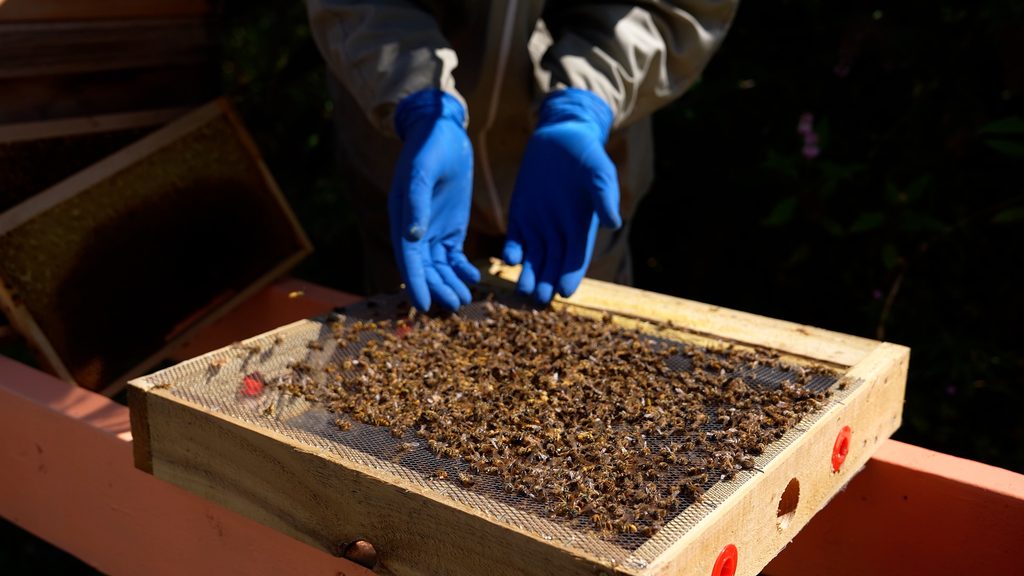
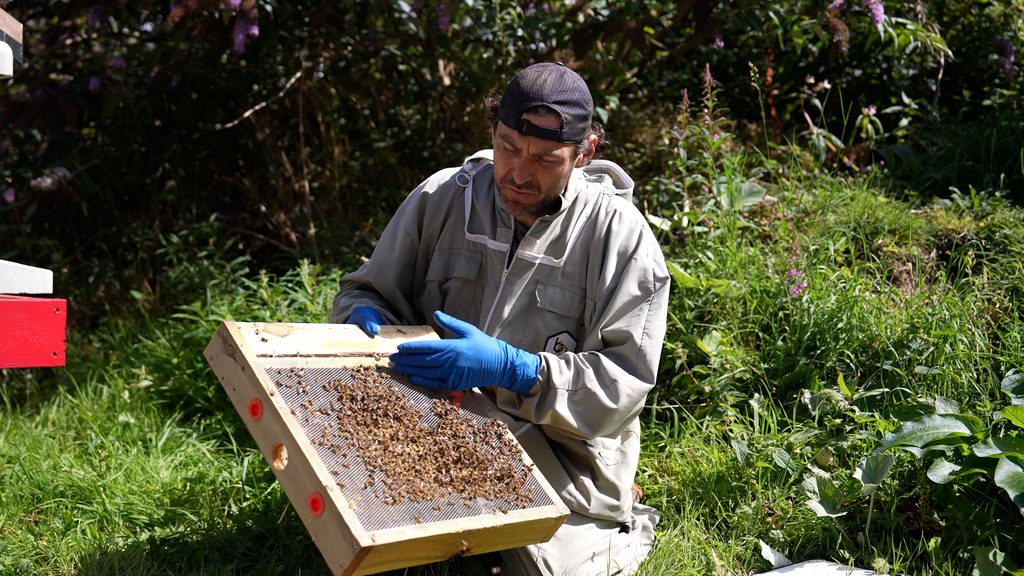
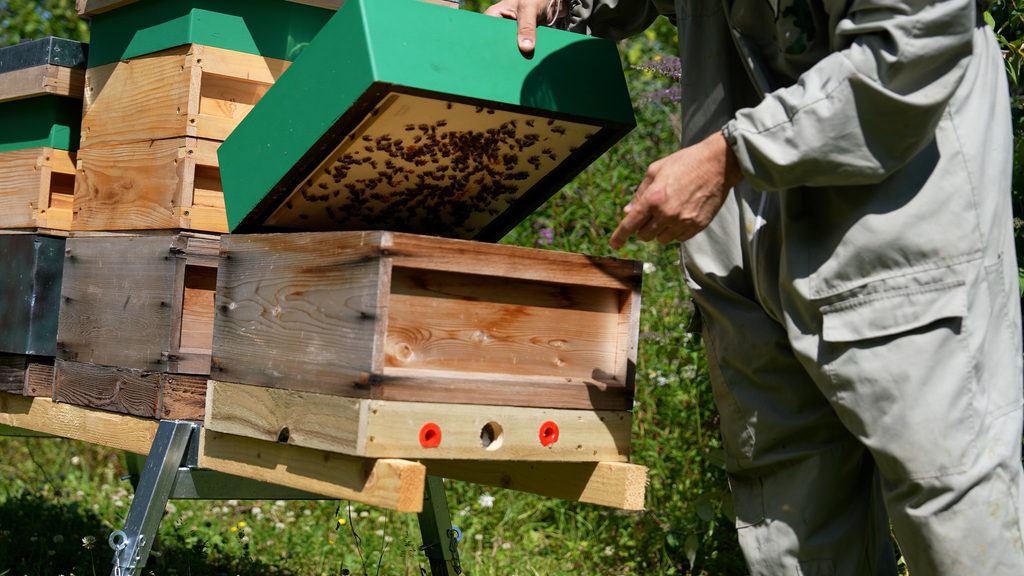
A large open entrance can be hard for a small colony to guard. I favour an underfloor entrance because it gives the bees a route they can defend.
You don’t need to reduce every entrance to a single bee space. I focus on whether that colony can guard the entrance it has.
Plan splits before wasp pressure rises
I try to make splits early enough for them to build before wasps become a problem. Around here, I often see wasp pressure rise in early to mid-July.
If I make a split in May, I might start with one frame of brood, one frame of stores and extra bees. I would rather give it time to build before wasps start testing colonies.
For an August split, I want at least three or four frames of brood and plenty of bees. That’s my approach, not a fixed recipe for every colony.
What I check when wasp activity rises
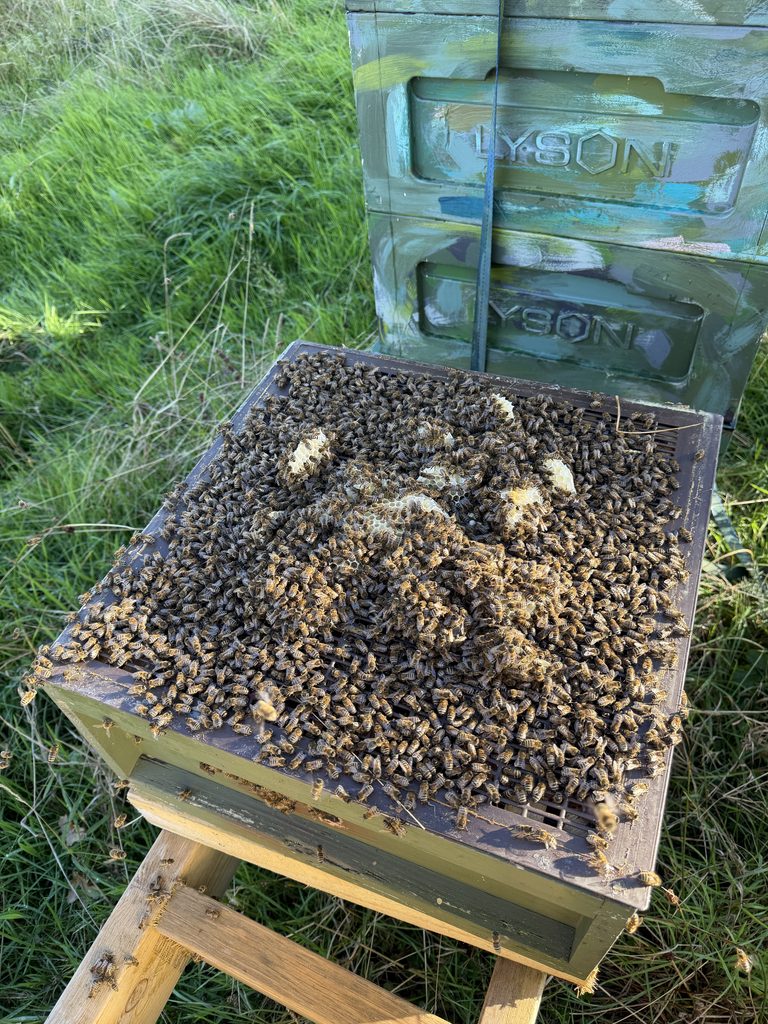
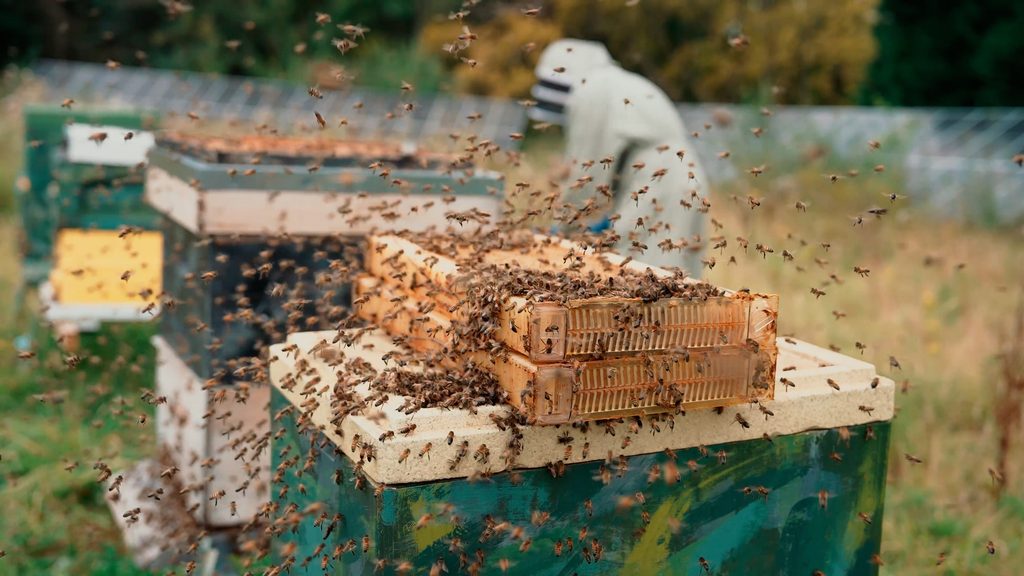
When I see wasps attacking colonies, I pay attention to activity at the entrance and on the frames. I don’t panic at a couple of wasps passing by, but I watch for numbers building and frantic activity.
If I see wasps robbing bees, I check whether the colony is strong and whether its entrance is easy to defend. I don’t assume a trap will fix a weak colony.
A quick check for wasp pressure
- Is the colony strong enough to guard its entrance?
- Is the entrance easy for the bees to defend?
- Was the split made early enough to build before pressure rises?
- If it’s a late split, does it have the brood and bees I would expect?
Where to go next
For more help with wasps, get our Stop the Wasps guide.