Varroa: what it is, why it matters, and how to keep it under control.
This guide covers everything you need to know – what Varroa is, how to spot it, and how to manage it effectively.
- Understand what Varroa is and why it is so damaging
- Learn to spot the warning signs before your colony collapses
- Discover practical control methods that actually work
Managing Varroa is not optional. But with the right approach, it is completely manageable.
What Is Varroa?
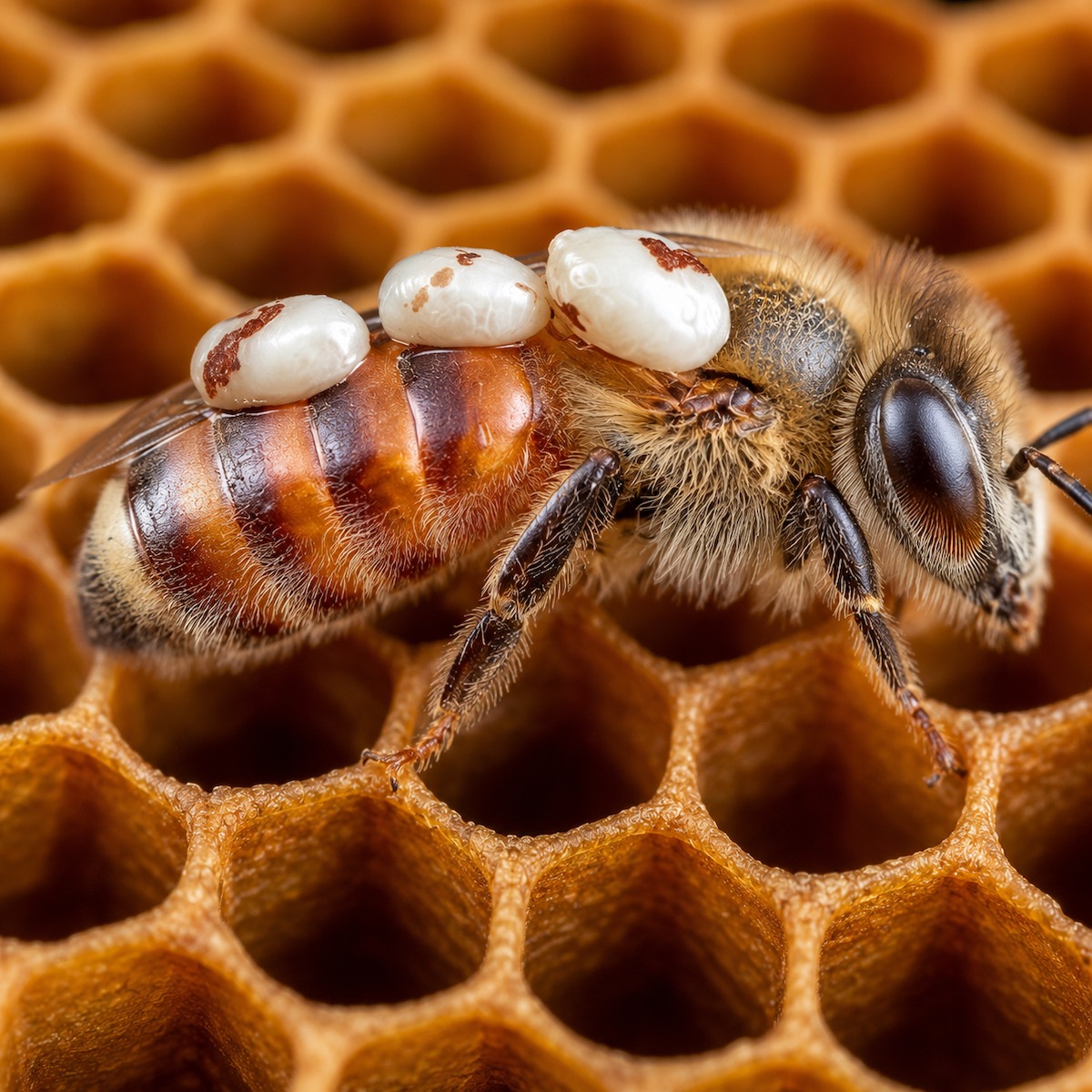
Varroa destructor is a parasitic mite that lives on honey bees. It feeds on developing brood and on adult bees, weakening them and making them vulnerable to disease. Originally a parasite of the Asian honey bee, Varroa has adapted to infest the European honey bee – which has no natural defences against it.
The result is often catastrophic if left unmanaged. The damage Varroa causes goes beyond feeding. It spreads dangerous viruses, most notably Deformed Wing Virus (DWV). Even small numbers of mites can reduce bee lifespans and weaken the colony significantly.
One important fact: every beehive in the UK has Varroa. There are no exceptions. This is not cause for panic – but it does mean that management is something every beekeeper needs to take seriously from day one.
Why Varroa Is Such a Serious Problem
The real danger comes from how fast Varroa reproduces. Mites enter brood cells just before they are capped and reproduce inside them, emerging with the young bee. Throughout the season, mite numbers can grow rapidly and a colony that looked healthy in spring can be on the verge of collapse by autumn.
The viruses Varroa spreads, particularly DWV, cause bees to emerge with crumpled or missing wings, shortened abdomens, and much shorter lifespans. A heavy mite load does not just weaken individual bees – it undermines the entire colony’s ability to function.
Mite levels that feel manageable in June can become critical by August. This is why regular monitoring matters so much: by the time you see obvious symptoms, you may already be behind.

How Varroa Spreads
Varroa mites move easily between bees inside the hive. They also travel between colonies hitching rides on foragers, spreading through robbing, drifting, and swarming. One of the most common ways mites spread over long distances is through the movement of hives by beekeepers, often without anyone realising an infestation is being carried along.
This matters if you are buying bees. Always buy from a supplier who monitors and treats for Varroa. Buying untreated or unmonitored colonies is one of the fastest ways to introduce a serious mite problem into a healthy apiary.
Our Starter Colonies are inspected, treated, and healthy before they leave us. Every colony is checked by Laurence personally before dispatch.
How to Spot the Warning Signs
Knowing what to look for is essential. Colonies suffering from a heavy Varroa load can appear healthy one week and collapse the next. Here are the key signs to watch for during your inspections.
Bees with crumpled or missing wings. This is the clearest visible indicator that mite levels are too high. Affected bees typically have shortened abdomens and look smaller or weaker than healthy workers. If you see more than one or two of these bees on the landing board, act quickly.
Patchy or damaged brood. Look for an irregular brood pattern, with missing or sunken cappings. You may also see small holes chewed into capped cells, (off centre) or brood that looks discoloured, neglected, or partially removed by other bees.
Sudden population drop. If your colony dwindles quickly especially in late summer or early autumn – Varroa should be your first thought. A colony that was strong in July and struggling by September is a clear warning sign.
If you are seeing more than one of these symptoms together, act immediately. Do not wait until your next scheduled inspection.
Practical Control Methods
Managing Varroa requires a hands-on approach. There are two main ways to reduce mite pressure: husbandry techniques and Varroacide treatments. Most effective management programmes use both.
It is worth acknowledging upfront that beekeeping has two broad camps on this subject: those who treat their bees, and treatment-free beekeepers who focus on promoting Varroa Sensitive Hygiene (VSH) traits. Both are valid approaches. At Black Mountain Honey, we treat our bees – it is what works for our operation – and that is the focus of this guide.
Husbandry Techniques
Queen caging and brood breaks. This is one of the most effective non-chemical methods. Confining the queen forces a brood break – once all capped brood has emerged, there are no sealed cells for mites to reproduce in. A follow-up treatment with oxalic acid at this point is highly effective, since mites are exposed on adult bees with nowhere to hide.
Artificial swarming. This naturally separates the queen from the brood and interrupts the mite lifecycle. If you are managing a swarm anyway, it is a good opportunity to time a treatment around it.
Open mesh floors. These allow mites that fall from bees to drop out of the hive rather than re-infesting the colony. The reduction in mite load is modest on its own, but it is a sensible baseline for any hive.
Varroacide Treatments
When used correctly, approved Varroacides can reduce mite levels quickly and significantly. The main treatments available in the UK include:
- Oxalic acid — effective during a brood break. Available as a trickle, spray, or sublimation. Works by contact on adult bees.
- Formic acid — effective against mites in sealed brood as well as on adult bees. Requires careful temperature management.
- Thymol — a naturally derived treatment available in gel form. Works well in warm conditions.
- Amitraz — available as strips. Often used in autumn after honey supers are removed.
Always follow the instructions exactly. Rotate products to prevent resistance building up. You can use two treatments in the same season, but check they are compatible first. Never use homemade or off-label treatments – it is illegal, and it risks harming you, your bees, and your honey.
Want a complete, structured course?
These guides cover the essentials, but if you want to learn beekeeping step by step with video lessons and ongoing support, our course is built for exactly that.
- From complete beginner to confident beekeeper in a structured, logical order
- Video lessons built from decades of hands-on experience
- Learn at your own pace with lifetime access
- Pays for itself with just one extra super of honey from a single hive
Integrated Pest Management (IPM)
The most effective Varroa control strategy combines regular monitoring, husbandry techniques, and treatments – used together at the right time of year, without methods that clash with each other. No single approach works reliably on its own.
A practical seasonal IPM plan looks something like this:
- Spring — monitor mite levels using a sticky board or alcohol wash as the colony builds up
- Summer — use husbandry techniques such as brood breaks and queen caging to keep mite numbers in check
- August — take off the honey, apply a Varroacide treatment, feed the colony to build up winter stores
- Winter — apply an oxalic acid treatment when the colony is broodless for maximum effectiveness
Timing matters. The mid-August cutoff is a good rule of thumb for most of the UK. Get this right and your colony goes into winter in far better shape.
Your Legal Responsibilities
In the UK, beekeepers are legally required to report the presence of Varroa. In practice, BeeBase – the National Bee Unit’s online registration system – pre-populates this for registered apiaries, because every apiary in the UK is assumed to have Varroa. All registered beekeepers should be on BeeBase.
If you use Varroacide treatments, you must keep records of:
- The product name
- The date of treatment
- The batch number
- The dosage applied
These records must be kept for five years. Only purchase approved treatments, and never apply them while honey supers are on the hive unless the product label specifically permits it.
The Right Bees Can Help
Some bees are bred to detect and remove Varroa-infested brood naturally. Our VSH Queens carry Varroa Sensitive Hygiene traits meaning they actively help manage mite levels through their own behaviour. It is not a substitute for treatment, but colonies with strong VSH traits typically carry lower mite loads and respond better to management overall.
If you are starting out or looking to requeen, it is worth considering. Browse our Queens – all bred for calmness, productivity, and disease resistance, and every one has Laurence’s personal approval before it leaves us.