In this guide
- What I found inside a hive that looked untouched for years
- Why the frames and boxes were so difficult to inspect
- Which signs made me cautious about moving the colony
- How I arranged for the bees to be collected and moved somewhere safe
An abandoned beehive can still hold a live colony, stores and old treatment material. I opened one that looked as if it had been left for years. The frames were stuck together, the spacing was poor and the brood showed worrying signs. I decided not to bring the bees into my own apiary. I arranged for another beekeeper to collect them and move the colony somewhere safe.
This is the account of one unusual inspection, not a complete rescue or treatment plan.
What I found inside an abandoned beehive
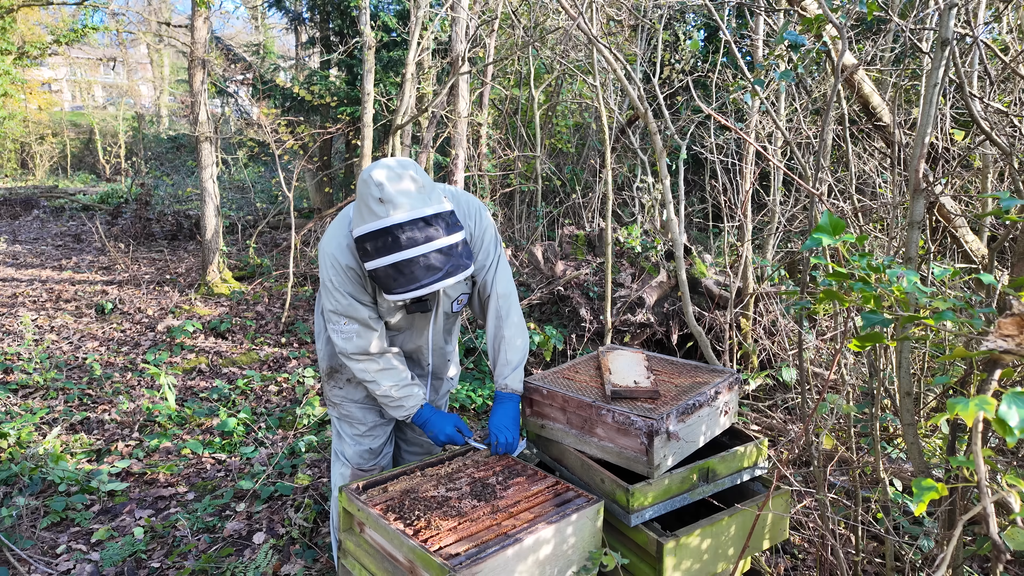
The hive stood in woodland. Its roof and crown board were rotten, and damp had worked its way inside. From the condition of the equipment, I estimated the hive had been untouched for at least ten years. That was a guess, not a date I could prove.
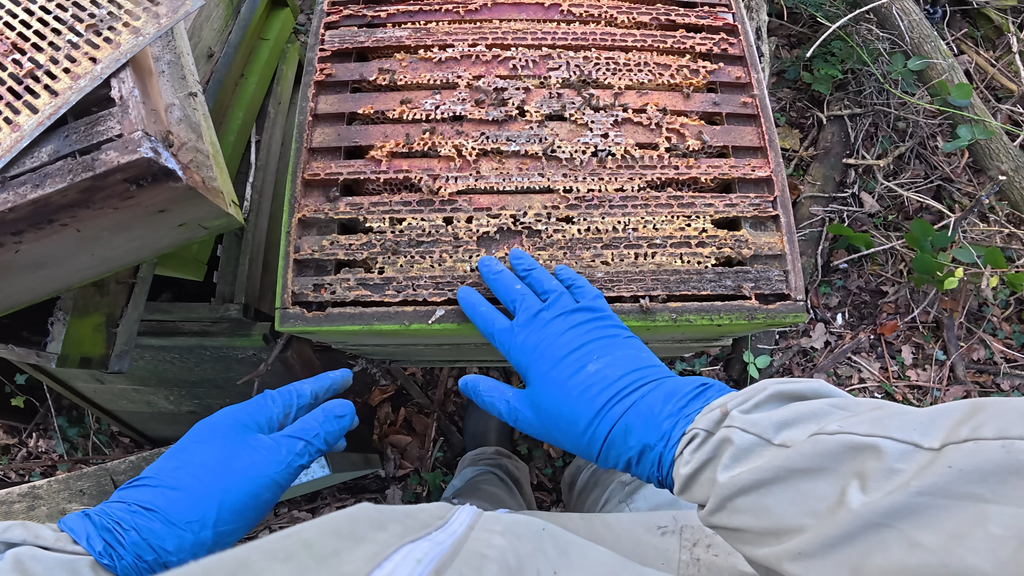
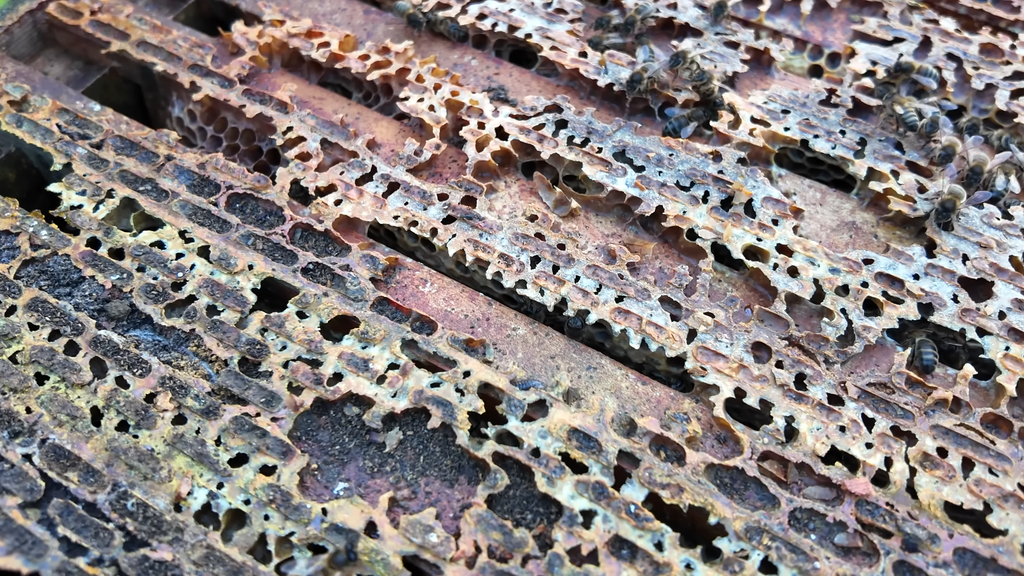
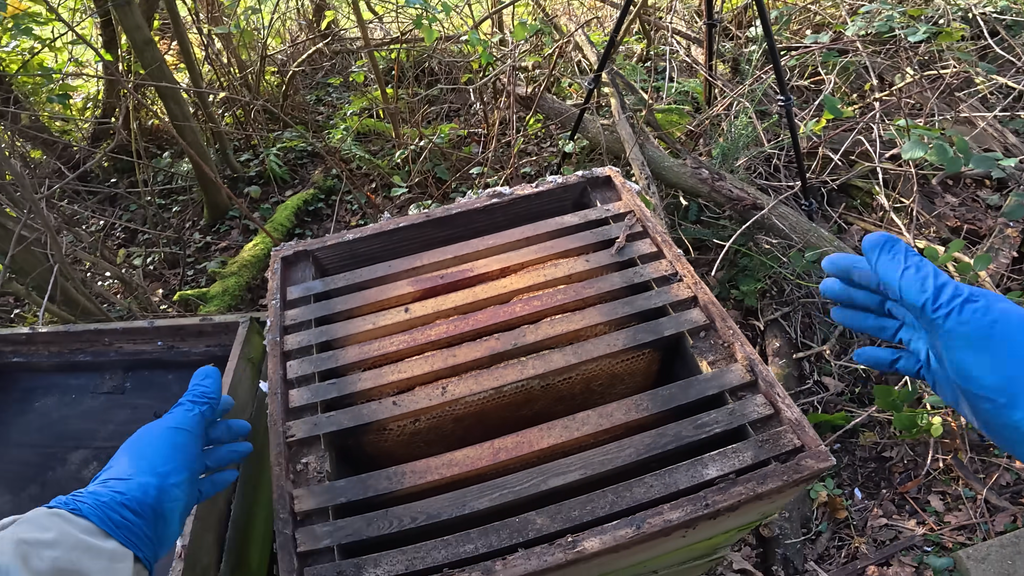
Some frame positions were empty. Propolis had sealed the queen excluder and joined the boxes and frames together. The comb was old, dark and fragile, with parts built out in unusual shapes.
I also found honey stores and old treatment trays in the boxes. That matters. Honey near a treatment is not something to assume is safe to eat. Check the exact product instructions and any restrictions before using it.
Why the abandoned hive was difficult to inspect
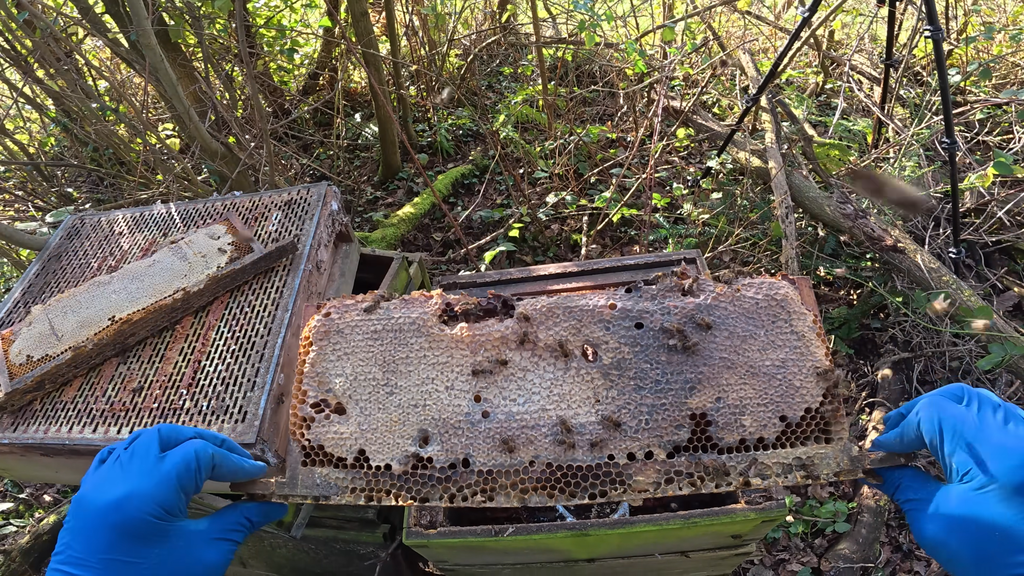
The frames were badly spaced and stuck together with propolis and wax. Some comb had been built across the gaps, so pulling one frame could shift the next one too. In places, several combs had joined into a tangled mass.
I had left my hive tool at home. I improvised with a Leatherman, which was a mistake and not a tool setup I recommend. A proper hive tool is essential when frames are stuck. Even then, old comb can break, so I worked carefully and tried to disturb the colony as little as I could.
The hive also had wide spacers in the brood box. In my view, that poor spacing helped explain why the comb was so difficult to inspect. It was a striking example of how years of damage, missing frames and irregular comb can make a simple inspection difficult.
The signs that made me cautious about moving the colony
I found patchy brood, dead bees with their tongues extended and adult bees with deformed wings. I read these as signs of very heavy Varroa pressure. They were serious warning signs, but this inspection was not a confirmed diagnosis of every disease.
I did not see clear signs of European or American foulbrood in the frames I checked. That did not prove either disease was absent. The colony’s history was unknown, and the signs in front of me were enough to make me cautious.
If you’re unsure how to interpret signs in a colony, don’t rely on a single visual clue. Our guide to managing Varroa explains the wider context. For treatment, follow the current instructions for the approved product you use. This account does not give a treatment recipe.
Why I left the colony for a safe handover
There were many bees and plenty of stores, but that did not make the colony a safe one to move into my apiary. I was concerned about the signs of heavy Varroa pressure and could not rule out other disease risks from a visual inspection alone.
Taking an uncertain colony home could put other colonies at risk. I put the hive back together as well as I could, then arranged for another beekeeper to collect it and move the colony somewhere safe for management. I did not take the bees into my own apiary.
An old hive can also contain frames and equipment that need careful handling. If you’re dealing with a colony loss or uncertain kit, our guide to starting over after hive losses covers the decisions to make before reusing equipment.
What to check before handling a neglected beehive
An abandoned hive inspection can quickly become messy if you open it without a plan. Before you start, consider these points:
- Get permission to access the site and agree what will happen to the hive and bees.
- Decide where the colony could go before moving or dismantling anything.
- Wear suitable protective clothing and take the right hive tool. I forgot mine, and that made a difficult job harder.
- Expect frames to be stuck, comb to be damaged and equipment to be damp or rotten.
- Look carefully at the brood and adult bees, but treat your observations as clues rather than a confirmed diagnosis.
- Check for old treatment material before making any decision about honey.
- If you suspect a serious disease or are unsure what you are seeing, get suitable beekeeping advice before moving the colony or sharing equipment.
The current colony may not have been there for as long as the hive itself. I suspected these bees had arrived more recently, but I could not know their full history from one inspection.
Common questions about an abandoned honey bee colony
Can bees live in an old hive for years?
A colony can occupy old equipment, but the state of the hive does not tell you how long the current bees have been there. In this case, the age of the equipment was only an estimate. I could not confirm when the colony moved in.
Should I take honey from an abandoned hive?
Don’t decide by appearance alone. I found old treatment trays near honey stores, so I would check the product instructions and restrictions before using any honey.
Can I move an abandoned colony into my apiary?
That depends on the colony’s condition and history. In this case, the brood and adult bees gave me enough cause for concern that I arranged a separate handover instead. If you are unsure, seek advice before bringing an unknown colony near your other bees.
Where to go next
If Varroa is your main concern, read our guide to managing Varroa in a honey bee colony.