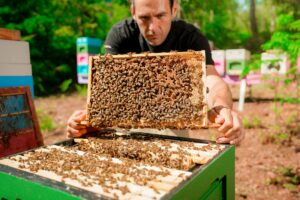
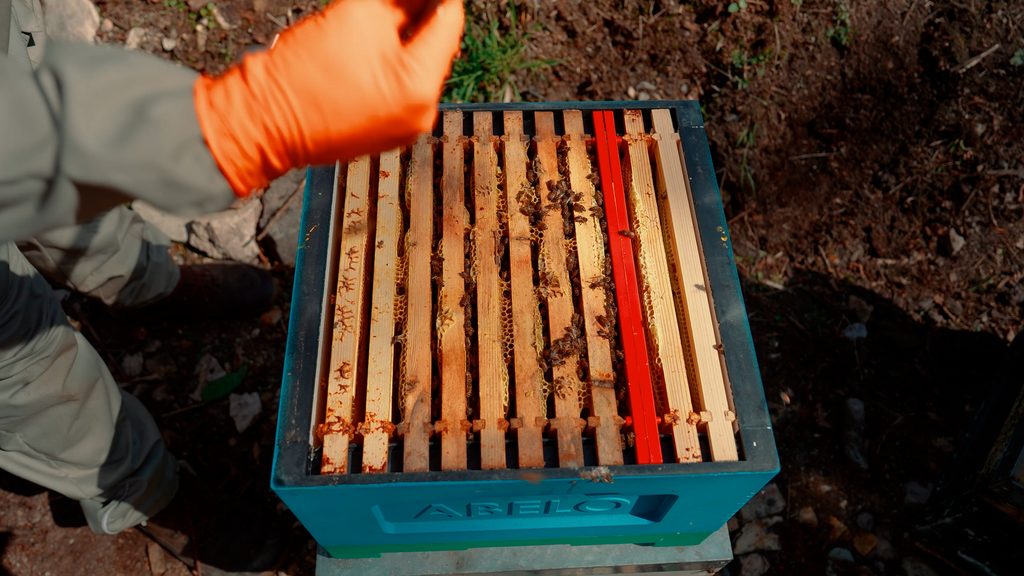
I add the first super when bees are covering about 80% of the frames in the brood box. In a ten-frame box, that’s eight frames of bees.
If you’re wondering when to add a super to a beehive, that’s the starting point. Check how much of the box the bees are using, look at the flow and the weather, and give them room before the brood box becomes packed.
For a garden hive you’re inspecting every week, I keep it simple. Add one super at a time and let the colony grow into it.
When to add a super to a beehive
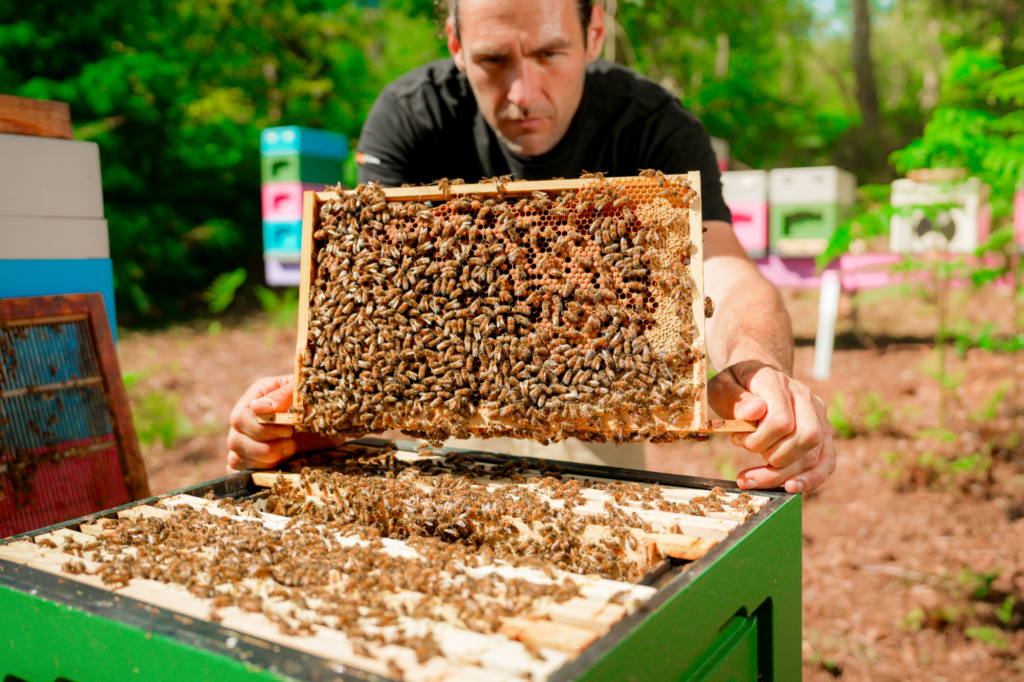
When you open the hive, look at how many frames the bees are covering. You’re looking for a colony that’s building up well and getting close to filling its brood box.
I work on roughly eight frames covered with bees in a ten-frame box. In an eleven-frame box, you’re looking at eight or nine. Keep an eye on the outer frames so you’ve still got some room before everything is full.
I also look at the conditions around the colony. Is there nectar coming in? Have they got adequate stores? Is the weather warm enough for them to take on the extra space?
At one of my river apiaries, I added supers when the colonies were covering around 80% of their frames. It was a warm site, the forecast was good and the bees had enough stores. They were ready for the extra room.
Why I don’t wait until the brood box is full
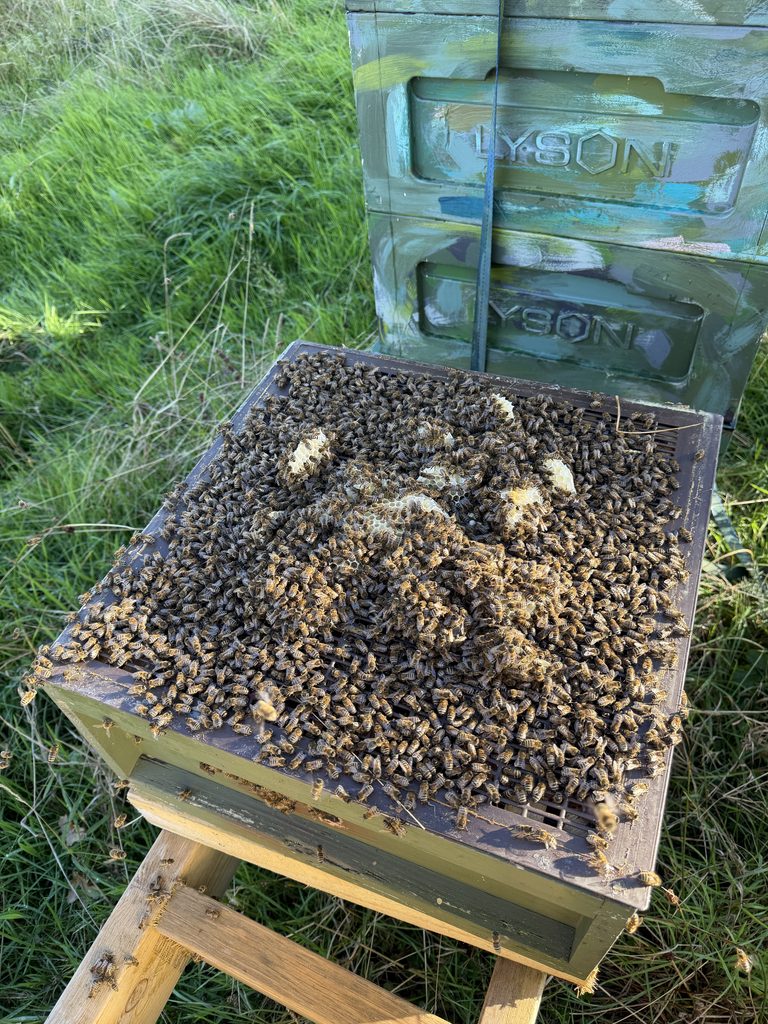
If you wait until every frame is occupied, the outer frames are often already full of honey. As more nectar comes in, those stores can spread inwards and restrict the brood nest.
The queen has less room to lay, the colony gets congested and you’re increasing the risk of swarming.
That’s why I put the super on before the brood box is completely jammed. I want the bees to have somewhere to put incoming nectar while there’s still room below.
Giving them space at the right time is part of managing that pressure. For the wider job, have a look at my guide to stopping bees swarming.
Drawn comb or foundation
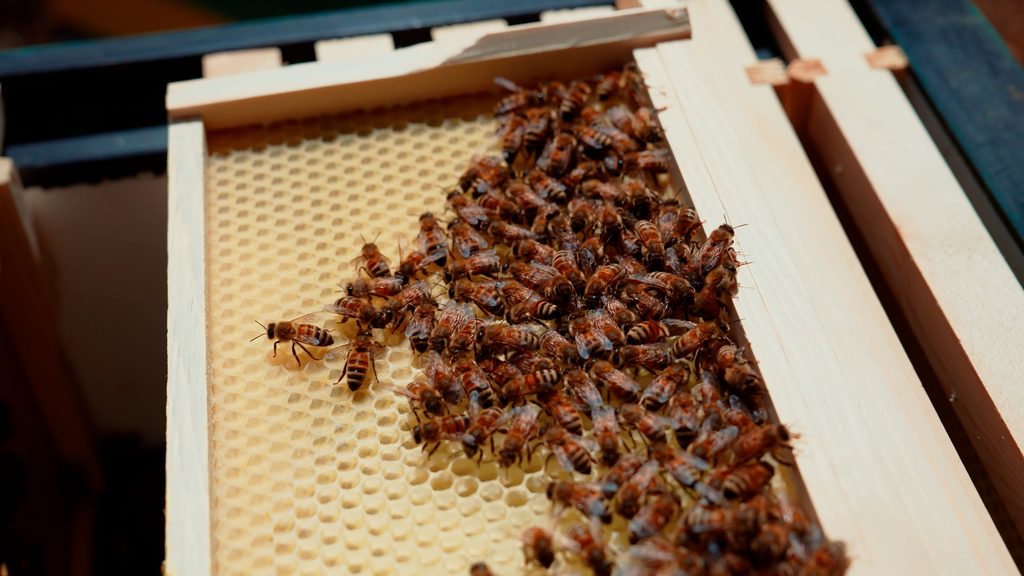
Drawn comb makes adding the first super much easier. The bees can move straight onto it, and they much prefer it to a box full of foundation.
If you’ve got enough drawn comb to fill the super, use it. If you’ve only got one or two drawn frames, put them in the middle. Even a partially drawn frame helps attract the bees upwards, then they can work out towards the sides.
If all you’ve got is foundation, give them a super when there’s a nectar flow to support drawing it. Building that comb is another job for the colony.
Bees not moving into the super
The first thing I check is whether there are enough bees below. It’s easy to put a super on, come back a week or two later and wonder why they’ve barely touched it.
If the brood box still has plenty of space, the bees may have little reason to move upstairs. Check the strength of the colony and whether nectar is coming in before expecting them to draw a whole box of foundation.
If the outer brood frames are honeybound, I bruise the capped stores with a hive tool before putting the super on. That encourages the bees to move those stores upwards.
Should you feed to get the comb drawn?
I prefer the bees to draw their supers on a natural nectar flow. I’m not a fan of feeding with honey supers on.
You can use small amounts of syrup to encourage comb building, but you need to watch closely that it’s being used to draw comb rather than stored. With the way I run my apiaries, that level of checking isn’t practical.
For me, the straightforward option is to add the super for the nectar that’s coming in. If you’re deciding whether a colony needs feed, my guide to when and what to feed your bees will help with that decision.
How to add the first super
Have the box ready before you open the hive. Put any drawn comb in the middle and check that the frame spacing is right.
Then work through the job:
- Check that bees are covering around 80% of the brood-box frames.
- Look at their stores, the weather and the nectar flow.
- Fit the queen excluder above the brood box.
- Put the prepared super on top.
- Check how they’re using it at your next weekly inspection.
Keep watching the colony as it grows. You’re aiming to give it space while there’s still room to expand.
When to add a second super
I use the same approach for the next box. Once the bees are occupying around 80% of the first super’s frames, I add another.
If your bees are in the garden and you’re checking them every week, one box at a time is a sensible way to manage them. The space grows with the colony.
I sometimes put two supers on at an out-apiary that’s further away. During warm weather and a strong flow, that extra room buys me time if they fill the first box before I can return.
It does give the bees a larger space than they immediately need. That’s a trade-off I make for that site. For a hive you visit weekly, I’d stick with adding one super at a time.
Useful kit for your inspections
The decision to add a super comes from looking inside the hive. A smoker, gloves and somewhere to keep your inspection notes are useful additions to your kit.
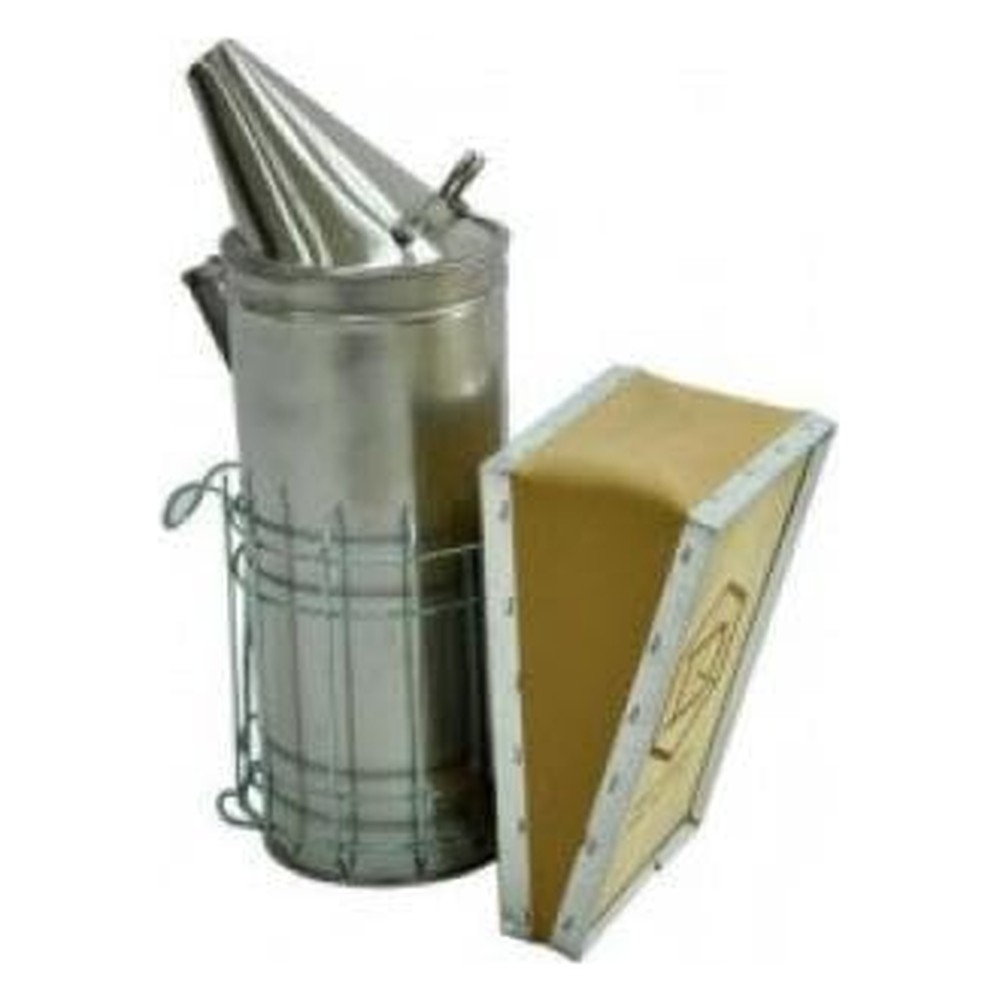
The Dadant stainless steel smoker has an 11 cm chamber, a heat guard and a hook for hanging it on the hive.
Recommended
Dadant Stainless Steel Bee Smoker, 11cm
A professional Dadant-style smoker in stainless steel with an 11cm chamber, real leather bellows, heat guard and a hook to hang it on the hive.
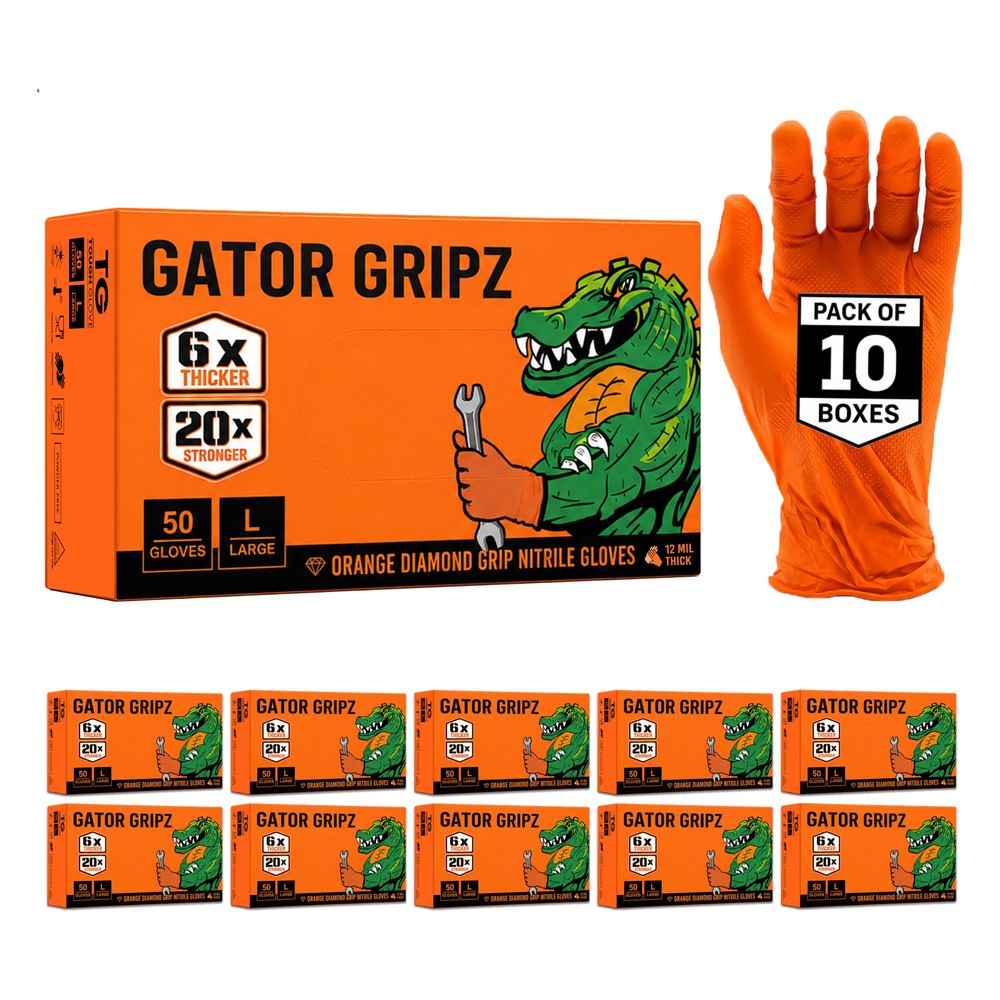
These Gator Gripz nitrile gloves have a textured grip and thicker fingertips. This pack is size large, so check the sizing before ordering.
Recommended
TG Tough Glove Gator Gripz Orange Nitrile Gloves, Large (500 Pack)
Extra-thick nitrile gloves with a diamond-texture grip and thicker fingertips. 10 boxes of 50 in size large, so you won’t run out mid-season.
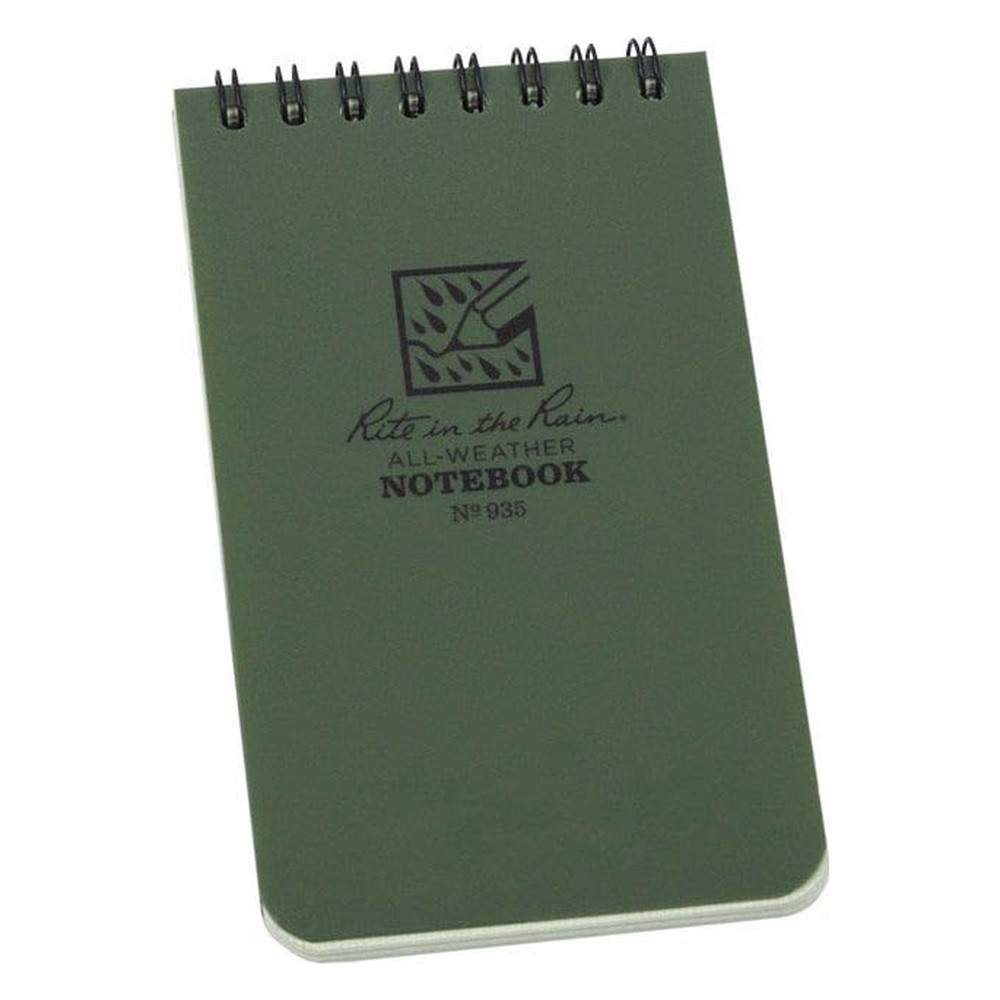
A Rite in the Rain pocket notebook gives you somewhere to record how many frames the bees cover and when you added each super. It’s handy to have those notes with you at the next inspection.
Recommended
Rite in the Rain All-Weather Top-Spiral Notebook, 3 x 5in
A pocket notebook with waterproof paper you can write on in the rain. 100 pages, top spiral bound. Ideal for hive inspection notes in any weather.
Keep your next inspection simple
When you’re deciding when to add a super to a beehive, start with the bees in front of you. Around 80% of the frames covered, a colony building well and nectar coming in are the signs I’m looking for.
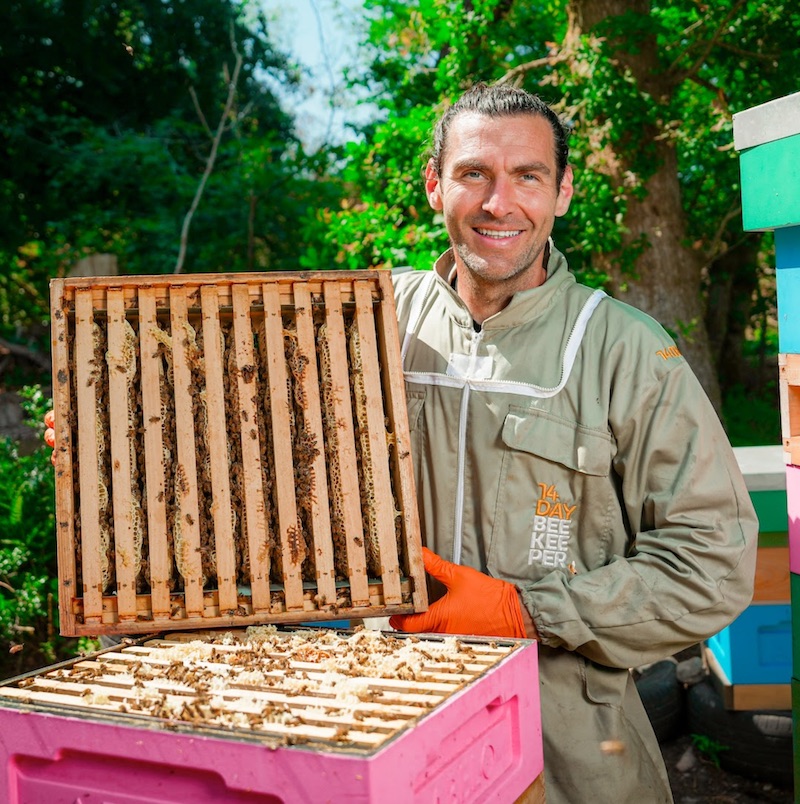
If you’d like help making these decisions through your first seasons, come and join 14 Day Beekeeper.
Some links on this page are affiliate links. If you buy through them, we may earn a small commission at no extra cost to you.