This guide explains what causes bee aggression, how Buckfast genetics change the picture, and what to realistically expect when you make the switch.
- One queen change can transform your colony’s temperament
- Most beekeepers see a real difference within 3 to 4 weeks
- Calmer bees mean fewer stings, more confidence, and a hobby you actually enjoy
When Beekeeping Stops Being Fun
In 2016, Laurence was seriously considering giving up beekeeping. His colonies were full of local mongrel bees, and every inspection was an ordeal. The bees would come up off the frames the moment the hive was opened, follow him across the garden, and sting repeatedly. He dreaded going anywhere near them.
It’s a situation many beekeepers recognise. You start the hobby full of enthusiasm, get your first colony, and spend the next season wondering whether you’ve made a terrible mistake. The bees are nothing like the books described. Inspections feel dangerous rather than enjoyable. You start finding reasons to put them off.
This matters more than it might sound. Missing inspections because you’re nervous leads to missed swarm cells, undetected disease, and colonies that get well and truly away from you. Aggressive bees don’t just make beekeeping unpleasant. They actively make you a worse beekeeper, because you stop doing the things that keep a colony healthy.
The good news is that there’s a practical solution. And it works faster than most people expect.
What Actually Makes Bees Aggressive?
Not all aggression is the same. Some colonies are defensive because they’ve been disturbed, because the weather is poor, or because there’s a wasp problem nearby. That kind of aggression is situational and temporary.
But if your bees are consistently aggressive across multiple visits and in decent conditions, genetics are almost certainly involved. Local mongrel bees in the UK often carry genetics from European wild bees that evolved long before modern beekeeping. Those bees developed aggression as a survival mechanism. They also developed a strong tendency to swarm frequently, which gave them a brood break that reduced Varroa pressure naturally.
The problem is that traits which helped wild bees survive make managed beekeeping genuinely difficult. You end up with colonies that are hard to inspect, prone to swarming, and often carrying higher disease levels as a result of that cycle. The bees aren’t doing anything wrong by their own standards. They’re just not suited to a managed apiary.
Changing that means changing the genetics. And the most reliable way to change the genetics is to change the queen.
The Experiment That Changed Everything
Faced with the choice of quitting or trying something different, Laurence ordered a couple of F1 Buckfast queens in 2016. He introduced them into two of his most difficult colonies and waited to see what happened.
The results came faster than expected. Within 3 to 4 weeks of introduction, there was a noticeable improvement in temperament. The bees were still largely the same workforce, because worker bees live for around 4 to 6 weeks during summer. But the tone of the hive had already started to shift.
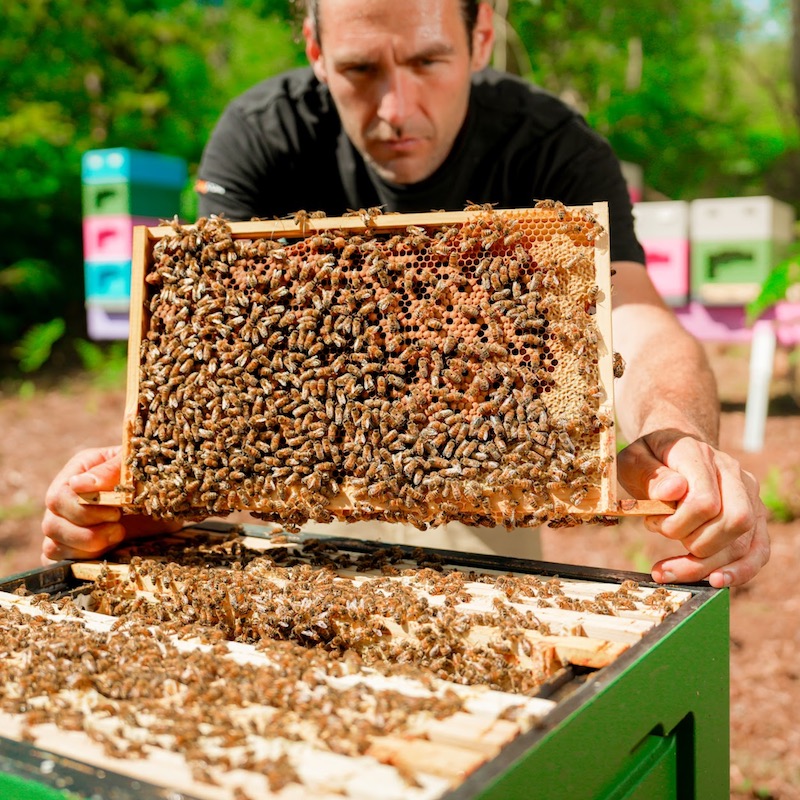
By 6 to 8 weeks, the transformation was dramatic. Colonies that had previously been unworkable were calm. The bees stayed on the frames during inspections. They didn’t rise up off the comb. They didn’t follow him across the garden. They stayed where they were and got on with things.
What surprised Laurence most was something he hadn’t been expecting at all. Those two colonies didn’t just behave better. They were noticeably bigger and stronger than his other hives, packing the brood nest with frames of brood and building up population far faster than anything else in his apiary.
The following spring, he requeened every colony he had. He hasn’t looked back since.
How Quickly Does Temperament Really Change?
This is the question we hear most often from beekeepers who are considering requeening, and the honest answer is: faster than most people expect.
Worker bees have a lifespan of roughly 4 to 6 weeks during summer. When a new queen is introduced and starts laying, the first new bees to emerge from her eggs appear around 21 days later. After another 6 weeks, the colony’s makeup has shifted significantly. The bees raised by the old queen are dying off. The bees carrying the new queen’s genetics are taking over.
So within 6 to 8 weeks of a successful queen introduction, you’re working with a fundamentally different colony. The genetics have changed. The temperament follows.
There’s one caveat worth knowing. The first couple of weeks after introduction can be slightly unsettled. The colony is aware that something has changed, and some colonies respond to that with a period of heightened defensiveness. Don’t judge the requeening by those first inspections. Give it the full 6 to 8 weeks before drawing any conclusions.
The Honey Bonus Nobody Talks About
When Laurence requeened those first two colonies, he wasn’t thinking about honey production. He just wanted bees he could actually work with.
But when the season ended and he counted the supers, the numbers were striking. Before requeening, he’d been getting roughly one super of honey per colony in a good year. Those two Buckfast colonies produced 4, 5, or 6 supers each. That’s an increase of around 300%, from bees he’d been on the verge of giving up on.
The reason isn’t hard to understand in hindsight. Calmer colonies let you inspect more confidently. You spend longer in the hive, which means you spot problems earlier and manage swarming more effectively. Keeping forager numbers high during the main nectar flow has a direct impact on how much honey you bring in. And Buckfast genetics are genuinely selected for productivity, not just temperament. These aren’t just calm bees. They’re productive calm bees.
Want a complete, structured course?
These guides cover the essentials, but if you want to learn beekeeping step by step with video lessons and ongoing support, our course is built for exactly that.
- From complete beginner to confident beekeeper in a structured, logical order
- Video lessons built from decades of hands-on experience
- Learn at your own pace with lifetime access
- Pays for itself with just one extra super of honey from a single hive
Why We Recommend Buckfast Queens
Laurence has now worked with Buckfast colonies for nearly a decade and has kept other lines alongside them for comparison. His conclusions have stayed consistent throughout.
Buckfast queens deliver reliable, repeatable results across the three traits that matter most to UK beekeepers: temperament, honey production, and disease resistance. They’re also significantly less likely to swarm than unimproved local stock. They will still try to swarm, and you absolutely still need to do your weekly inspections during swarming season. But the frequency is in a completely different category from what most beekeepers experience with mongrel genetics.
The disease resistance is worth expanding on. Buckfast bees were originally developed by Brother Adam at Buckfast Abbey in Devon, and selective breeding has continued to refine the line ever since. Part of that selection has focused on tolerance to Varroa and other pathogens. This doesn’t mean you stop treating. You don’t. But colonies with strong genetic disease resistance give you more margin for error, and that matters when you’re managing multiple hives.
For beekeepers who want to go further on Varroa management, we also stock VSH (Varroa Sensitive Hygiene) queens. These bees actively detect and remove Varroa-infested brood cells, adding a layer of natural resistance that works alongside your treatment programme.
Choosing the Right Queen for Your Hive
All four of our queen lines are rated highly for temperament. The right choice depends on your setup, your location, and what you’re trying to achieve.
Signature
Recommended
The queens most of our customers choose and come back for year after year. These represent the typical Black Mountain Honey experience: proven performance, calm temperament, and strong productivity.
UK queens
Bred and mated in secluded UK breeding stations by trusted family producers we’ve worked with for years. Fully acclimated to British weather, proven to thrive through wet summers and cold winters. The natural choice if you want locally raised bees.
VSH
Bred for Varroa Sensitive Hygiene. These bees actively detect and remove Varroa-infested brood. A smart choice if you want bees that help manage mite pressure naturally, without relying solely on treatments.
Obsidian
Our darkest line, and a favourite for anyone who loves a bit of character in the hive. They fly in cooler conditions, produce huge amounts of wonderfully fragrant propolis, and stay lovely and calm to work. A brilliant pick for an apitherapy setup.
Not sure which line is right for you? Read our guide on Which Queen is Right for My Setup or get in touch and we’ll help you decide.
What to Expect After Requeening
Requeening is straightforward, but it does require patience and a methodical approach. The queen arrives in a travel cage with attendant bees and a fondant plug. The colony chews through the fondant to release her, which gives them time to accept her scent before she’s free in the hive. Don’t be tempted to release her manually. It rarely ends well.
Once she’s laying, you’ll see eggs within a few days. By day 21, the first new bees will emerge. Over the following 6 weeks, the colony transitions from the old queen’s genetics to the new queen’s genetics. Temperament improves as that transition progresses.
Your job during this period is to inspect regularly and resist the urge to judge too soon. The colony may be slightly unsettled in the first couple of weeks. That’s normal. By week eight, you should have a clear picture of the new colony’s character.
All our queens ship via Royal Mail Special Delivery with next-day delivery to most UK addresses. You can order up to our 4pm cut-off and your queens will be dispatched the same day, arriving before 1pm the following day. Each queen comes in a secure travel cage with attendant bees, a fondant plug, and a QR code linking to our full introduction guide.