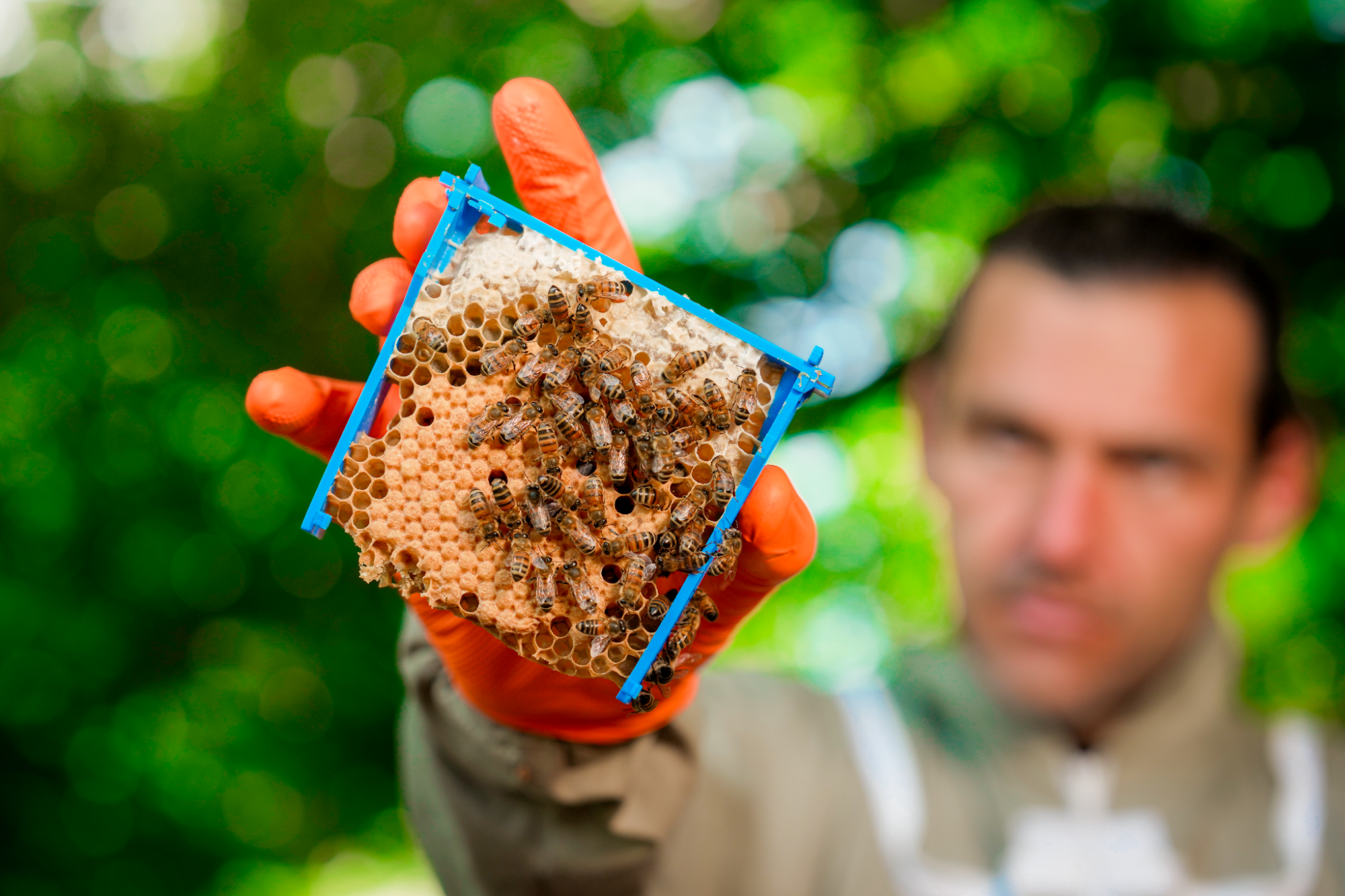
Buckfast bee breeding starts with a question you can ask in your own apiary. Which colony would you actually want more of?
The one with the most honey is tempting. So is the lovely calm colony you look forward to opening. But would you still choose it if it struggled with disease, needed constant attention or failed before spring?
My guest, Buckfast breeder Lutz Eggert, puts health at the centre of that decision. I want calm bees at Black Mountain Honey, but calmness means very little if the colony isn’t healthy. Once you start thinking that way, choosing your best bees becomes a much more useful exercise.
Buckfast bee breeding starts with the traits you need
Lutz describes Buckfast as a breeding idea. His focus is on selecting useful characteristics, testing them and improving the next generation. He doesn’t treat the name as a promise that every line will behave identically.
That’s worth remembering when you’re choosing bees. What do you need them to do? If your hives are in a garden, temperament may matter enormously. If you’ve got limited time, a colony’s tendency to swarm will be high on your list. A honey producer will also want bees ready for the local nectar flow.
Those priorities can pull in different directions. I can tell Lutz that calmness comes first, then immediately add that I don’t want brood problems either. So health was really the starting point all along.
For Lutz, the useful question is whether a line fits the job and the place. He contrasts Brother Adam’s focus on a late heather crop with breeders who need strong colonies for spring honey. The selection priorities are different, even though both are working with Buckfast bees.
His own selection includes how colonies respond when forage stops. He wants bees that adjust their brood rearing to the conditions he works in. Another beekeeper may need an earlier build-up for pollination or a particular crop.
If you’re comparing queen bees, ask what the breeder selects for. The name alone won’t answer whether those bees suit your apiary and the way you want to manage it.
Judge your best colony over the whole season
I understand the excitement of opening a hive and finding it packed with honey. It’s very easy to decide, there and then, that you’ve found your breeding queen.
Lutz wants a longer view. He looks at what happens after the crop comes off, how the colony finishes the season and whether it stays healthy. An impressive harvest is one part of his assessment.
He also relies on feedback from beekeepers working with daughter queens in different places. He compares their experiences with the same lines, including colonies he keeps himself. That helps him judge whether a result is repeated across a group or belongs to one exceptional colony.
You can use that way of thinking without running thousands of queens. Look back through your records. Was your favourite colony consistently good, or are you remembering one particularly enjoyable inspection?
Lutz values the colonies that get on with their work without constantly demanding attention. They can be easy to overlook beside a spectacular honey producer. Yet a colony that stays manageable and finishes the season well deserves a place in your assessment.
I also want to be honest about the poor performers. If a colony is horrible to handle, keeping it because it makes honey leaves that problem in the apiary. Selecting better bees means deciding which characteristics you want to keep, and which you want to stop carrying forward.
Give the drones some attention too
Most people start with the queen. Find your best colony, raise daughters from her and hope for more of the same.
Lutz puts a great deal of work into the drone side. At his mating station on Rügen, he describes using the location and arrangements with nearby beekeepers to manage the drone influence. That control is central to his breeding work.
Your back garden is a different situation. You won’t have the same control over mating, and you shouldn’t expect the same predictability. But Lutz’s suggestion for ordinary beekeepers is to start noticing which colonies are producing drones.
He favours encouraging drone production from colonies with characteristics he wants, while reducing the contribution from poor performers. He gives the example of adding drone comb to a good colony. He also stresses that choosing good drone colonies takes work.
That appeals to me because it’s easy to celebrate one good queen while ignoring an aggressive colony behind you. If you want to improve your bees, think about both sides of that decision.
Start by learning to read the colonies properly. Lutz repeatedly comes back to that. You need to recognise health, temperament and seasonal behaviour before deciding what deserves to influence the next generation. Talk to neighbouring beekeepers about their plans too, rather than treating your apiary as though it exists on its own.
Keep Varroa tests and breeding trials in perspective
Lutz uses hygienic-behaviour testing as part of his selection work. He describes looking at how colonies remove damaged brood, including through a pin-killed brood test.
His warning is that one result gives you a very small view of the colony. He compares resistance to a film, with a single test providing one image. He wants to see what happens over time, alongside the other parts of his assessment.
That distinction matters if you’re excited about breeding Varroa-resistant bees. Lutz doesn’t present one successful pin test as proof that a colony can manage Varroa on its own. Nor does he treat genetics as the only influence. In his approach, queen condition, nutrition, insulation and stress all deserve attention.
He works with selection pressures that I wouldn’t recommend a new beekeeper copy with their first colony. My advice is to let experienced breeders do that work while you learn to keep your own bees healthy.
I don’t want you gambling your colony on the hope that you’ve happened upon exceptional genetics. The same applies to feed. A discussion about selecting self-sufficient bees doesn’t mean you should leave a light colony hungry.
I raise queens, but I know where my experience ends. Working with Lutz lets me use his selection work rather than pretending I can reproduce it all myself. There’s a lot of value in knowing when to ask someone with more experience.
What to do next in your own apiary
Start with your records rather than buying more breeding equipment. Choose the colonies you’d most like to work with again, then write down why.
- Compare health and brood observations across the season.
- Record temperament over several inspections, rather than relying on one visit.
- Note swarming behaviour and how much intervention each colony needed.
- Keep honey production alongside those observations, not as the only score.
- Ask which colonies are contributing drones, including the ones you wouldn’t choose to breed from.
If you haven’t recorded enough to make those decisions, that’s a useful discovery. You now know what to watch and write down next season.
I would also like more cooperation between beekeepers with different breeding interests. Lutz and I both see room for people to share experience and improve their bees. You don’t have to agree on every breeding aim to have a useful conversation about health, selection and mating.
For me, the practical starting point is healthy bees that people enjoy keeping. Our overwintered colonies are bred from Lutz’s breeder queens, with calmness a major priority. If you’re looking for an overwintered colony for spring 2027, take a look at our nucs and reserve yours.
£375.00
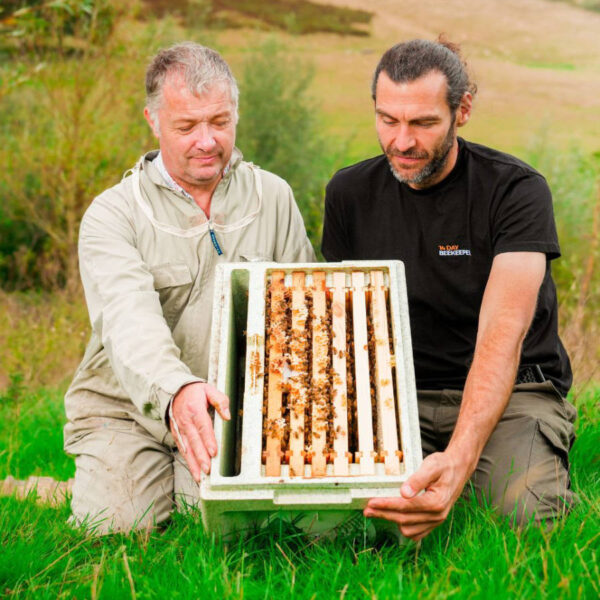
Wintered Starter Colony for National Frames
A strong, overwintered Buckfast colony on National frames. Proven survivors, ready to build fast from early spring.