The micro honey harvester had beekeepers arguing as soon as I posted about it. Why bother with something so small when you’ve already got an extractor? I own a 12-frame extractor and a 30-frame extractor, and I still want one.
Imagine having friends round for dinner. You could open a jar of honey, or you could let them watch you harvest it and taste it moments later. That’s where this little machine gets interesting for me.
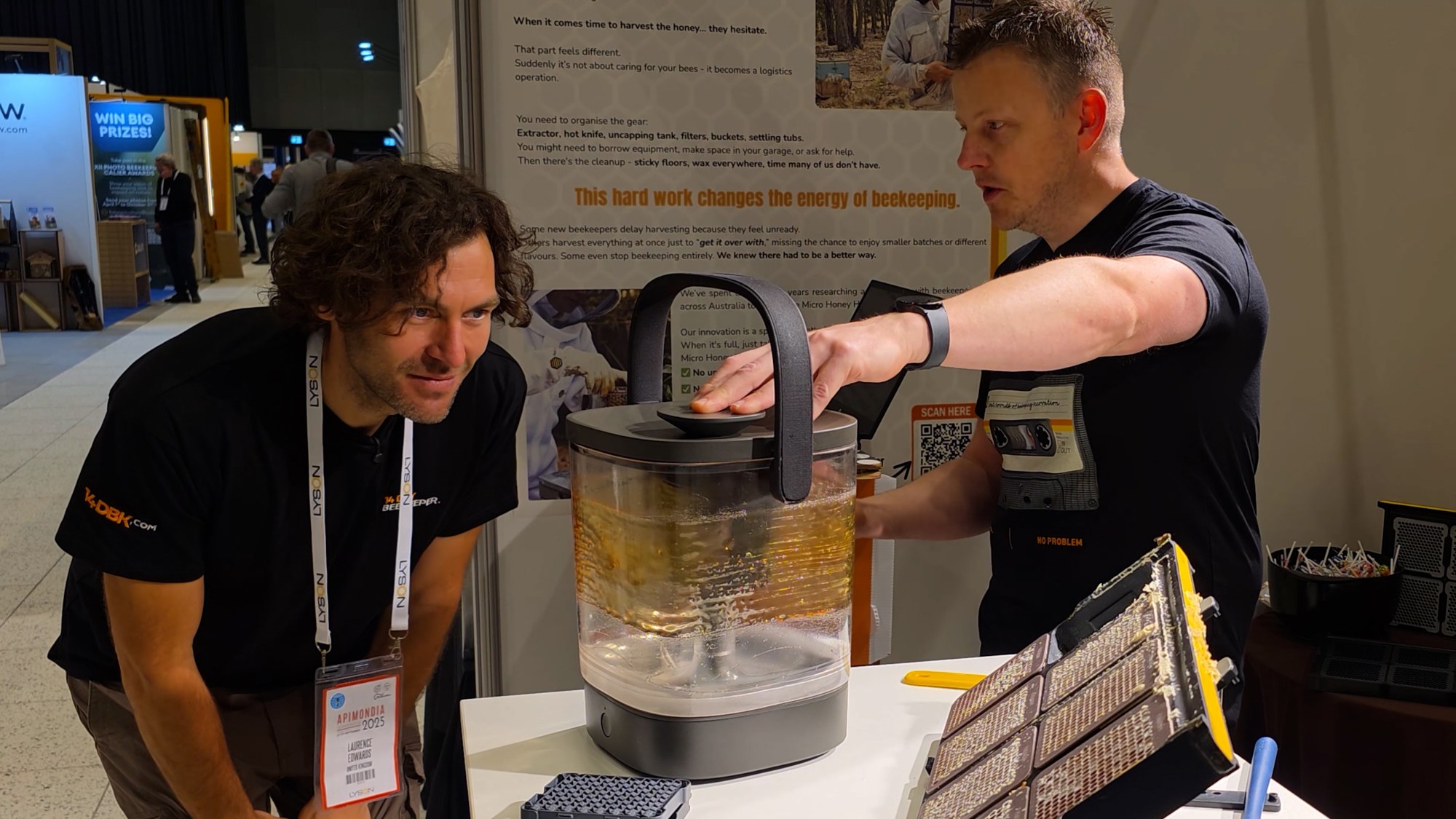
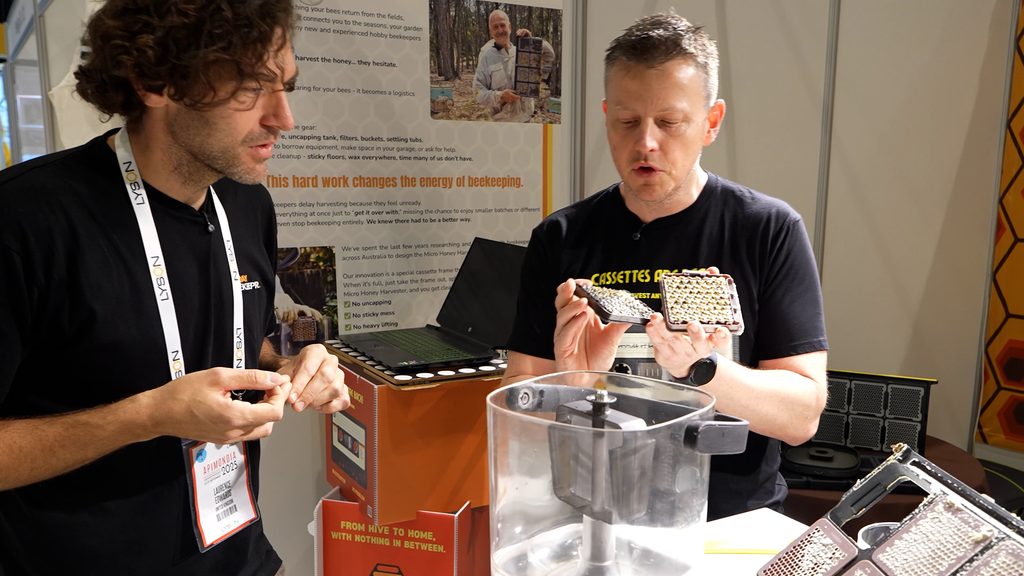
Simon, the inventor from Hive Keepers, brought it to my apiary after we met at Apimondia. I wanted to understand how it worked, who would actually use it and whether the excitement stood up to some pointy questions.
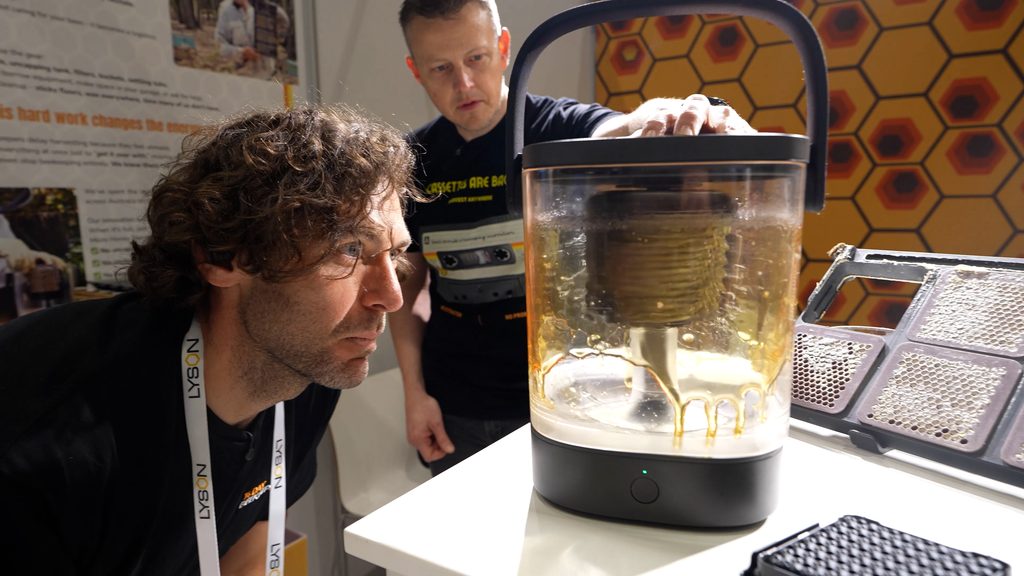
How the micro honey harvester gets honey out
The clever part is the cassette. It comes in two parts which fit together to close the bases of the cells. Pull those parts apart and openings appear behind the honey.
You then turn the cassette halves so those openings face outwards inside the harvester. Press the button and the honey spins out from behind the cappings. You don’t cut the cappings off first.
Simon says a 30-second spin usually removes at least 80% of the honey. He also says keeping the cappings intact removes much of the filtering work normally needed after uncapping.
The machine runs on a battery, so you don’t need a mains socket beside it. Simon says you can also connect a power bank or USB power supply. That makes sense for a demonstration where power might be awkward.
I watched the process repeatedly at Apimondia. Open the cassette, turn the halves, put them in the machine and spin. The honey came out, went into a jar and people tasted it. You can also see my small-batch extraction demonstration if you want a closer look at the process.
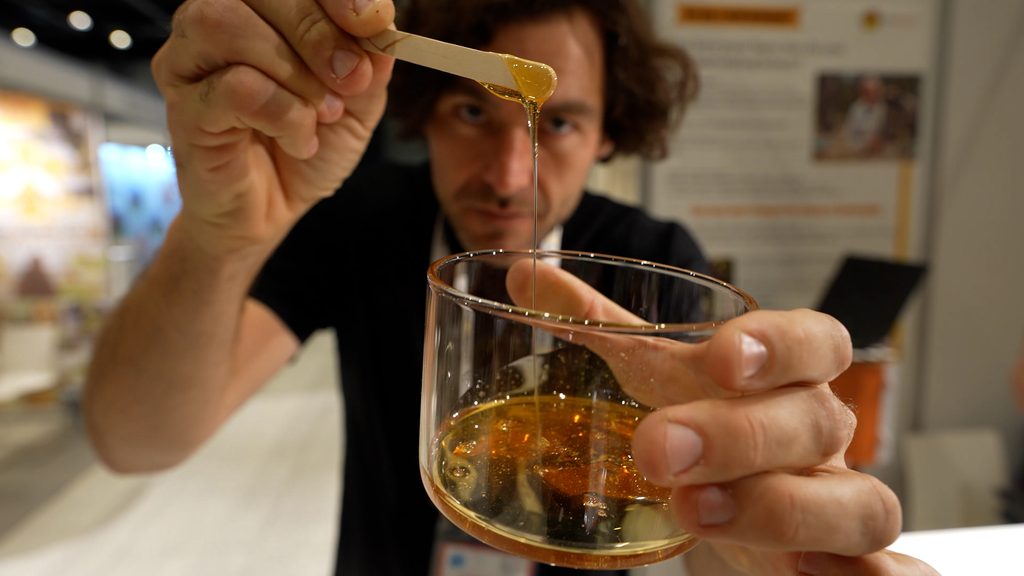
Small batches can be worth the effort
If you’re looking at a room full of supers, I understand why a small cassette doesn’t immediately appeal. Simon designed this around small-scale beekeepers, roughly one to five hives. He isn’t proposing it as the whole extraction system for someone with 100 colonies.
His description of the job is wonderfully straightforward:
“It’s to harvest small amounts of honey really fast.”
He puts a full frame at about five minutes. A larger extractor can spin several frames together, of course. But his argument includes the preparation, uncapping and clearing up around that spin.
I know what a proper extraction session involves. You can see my complete honey extraction method for the larger-batch approach. I’m happy using that equipment when I’ve got a crop to process.
For a little honey to share with friends at the dinner table, I’d use the micro harvester. Someone who keeps a few colonies and wants modest amounts more often might find that fits their beekeeping too. But, its certainly not for everyone and will likely never replace a full extraction set up (it’s not designed to either).
Fresh honey gives you something to share
The bit that excites me most is being able to harvest individual cassettes separately. Put lots of frames through a large extractor and their honey mixes together. With separate cassettes, you can taste each batch on its own.
Simon and I both liked the possibility of finding different flavours across one frame. You get to explore those differences instead of combining everything in one bucket.
I can see myself doing that round the dinner table. At Apimondia, I also watched people gather to see the harvester working. Experienced beekeepers were interested, and people enjoyed tasting the honey afterwards.
For a market stall, that gives you a practical demonstration with something to taste at the end. An educator could let students see the process and press the button. Those are uses I can understand even if the owner already has conventional extraction equipment.
I’m enthusiastic about the taste and the experience. I wouldn’t turn that into a claim that the honey is scientifically superior. Simon himself was careful to say his observations about freshness weren’t backed by research he could point to. If you’re weighing up the language around it, our guide to what raw honey means is useful background.
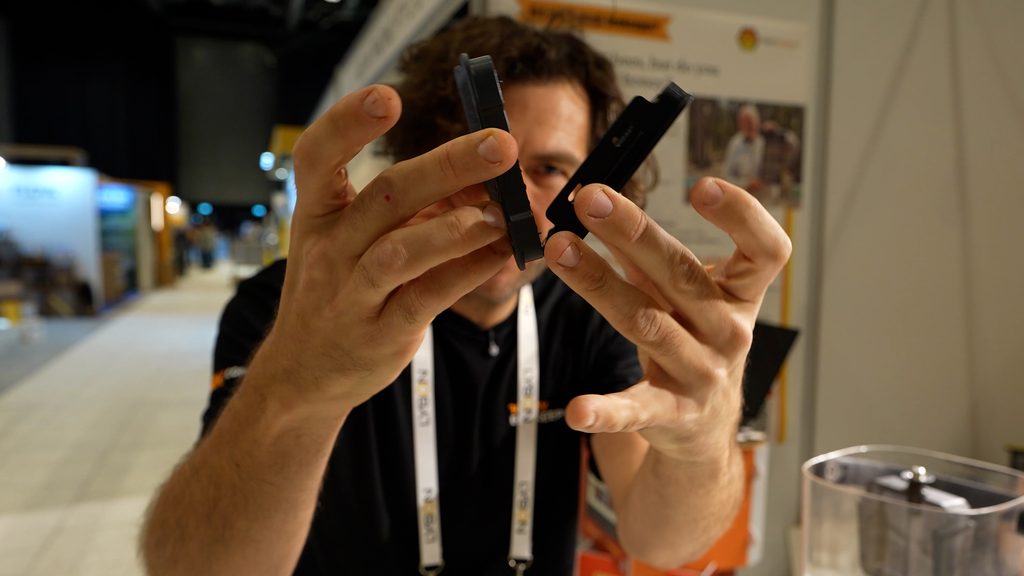
Prepare the cassettes the way Simon tested them
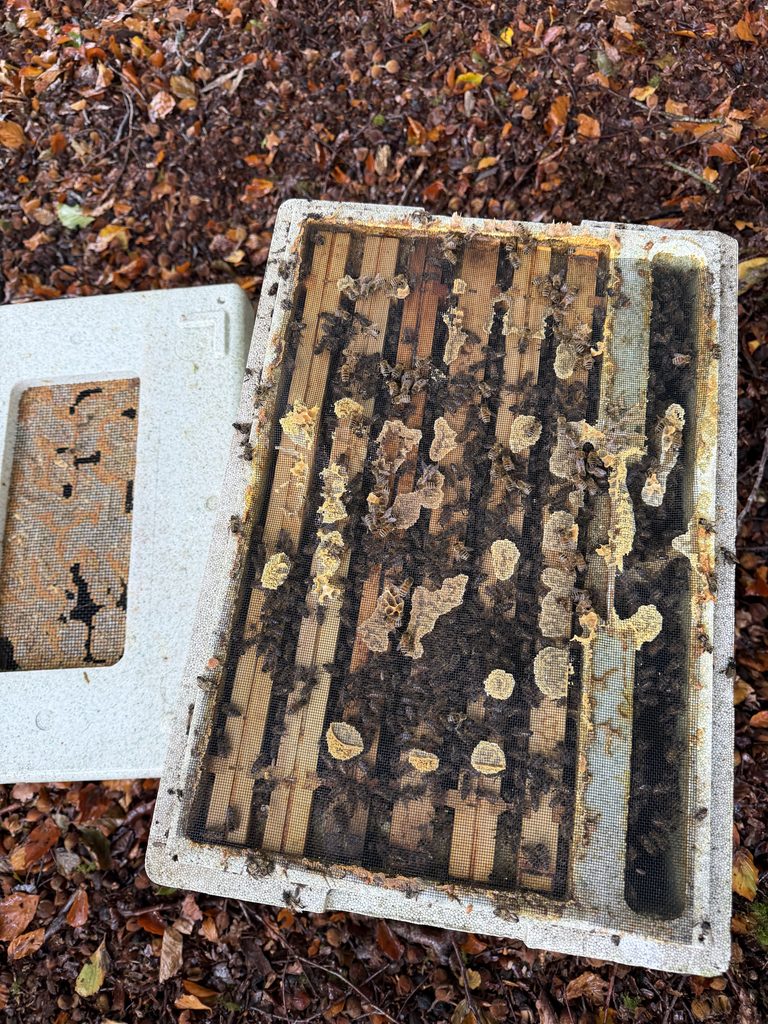
Simon was quite clear about preparing the plastic for the bees. His preferred method is to rub a solid block of beeswax firmly over both sides. He likes a generous, slightly flaky coating which the bees can move around.
He advises against dipping the cassettes in melted wax or rolling on lots of liquid wax. In his tests, wax collected too thickly at the bottom and obstructed the mechanism. He also says acceptance depends on having a nectar flow.
That’s useful detail to understand before buying. It would be frustrating to coat them using your normal plastic-foundation routine and then find the openings blocked.
The frame he showed me was Langstroth-sized. Other frame formats were part of his plans, so check the current options against your own equipment. I could see a possible use alongside a Flow Hive, but you’d need to check the actual fit and spacing.
The honey-fraud idea still has questions to answer
Simon has a much bigger ambition. Could honey reach the consumer in a cassette, with the consumer doing the harvesting at home?
I can see why that appeals. If you’ve watched honey come out of capped cells, you’ve seen a part of its journey that a normal jar doesn’t show you.
But seeing that extraction doesn’t establish the whole supply chain. Simon’s idea is a possible future approach to trust in honey. It isn’t an established quality mark or proof that fraud has been solved.
My immediate concern was the plastic. If people bought cassettes regularly, what would happen to them afterwards? Would there be a return system? How would they be reused or recycled?
Simon acknowledged those challenges. He described a long-term vision, with the immediate task being to get the first product into people’s hands and build a sustainable business. I like the ambition, while those practical questions remain open.
Products
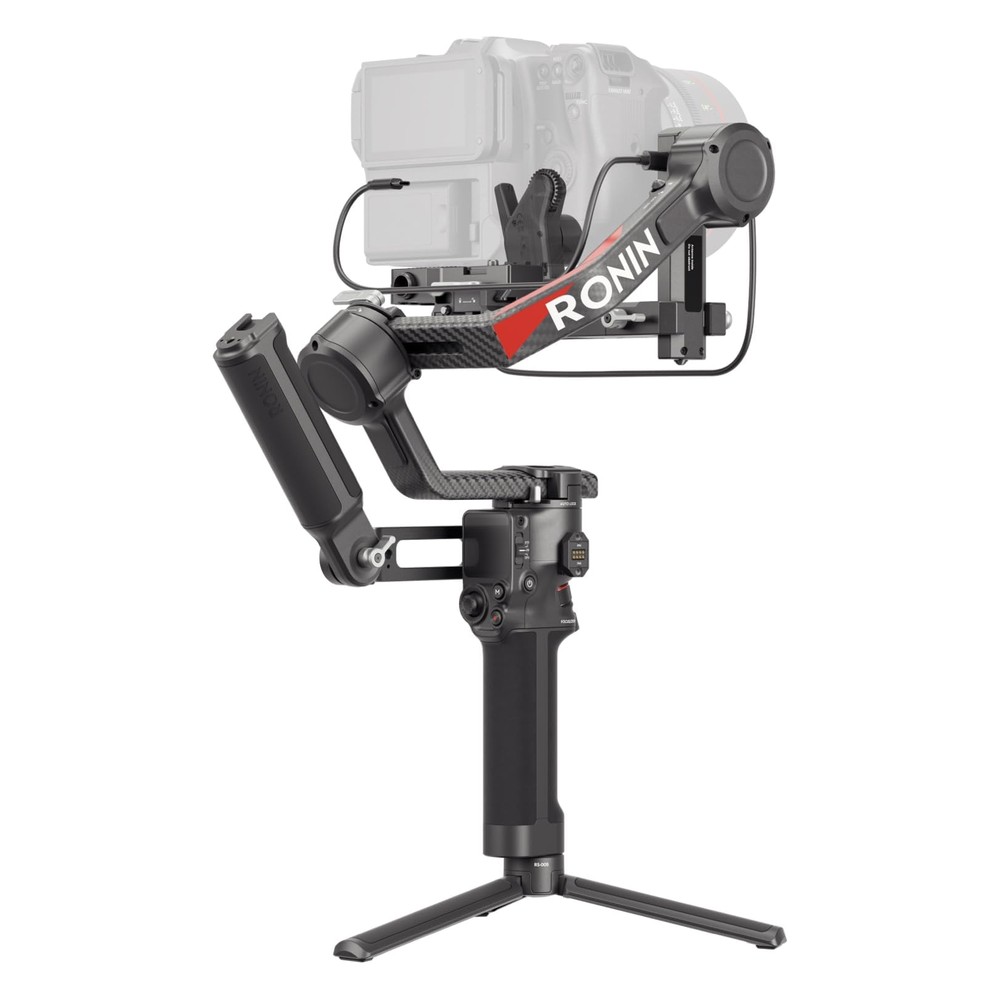
DJI RS 4 Pro Combo Gimbal Stabiliser
A gimbal for mirrorless and cinema cameras with a 4.5kg payload, native vertical shooting and LiDAR focusing. Smooth, steady footage from bigger rigs.
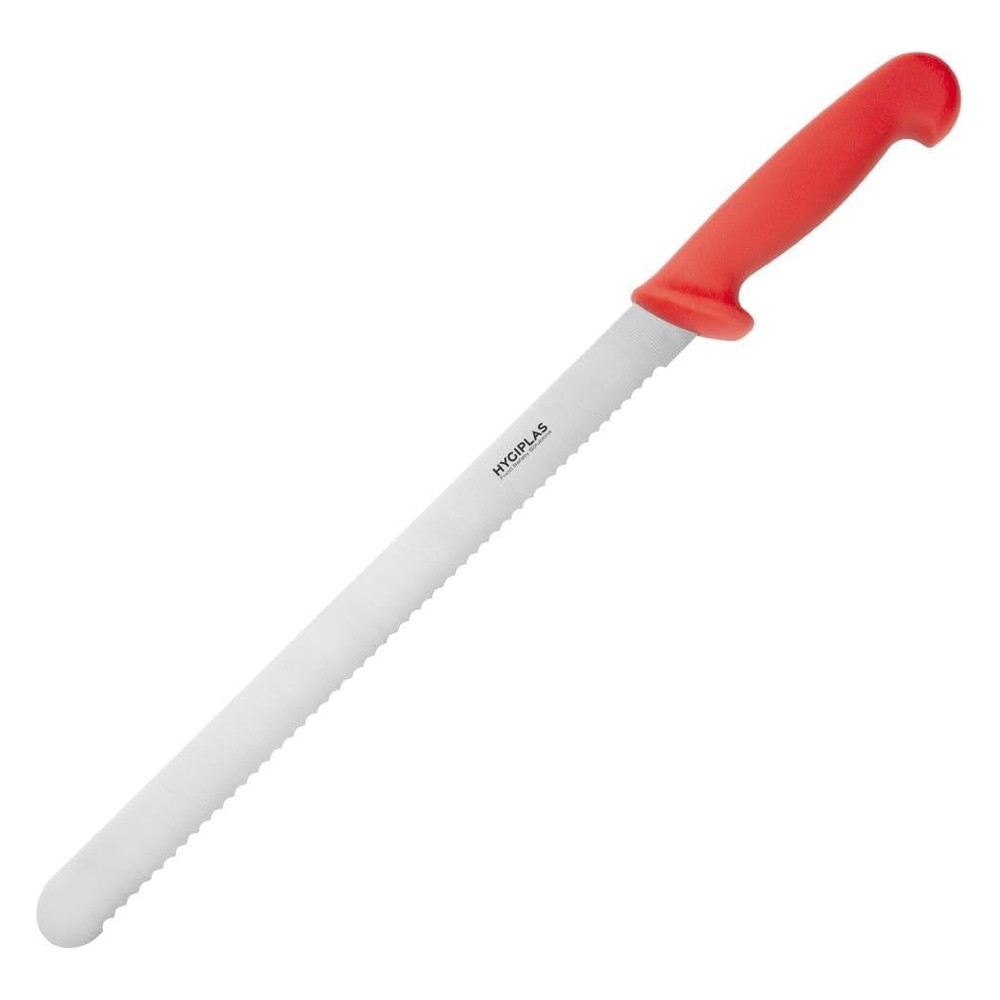
Hygiplas 30cm Serrated Slicer Knife, Red
Laurence’s go-to knife for uncapping honey frames. A 30cm serrated stainless steel blade with a soft-grip handle. Sharp, cheap and dishwasher safe.
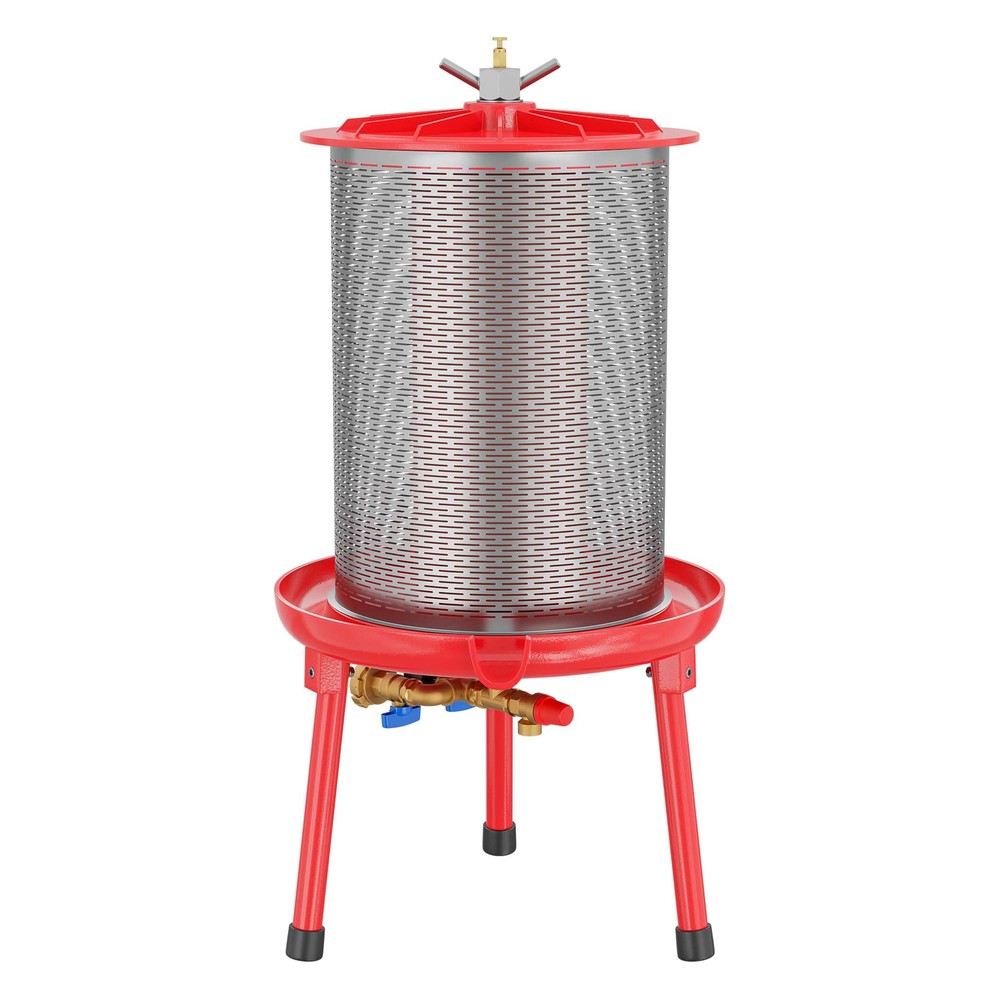
Hydropress 20L Stainless Steel Water Press
A 20L stainless steel press powered by your mains water at about 3 bar. Comes with a press bag and splash guard. Built for fruit, handy for honeycomb too.
What I’d check before buying
Think about the job you want this machine to do. For me, that’s harvesting small amounts and sharing the experience. If you want to process a large crop, compare the complete workload with your existing method.
Before spending money, I’d check:
- Whether the available frames fit your hive and how the cassettes need preparing.
- Current delivery options, price and support for your country.
- Cleaning instructions, spare parts and the manufacturer’s material information.
- Whether small, separate batches are something you’ll genuinely use.
If you’re interested in buying one, check the current product details and availability with Hive Keepers.
Some links on this page are affiliate links. If you buy through them, we may earn a small commission at no extra cost to you.