Protect your hives from wasps
Wasp season can put a weak colony under serious pressure. This free guide helps beekeepers assess their colonies, prepare hive defences and recognise when wasps are attacking.
Wasps can overwhelm a weak colony when their numbers build up. This guide helps you assess your hives and put defences in place before the pressure arrives.
What you'll learn
- Spot wasp pressureRecognise the signs that wasps are targeting your hive.
- Assess your coloniesCheck colony strength and identify hives that need extra protection.
- Prepare your defencesLearn about entrance reducers, wasp guards and other ways to protect your hives.
- Respond to an attackFollow the guide's steps if wasps are already attacking a colony.
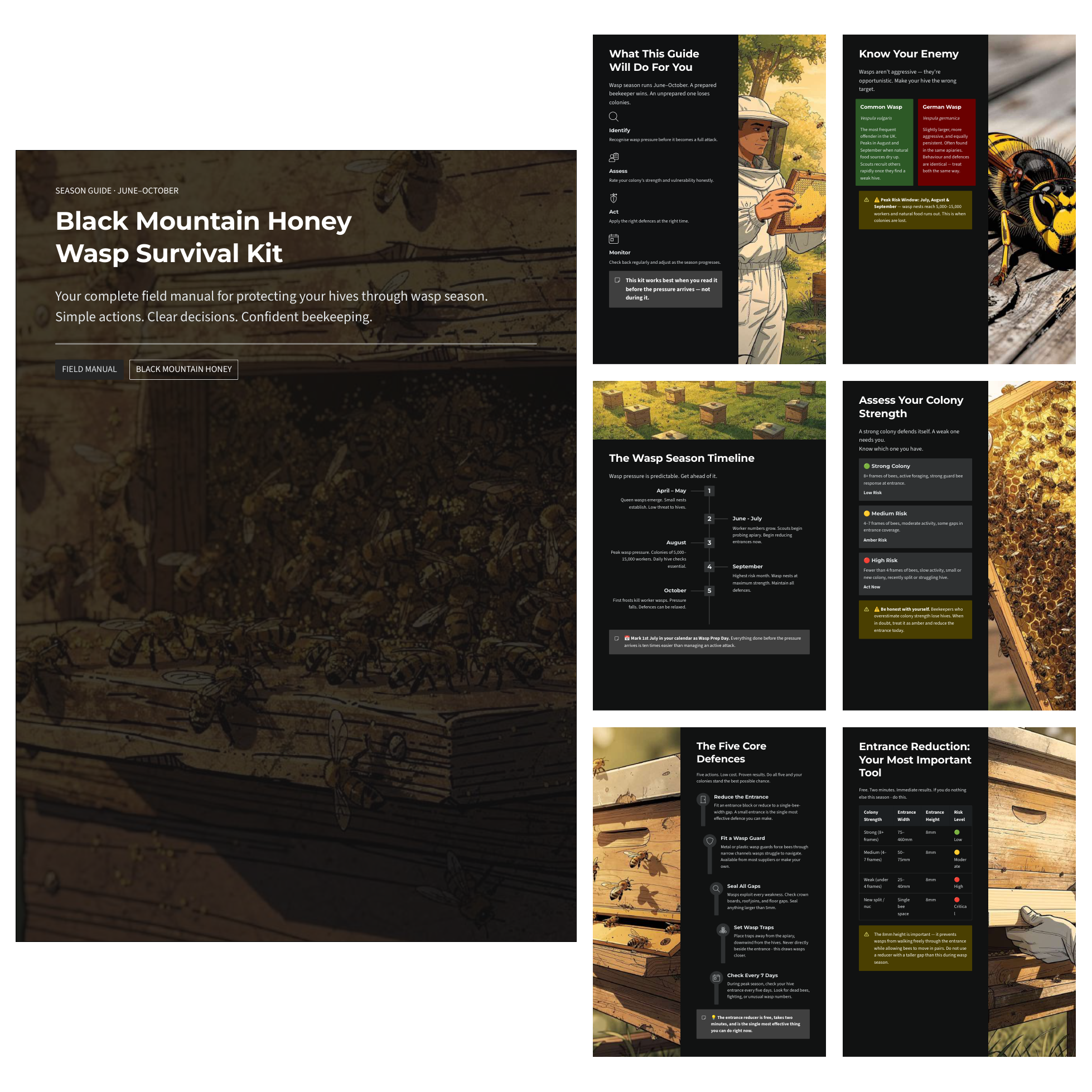
Inside the guide
- Page 3. Know your waspsMeet the common and German wasps and see when the guide identifies peak risk.
- Page 4. The wasp season timelineSee how wasp pressure changes between spring and autumn.
- Page 5. Colony strengthCompare the signs of strong, medium and high-risk colonies.
- Pages 6 and 7. Hive defencesFind five defensive actions and an entrance-size table for different colony strengths.
- Page 8. An active attackFind a sequence of actions alongside signs of wasp pressure and things to avoid.
- Page 9. The seasonal checklistWork through the preparation, monitoring and wind-down tasks for wasp season.
Keep it simple. Keep it calm. Keep your bees safe.

This guide is for you if
- You're preparing your hives for wasp season.
- You have a weak colony or a new split that needs extra protection.
- You're seeing wasps around a hive and want to recognise the signs of an attack.
- You want a seasonal checklist to keep in your kit bag.