Beekeeping isn’t about one clever trick. It’s about doing the right small things at the right time, all the way through the year. Here’s how I look after my bees, and how you can build the same routine.
Never let your bees run out of food
Food comes first. You must never let the bees run out.
Bees can starve surprisingly fast, especially early in spring, during bad weather, or going light into winter. So your job is simple. Lift the hive, feel the weight, check the stores, and feed when they need it.
You don’t feed constantly. You feed strategically, when the stores run low. And you can’t strip all the honey away and expect the bees to replace it.
If a colony starves, that’s on the beekeeper. Manage and monitor their stores all year round. If you’re not sure what or when to feed.
Read more: when you should feed your bees
Inspect with purpose, not panic
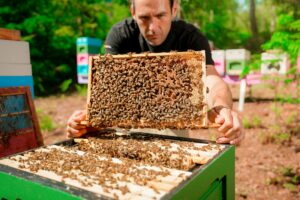
In spring, beginners often over-inspect. Instead, think short, calm, purposeful checks.
Early in the season you’re looking for three things:
- Do they have enough stores?
- Do they have enough space?
- Are they healthy?
You don’t need to worry about honey this early on. If you’ve got those three things, your colony is building well.
New to this? Our guide on when to do your first inspection walks you through it.
Give them space before they demand it
One of the most common beginner mistakes is waiting until the bees are bursting before adding space. Bees don’t ask politely. They swarm.
So stay ahead of them. Add space as they grow, whether that means spacing out the brood box, adding supers, or easing congestion.
Adding space early keeps the whole colony healthy and calm, and it protects your honey crop too.
Prevent swarms before they happen
Swarming is natural. But losing half your bees to a tree or a neighbour’s chimney isn’t ideal.
Swarm prevention comes down to space, timing, and reading the colony. Watch the weather and the conditions, and learn where the risk sits. Learn the early warning signs and you’ll keep your bees calm and productive through the busiest part of the year.
Keep your queen laying well
The queen is the colony’s engine. Through the season, keep asking one question. Is this colony queenright and thriving?
That means eggs, young larvae, steady brood, and a nice consistent laying pattern across the frames.
If that engine falters, everything else gets harder. Stay on top of it with regular checks in the brood nest.

Stay on top of varroa
This is a big one. I treat for bee health, not for hope. I want healthy bees, not a gamble on a colony that supposedly never needs help.
Treat early, and treat when the bees need it. Don’t take the honey off and only react at the end of the season.
My baseline is at least two treatments a year, using two different treatments, with the main one going on around the middle of August. Strong colonies don’t come from luck. They come from managing varroa properly.
Read more: How To Manage Varroa
Spot disease early
You don’t need to be paranoid, but it pays to stay alert. Learn what healthy brood looks like, and learn what “not right” looks like too.
Watch for problems like sacbrood, chalkbrood, bald brood, European foulbrood and American foulbrood.
If something seems off, a weak colony, a poor brood pattern, or odd behaviour, don’t ignore it. Most big failures start as small signals that got missed.
Manage through the seasons
Your bees need different things at different times of year. Here’s how the seasons shape the work.
Balance honey and welfare in summer
In summer it’s easy to focus on the honey. But the bees still need everything else. Space, water, and a workload they can manage.
Work with the bees. Don’t push them to produce when the conditions say they shouldn’t. Healthy bees first, and the honey follows.
Autumn prep starts in August
Autumn prep starts earlier than most people think. I start in the middle of August.
From mid-August through to October, keep asking:
- Do the bees have enough food?
- Are they heavy enough?
- Are they healthy?
- Is varroa under control, and are my treatments working?
- Do I have a plan for robbing bees, wasps and high varroa loads?
Autumn is when you set your bees up to survive. Leave it until October or November and it’s too late.
Take a light touch in winter
If you’ve done the work all year, winter is the easy bit. The bees do most of it themselves.
Keep the hive secure, sheltered and dry. Check the weight by hefting it now and then, and watch the entrance. On a warm day they might come out for early pollen.
Don’t break the cluster with needless inspections. A light touch will see them through, and honestly, winter is one of my favourite times of year.
Your year-round plan to look after your bees
Use this as a quick checklist through the season:
- Check the stores and feed when needed, all year round
- Keep spring inspections short and look for eggs, brood, stores
- Add space before the colony gets crowded
- Watch for swarm signs and act early
- Confirm the colony is queenright at each inspection
- Treat for varroa at least twice a year, starting mid-August
- Learn healthy brood so you spot disease fast
- Start winter prep in August, not October
- Leave the cluster alone through winter
Common mistakes to avoid
- Over-inspecting and unsettling the colony
- Adding space too late, then losing bees to a swarm
- Taking off all the honey and leaving the bees short
- Waiting until autumn to think about varroa
- Starting winter prep too late
Where to go next
Looking after your bees well is a year-round habit, and it’s far easier once you’ve seen it done properly. Our 14-Day Beekeeper course takes you from beginner to confident beekeeper one module at a time, with 300+ video lessons that cover everything in this guide and more.
And when you’re ready for bees of your own, our starter colonies give you a calm, healthy colony with a proven queen, plus support every step of the way.