Winter beekeeping brings a tricky balancing act. You want your bees to have enough food to get through the cold months, but you don’t want to keep piling in feed they won’t need.
If too much syrup or fondant remains in the hive when spring arrives, the bees can move those stores into your honey supers. At the other end of the scale, a colony that runs out of food needs help quickly.
The answer is to pay attention to the colony’s stores, know how your hives feel when they’re heavy, and have a plan for the ones that become light.
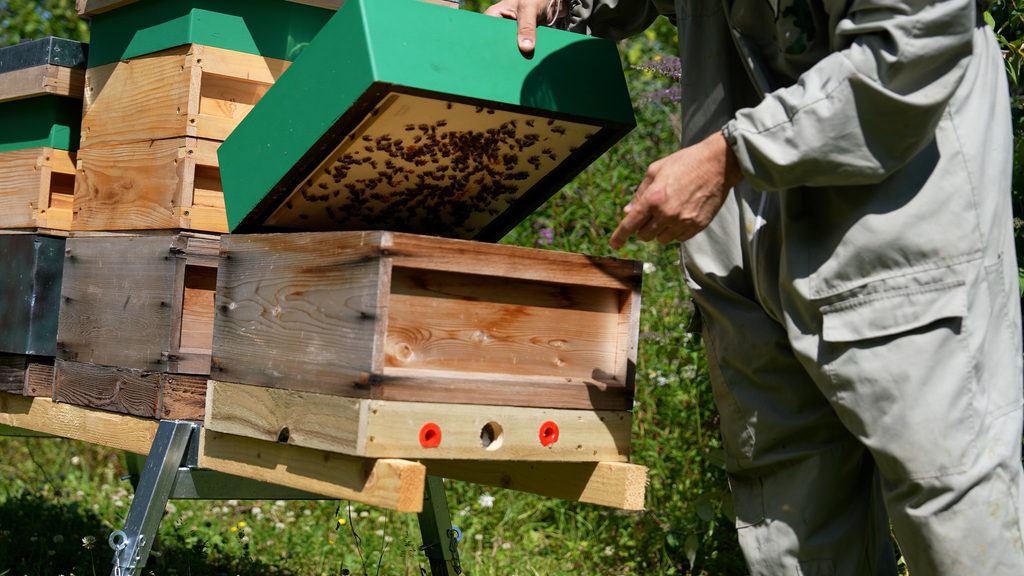
Winter beekeeping: when to feed fondant
I like my colonies to go into winter with enough stores already in the hive. Once the weather turns and the bees stop taking down syrup, I monitor their weight rather than keep feeding for the sake of it.
I use roughly 40 kg as a winter target for my single-brood hives and 45 kg for double brood. Those are rough figures for my equipment, not numbers to apply blindly to every hive. The boxes and equipment you use affect the total weight.
Get a feel for your hives now. Lift the back of each hive and compare how heavy they feel. A measured weight can help you learn what a well-supplied hive feels like, then you can keep checking as the bees use their stores.
If a colony has plenty of food, I don’t automatically add fondant at the start of winter. I keep an eye on it and use fondant if it becomes short, often towards the end of winter or into spring. If a hive is already dangerously light and the bees aren’t taking syrup, I wouldn’t wait until spring to help them.
For a colony that needs fondant, my usual approach is to place it directly over the bees on the frames and put the feeder back over it. I then secure the hive and continue monitoring its weight. There’s more on choosing feed in our guide to feeding your bees.
Feeding too much is a real problem.
There’s another reason I don’t want excess winter feed hanging around. Bees can move remaining stores up into supers when you add them in spring. That matters for the purity of your honey. Feed with a strong additive can also affect its smell and taste.
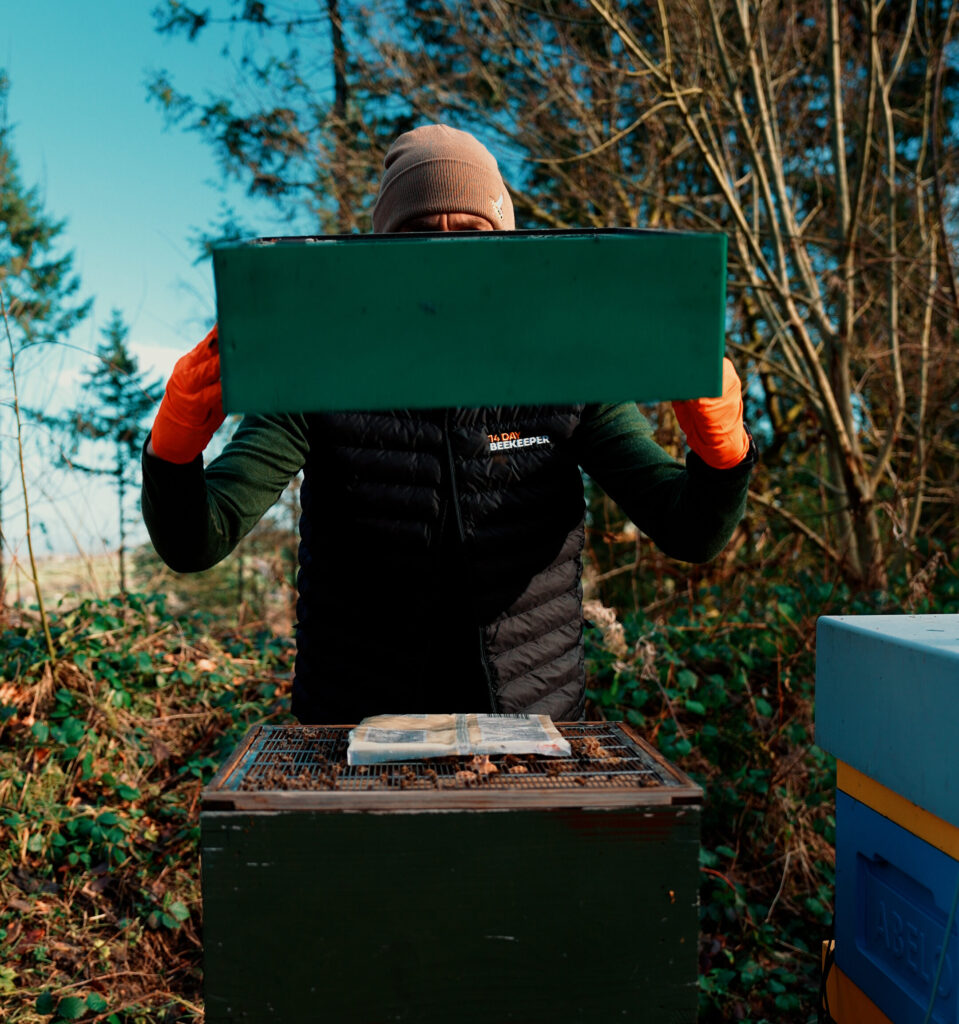
Keep mice out and think about condensation
Mouse guards are a small job worth getting right before winter. Before you fit one, check there isn’t already a mouse inside. You don’t want to trap it in the hive.
If you’ve been using a wasp guard with a tunnel entrance, think about whether it will also keep mice out. At this time of year, I’d normally swap to a mouse guard rather than leave an entrance that could admit a mouse.
I leave the monitoring boards out of my mesh floors except when I’m using them to monitor. I also make sure the top of the hive is insulated. A solid floor can work too, so look at the whole setup rather than treating the floor as the only factor in condensation.
A clear crown board lets you see your bees without pulling through the frames, which can be lovely when you’re starting out. I still put insulation above it. If you’re tempted to look every time you visit, try to leave them in peace once you’ve checked what you need.
Our winter preparation guide covers the wider jobs that help you get the hives ready.
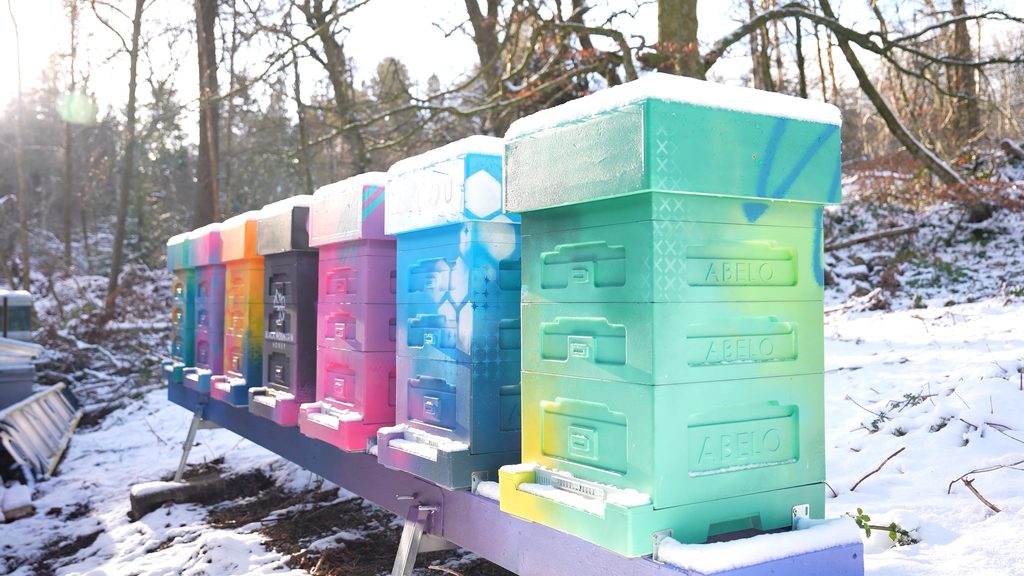
Why are the brood frames sticking together?
If lifting one brood box pulls frames up from the box below, check the bee space between them. I normally expect around 8 mm between the relevant surfaces in my National setup.
With bottom bee space, the frames sit flush at the top of the box and the gap is at the bottom. A top bee space setup puts that gap at the top instead. Either arrangement needs to be consistent across the boxes you’re stacking.
Mix a top bee space box with a bottom bee space box and you can end up with no gap between the frames. Put them together the other way and you can create a double gap. Bees may build burr comb in that larger space, tying the frames together.
It’s a frustrating thing to discover when you’re trying to remove treatment strips. Make a note of which boxes are causing the problem and check how their frames sit before next season. Getting the spacing consistent makes the boxes much easier to handle.
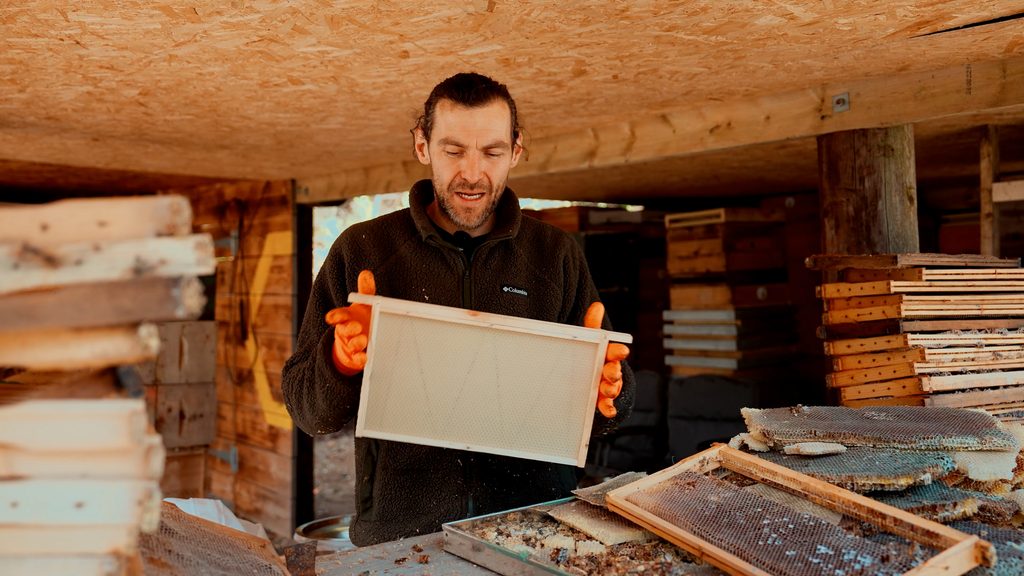
Plan winter varroa treatment around the colony
After the honey harvest, I focus on the health of my bees and use a post-harvest varroa treatment. I also use an oxalic acid treatment during winter, aiming for a period when the colony is broodless.
In North Wales, I watch for a sharp cold spell and then look at the weather over the following three weeks. Late November or early December can be a useful time in my apiaries. The weather and the timing of a broodless period will differ elsewhere, so I use the cold spell as a guide rather than assuming a particular date will work every year.
Check the instructions for the authorised treatment you’re using, including its application and safety requirements. Our guide to managing varroa gives the wider context for planning treatment through the year.
What to check next
- Heft your hives and note which ones feel light. Check them again as winter goes on.
- Have fondant available for colonies that need it, and make sure the bees can reach it.
- Check for mice before fitting mouse guards, and make sure the hives are secure.
- Note any boxes with frames that stick together, ready to check their bee space.
- Watch the weather and plan your winter varroa treatment around the colony and the product instructions.
If you’d like to bring your own questions to the live stream, you can try HiveQ free for 30 days and join us on a Saturday morning.