top of page

Adam's Apiaries: Using a Conversion Board To Change Brood Box Size

How To Change Brood Boxes Using A Conversion Board

The first stage of the swap.
The first stage of the swap

Do you want to discover how to change from one hive style to another? This blog post will detail the full process on how to achieve this from start to finish.


Whatever your reason for changing brood box type, the process is the same. Some formats of hive are compatible i.e. commercial to national, national to 14 x 12. By this I mean that the footprint of the brood box is the same. If this is the case, then making the change will not be that difficult. In short just double brood the colony, placing the new box above and insert the queen excluder in the middle once both boxes are full (be sure the queen is on the right side!). Also, make sure that there is still the correct bee space between the adjacent frames.


I was making the change from commercial to Langstroth. The principle is the same for any swap. The conversion board will need to cover the whole top of your current brood box and the whole bottom of the new size brood box. The hole you then cut in the middle can be as large as you can make it, ensuring that there will be a seal on both boxes.

Conversion Board Cut Out Plan

I used a piece of 9 mm ply wood that I had to make my conversion board. This isn’t going to last for ever but I’m sure I will get a couple of rounds out of it. Place your current brood box on the piece of wood and draw round the inside. Place the new brood box over the top of those lines and draw around the inside. This will show you the maximum cut out you can do. The other positive from the 9 mm ply is that it is as close as I could get to 1 bee space without having to make anything specific.


Conversion Board In Place

Step 1 - Set Up


The process itself is simple enough, remove your roof and crown board and place your conversion board onto the top of the original brood box. Then place your new brood box on top. At this point all that you need to check is that there is a good seal around the top of your old brood box and the bottom of the new. When I was doing this change I did not have any drawn frames on my new size so the new box was all foundation and the bees did just fine.


Due to the weather this year I did give the bees a small feed to help them along, not a lot just a little every couple of days, I didn’t want them trying to store the syrup!


Step 2 - Expansion


This is the very easy part! Just continue with your normal seven day inspections. Before you can go any further with the process you will need the bees to have drawn out a few frames in the new brood box and for the queen to have started to lay in the new frames. If you leave it too long though you will run the risk of them starting to store honey in the frames.


The Conversion stages

Step 3 - Swap Boxes


With your queen now laying in the new brood box, it is time to swap the two boxes around. What you must ensure is that the queen is in the correct box. When I did my change, I was lucky to find her in the top box both times. This made the process simple, lift the top box off and place it onto the correct (new) floor. Then lift the remaining old hive off the stand and place it to one side. Place the new floor and brood box onto the stand so the hive remains in the correct place.


Step 4 - Trap Queen


A quick check at this point to make sure the queen is in the bottom box is worth doing adding a queen excluder to keep the queen in the new box. You will then need to place the conversion board back on and add the original brood box on top.


Stage four of the Conversion
Stage Five of the Conversion

Step 5 - Emerging Brood


All that you need to do now is to decide how long you will intend to leave the old brood box in place. I left mine on the hive for some time allowing all the bees to emerge. The down side is they started to store honey in the box.


For me this was not an issue due to the fact that this was a split and only 3 frames had been in contact with a miticide. These frames I will not extract and store for future splits.




Comments

Rated 0 out of 5 stars.
No ratings yet

Add a rating
Mountains

Subscribe to our newsletter

Get latest offers, deals and news directly to your inbox!

Discover the Buzz - Our latest blog articles!

Why This Swarm Died In The Box?

Over Christmas I was having a tidy up, moving stacks of boxes around, when I noticed something that caught my eye... Inside a stack of stored equipment, I found a dead colony of bees. Whenever you find a dead colony, the first thing you should do is not panic. The second thing you should do is investigate properly. So I decided to do a full dead swarm autopsy and work out exactly what had happened. The Configuration Was a Disaster Before even looking inside, the setup itself told a story....

Why Cold Weather Might Be A Blessing For Your Bees

Most beekeepers see snow and frost and immediately worry that their bees are going to starve or struggle. But in the UK in particular, cold weather is usually not the enemy. In fact, cold weather can be a blessing for your bees and can be one of the best things for a colony because it makes winter predictable, and predictable winter is what stops colonies quietly burning through stores and ending up in trouble. In this blog I am going to explain why cold weather helps, what the real winter...

Use A Hard Frost To Kill Wax Moth In Stored Frames With No Chemicals

Wax moth can absolutely ruin a stack of stored brood comb and what makes it worse is that most people only react once they spot the damage, by which point the frames are already on the way out. I want to show you a simple winter trick that costs nothing, uses no chemicals, and works brilliantly if you get a proper hard frost. This is one of those rare moments in beekeeping where nature hands you a free solution. You just have to use it properly. Killing wax moth In a good colony, wax moth is...

How To Mark A Queen Bee

Marking a queen bee is one of those small jobs that makes a huge difference to your beekeeping. Once you know how to mark a queen safely and confidently, everything from finding her on a busy frame to tracking her age and performance becomes much easier. In this blog I will walk you through exactly how I mark a mated queen, the tools I use, and some simple tips to help you avoid common mistakes. If you have ever thought “I can never find my queen” or “I am too nervous about hurting her”,...

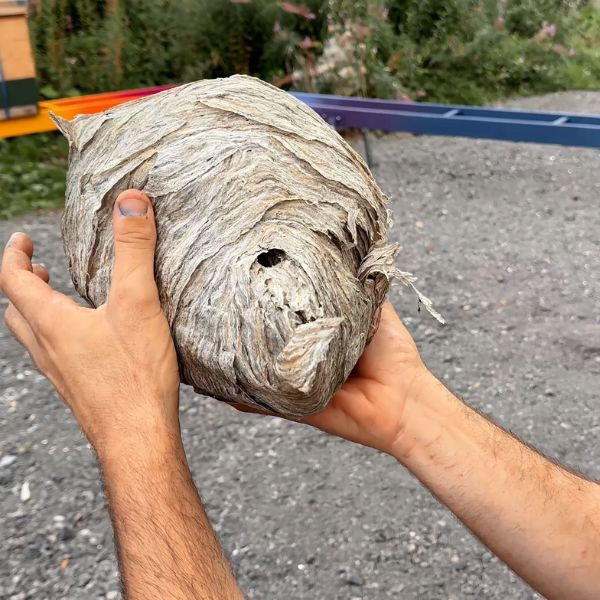
A Look Inside An Old Abandoned Wasps Nest

Explore the fascinating structure of an old abandoned wasps nest. Discover insights on wasps nest dynamics and learn how to protect your bees.

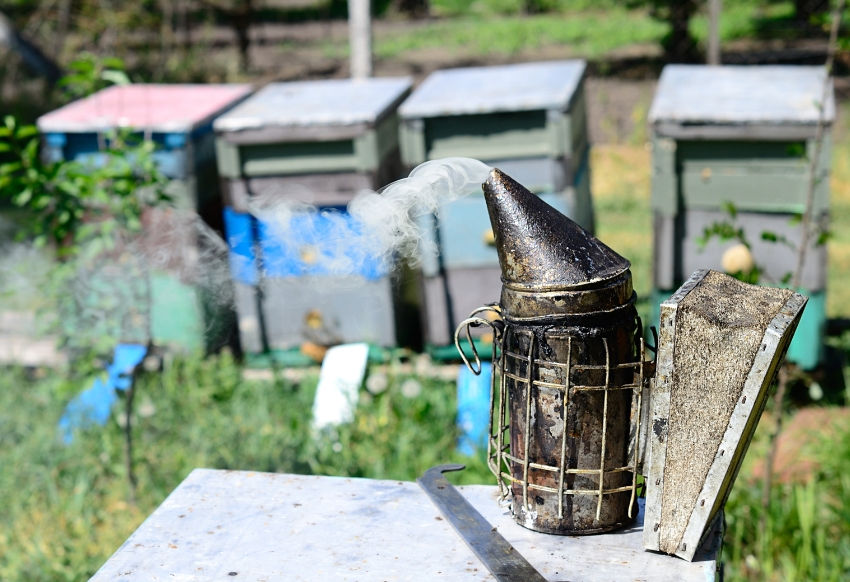
How To Light A Bee Smoker - Heat, Fuel and Cool

Discover how to light a bee smoker effectively with our step-by-step guide. Ensure your smoker stays lit for calm, safe bee inspections.

How To Scorch, Clean and Sterilise  Beehives
How To Scorch, Clean and Sterilise Beehives

Learn how to clean beehives effectively to keep your bees healthy. Discover step-by-step methods on how to clean beehives and protect your colonies.

How I Extract Honey From Honeycomb

Discover how to extract honey with ease using my methods at Black Mountain Honey. Learn how to extract honey efficiently and stress-free.

How To Make Natural Beeswax Firelighters From Old Brood Frames

Old brood frames and scrap beeswax can look like a horrible mess, but there is still a lot of value left in them. Once I have rendered out as much wax as I sensibly can, there is often a pile of darker, lower grade wax that I would never use for candles or cosmetics. Instead of throwing it away, I turn it into simple, natural firelighters. In this guide I will walk you through how I make beeswax firelighters using wood wool and recovered wax from old brood frames. This is not about fancy...

How To Render Beeswax Cappings Into Beeswax Blocks

Beeswax cappings are one of the nicest by products of extracting honey. They look and smell fantastic, they are usually much cleaner than old brood comb, and they give you some of the highest quality wax you will ever get from your bees. A lot of beekeepers scrape them off, let them pile up in a tub and never quite get around to dealing with them. That is a shame, because with a simple process you can turn those sticky cappings into clean wax blocks ready for candles, polishes or swapping in...

How I Time My Varroa Treatment Around A Cold Snap To Kill More Mites

Varroa is still the number one health threat to honey bees in the UK. You feel it in spring when colonies that looked fine in autumn come out weak, slow and virus ridden. One of the biggest improvements I have made in my own beekeeping is learning to time winter oxalic acid treatments around a natural brood break, instead of just picking a random date on the calendar. In this guide I will show you how I use the first proper cold snap as a trigger, apply a simple three week rule and then treat...

How I Light A Smoker Using My 3 Step Technique: Heat, Fuel And Cool

Discover how to light a smoker with ease using my 3-step technique: Heat, Fuel, and Cool. Master how to light a smoker confidently today!

bottom of page