Why This Swarm Died In The Box?
- Laurence Edwards

- Mar 7
- 3 min read

Over Christmas I was having a tidy up, moving stacks of boxes around, when I noticed something that caught my eye...
Inside a stack of stored equipment, I found a dead colony of bees.
Whenever you find a dead colony, the first thing you should do is not panic.
The second thing you should do is investigate properly.
So I decided to do a full dead swarm autopsy and work out exactly what had happened.
The Configuration Was a Disaster
Before even looking inside, the setup itself told a story.
These were boxes I had left outside, sealed up, intending to process them over winter.
At some point the stack must have slipped slightly, creating a small gap. That gap was enough for a swarm to find its way in.
The problem is that this was never designed to house bees.
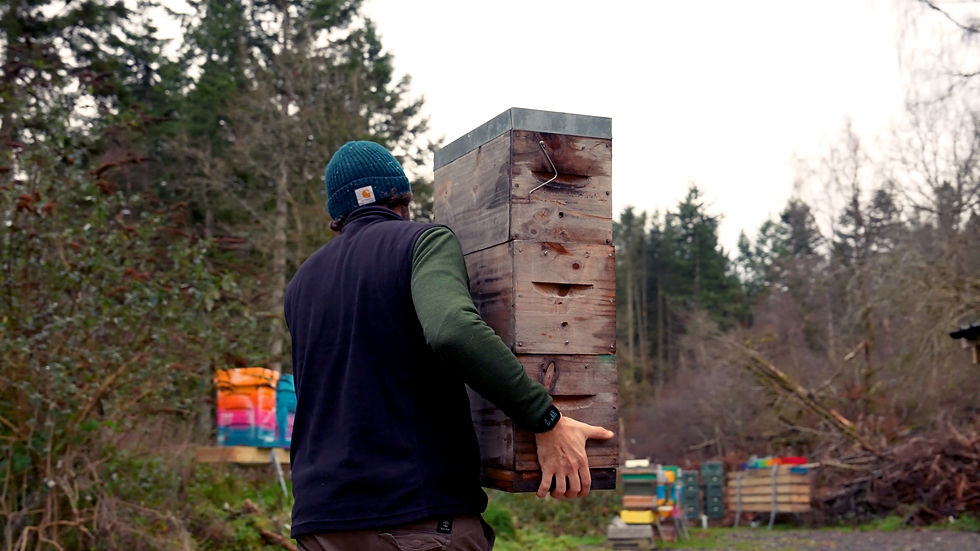
It was essentially a tall, cold vertical tunnel with a thin metal roof on top. That metal roof is the worst part of it. It attracts condensation directly underneath, which is exactly where a cluster would form in winter.
Instead of insulation at the top and airflow through the sides, this setup did the opposite.
It pulled moisture to the coldest point and let it drip straight down.
You could see the condensation running off the roof and down the sides of the boxes.
Combine that with freezing temperatures and you create a brutal environment for a small colony.

Dead Swarm Autopsy - What Was Inside
Once I removed the top box, the picture became clearer.
This was not a prime swarm.
This was a tiny late season cast swarm.
Likely late August or early September.
The bees had entered a box that only contained foundation and began drawing it out themselves.

You could see the wax had buckled slightly and been partially drawn. But there were barely any bees. Across the entire box there was less than half a frame of bees.
That is an incredibly small cluster going into winter.
Without enough bees, there is no thermal mass. Without thermal mass, there is no heat retention. And without heat retention, survival chances drop rapidly. Even if the virgin queen had successfully mated, this colony would have struggled badly.

What Actually Killed Them
When you find bees dead over winter, many people immediately blame the cold or damp.
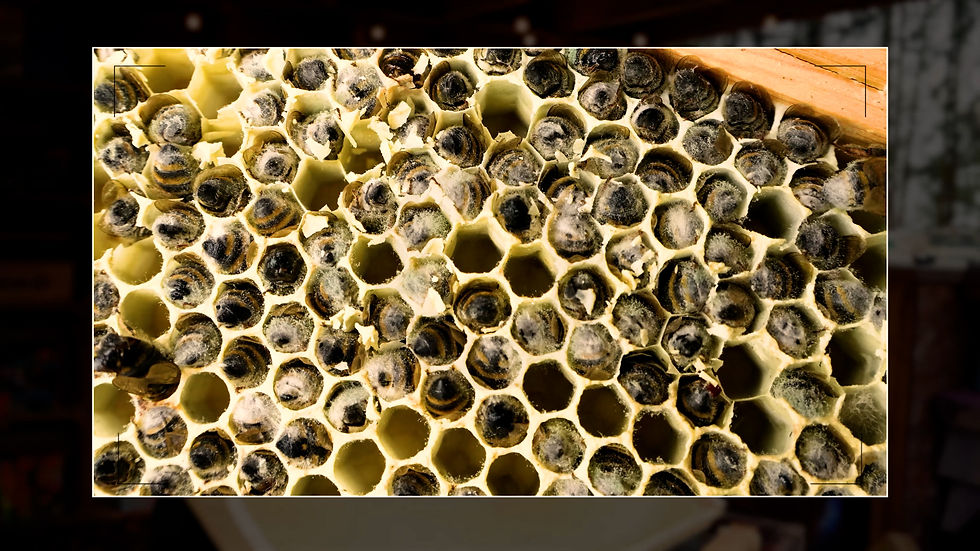
But the cold is rarely the primary cause. The position of the bees tells you everything.
These bees had died with their heads buried inside the cells. That posture is classic starvation. They were trying to scrape out the last remnants of honey and simply ran out of food.
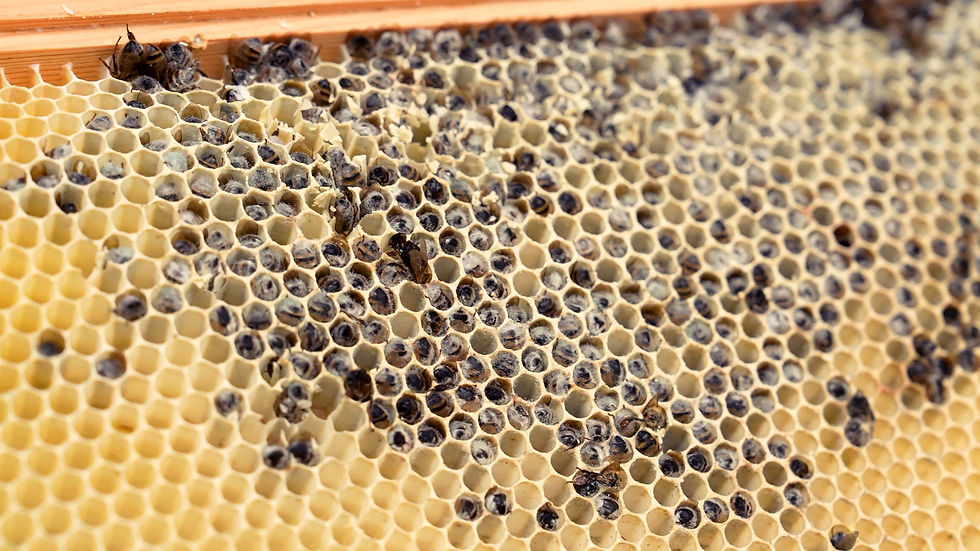
Starvation got them first. The cold simply finished the job and made the scene look worse, adding dampness and mould which people often mistake as the cause.
There were nowhere near enough stores in that box to carry them through winter.
A tiny cast swarm, late in the season, minimal drawn comb, very little forage time left.
It was a combination that never stood much of a chance.

Additional Red Flags
As I inspected further, I spotted a small patch of brood that I did not like the look of, along with some mouse damage.
At that point, the decision becomes straightforward.
You do not try to salvage questionable equipment.
The cleanest and most hygienic approach is to burn the contaminated material.
So I scraped the dead bees into the fire and decided not to reclaim this wax.
Sometimes the safest move is simply to reset.

The Lessons From This Colony
There are a few clear takeaways here.
Late season cast swarms are extremely vulnerable.
Even if they settle, they often lack the population and stores required to survive winter.
Condensation management is critical.
Insulation belongs at the top.
Moisture needs to track away, not collect above the cluster.
And most importantly, cold weather does not usually kill bees directly.
Starvation does.
The way bees die tells you the real cause.

What To Do If You Find Something Similar
If you discover a small dead colony like this:
Inspect properly and look at bee positioning.
Check for signs of disease before reusing equipment.
If in doubt, burn questionable frames.
Do not assume cold was the primary cause.
Sometimes a swarm simply does not have enough strength or stores to make it through.
That is nature. Your job is to learn from it and tighten up your systems.

Watch the video here
Useful Links
Black Mountain Honey
14 Day Beekeeper Overview





I noticed the site after reading a forum thread where several users were debating whether a casino's payment methods should influence the choice of operator. That made sense to me, so I searched specifically for Irish casino information and found http://best-online-casinos-ie.rogueaba.com/. I normally prefer having a familiar card or electronic payment method available, especially when I want to withdraw without unnecessary delays. I also check whether the casino explains verification requirements before making a deposit. For someone playing from Ireland, those details can be more useful than another paragraph about a welcome bonus. What caught my attention was the local orientation of the page, while what I enjoyed was being able to build my own checklist around payments, games, licensing…
The dead-out setup outside tells the story before you even crack the lid—moisture and wind exposure in stacked boxes is a killer. I’ve been digging into my own winter losses with a similar autopsy checklist, and this breakdown is exactly the nudge I needed to check my equipment storage. https://3daimaker.com
The dead swarm autopsy approach is exactly why I love this—checking the box placement before even opening it tells you so much. I’ve had similar losses from stored equipment and always kick myself for not looking at the entrance angle first. I’ve been using a similar diagnostic checklist over at https://fruit-love-island.com
Ragarding https://from-you-flowers.pissedconsumer.com/review.html I ordered flowers from From You Flowers and was thoroughly impressed with their customer service. The representative I spoke with was attentive and knowledgeable, addressing all my concerns promptly. My order arrived on time and the arrangement was even more beautiful than I had anticipated. Overall, the experience was seamless and left me feeling valued as a customer. I would highly recommend their services to anyone in need of quality floral arrangements.
The part about the setup telling the story before you even cracked the lid really hit home—stacked boxes outside are basically a bee trap. I've been guilty of the same storage mistake, so this autopsy is a solid reminder to check my own pile before spring hits. https://magicbrief.pro